Poor data impacts more than delivery. Inaccurate or outdated postal and email data can lead to returned mail, wasted costs, email bounces, and missed customer communications. Learn how better data quality and address hygiene can improve deliverability, reduce waste, and strengthen your omnichannel communication strategy.


.png)


For years, business leaders have debated which communication channel delivers the best results. Should organizations focus on direct mail? Invest more heavily in email? Expand into SMS messaging? The reality is that today's consumers don't think in channels. They move seamlessly between physical and digital experiences throughout the day. They receive a letter in the mailbox, visit a website on their phone, respond to an email at work, and engage with a text message while on the go. This evolution has given rise to what many marketers call the "Phygital Consumer" — individuals who expect a connected experience that combines both physical and digital interactions.
For organizations looking to improve engagement, response rates, and consumer experience, the question is no longer which channel is best. The question is how effectively those channels work together.
What Is a Phygital Consumer?
A phygital consumer blends physical and digital behaviors throughout the consumer journey.
They may:
- Receive a printed notice and scan a QR code to learn more.
- Open an email and later respond after receiving a reminder text.
- Read a mailed statement and log into an online portal.
- Receive an SMS notification that reinforces information already delivered through mail or email.
Consumers no longer view these touchpoints as separate experiences. Instead, they expect organizations to communicate through the channels that are most convenient at any given moment. Organizations that embrace this reality are seeing stronger engagement and better outcomes.
The Myth That Print Is Dead
One of the most persistent misconceptions in modern communications is that younger consumers only respond to digital channels. The data tells a different story. Recent research found that 85% of Gen Z and Millennial consumers engage with direct mail, with 67% taking a measurable action such as making a purchase or signing up for a service.
In fact, younger generations are helping fuel a resurgence in direct mail effectiveness:
- Gen Z and Millennials are the most likely generations to share direct mail with others.
- Nearly 80% of Gen Z consumers sort through their mail rather than immediately discarding it.
- More than half of consumers aged 18-34 report that direct mail is highly useful, making them one of the most receptive demographics to physical communications.
- Many younger consumers report that physical mail feels more personal, credible, and trustworthy than purely digital communication.
Why?
Because physical mail has become uncommon. In a world saturated with emails, social media ads, notifications, and digital noise, a personalized piece of mail stands out. It creates a tangible experience that digital channels often cannot replicate. Digital Channels Are Essential—But Not Enough Alone. While print remains highly effective, digital communication channels are equally important. Email continues to be one of the most cost-effective ways to deliver timely information, educational content, statements, notifications, and marketing communications. SMS offers something few other channels can match: immediacy. Text messages routinely achieve engagement levels that far exceed most other communication methods because they reach consumers where they spend much of their time—on their mobile devices.
The challenge is that each channel has limitations:
- Higher production and postage costs
- Longer delivery timelines
- Limited ability to provide immediate updates
- Inbox competition
- Deliverability concerns
- Increasing consumer fatigue
SMS
- Requires consent management
- Limited message length
- Not ideal for complex communications
Relying exclusively on any one channel creates blind spots. That's why leading organizations are moving toward integrated communication strategies.
Why Omnichannel Communication Delivers Better Results
The most successful consumer communication programs do not force consumers into a single channel. Instead, they create coordinated experiences across multiple touchpoints.
Consider a simple example:
- A consumer receives a printed communication introducing an important update.
- An email follows with additional details and digital resources.
- A text message provides a timely reminder or call to action.
Each channel reinforces the others. The print piece creates visibility and credibility. The email delivers depth and supporting information. The text message provides immediacy and convenience. Together, they create a more complete consumer experience.
This coordinated approach helps organizations:
- Increase consumer engagement
- Improve response rates
- Reduce communication gaps
- Enhance consumer experience
- Meet consumers where they prefer to interact
- Improve campaign measurement and optimization
The Business Case for Integrated Communications
For executives and decision-makers, omnichannel communication is not simply a marketing strategy. It's a business strategy.
Organizations across industries are facing growing pressure to:
- Improve consumer experiences
- Increase operational efficiency
- Demonstrate compliance
- Enhance communication effectiveness
- Generate measurable outcomes
An integrated print, email, and SMS strategy helps accomplish all of these objectives. Rather than viewing channels as separate programs managed by different teams, leading organizations are building communication ecosystems where every touchpoint supports a broader consumer journey. The result is greater visibility, stronger engagement, and better business performance. The Future Is Not Print or Digital—It's Both! The rise of the phygital consumer has fundamentally changed how organizations should think about communication. Consumers don't separate their experiences into "offline" and "online." They expect seamless interactions across both. Print continues to deliver trust, visibility, and credibility. Email provides scalable, information-rich communication. SMS delivers speed and immediacy.
When combined strategically, these channels create an experience that is far more powerful than any single communication method on its own. Organizations that embrace this integrated approach will be better positioned to engage consumers, improve outcomes, and build stronger relationships in an increasingly connected world.
How CompuMail Supports Omnichannel Communication
At CompuMail, we help organizations deliver coordinated communication experiences across print, email, and SMS channels. Whether you're sending critical consumer communications, compliance notices, statements, reminders, or engagement campaigns, our solutions help ensure your message reaches the right person through the right channel at the right time.
Because in today's environment, communication success isn't about choosing between physical and digital. It's about bringing them together.
Latest insights from our articles
Explore a collection of curated articles designed to help you stay ahead in multichannel communication, compliance, and digital transformation.
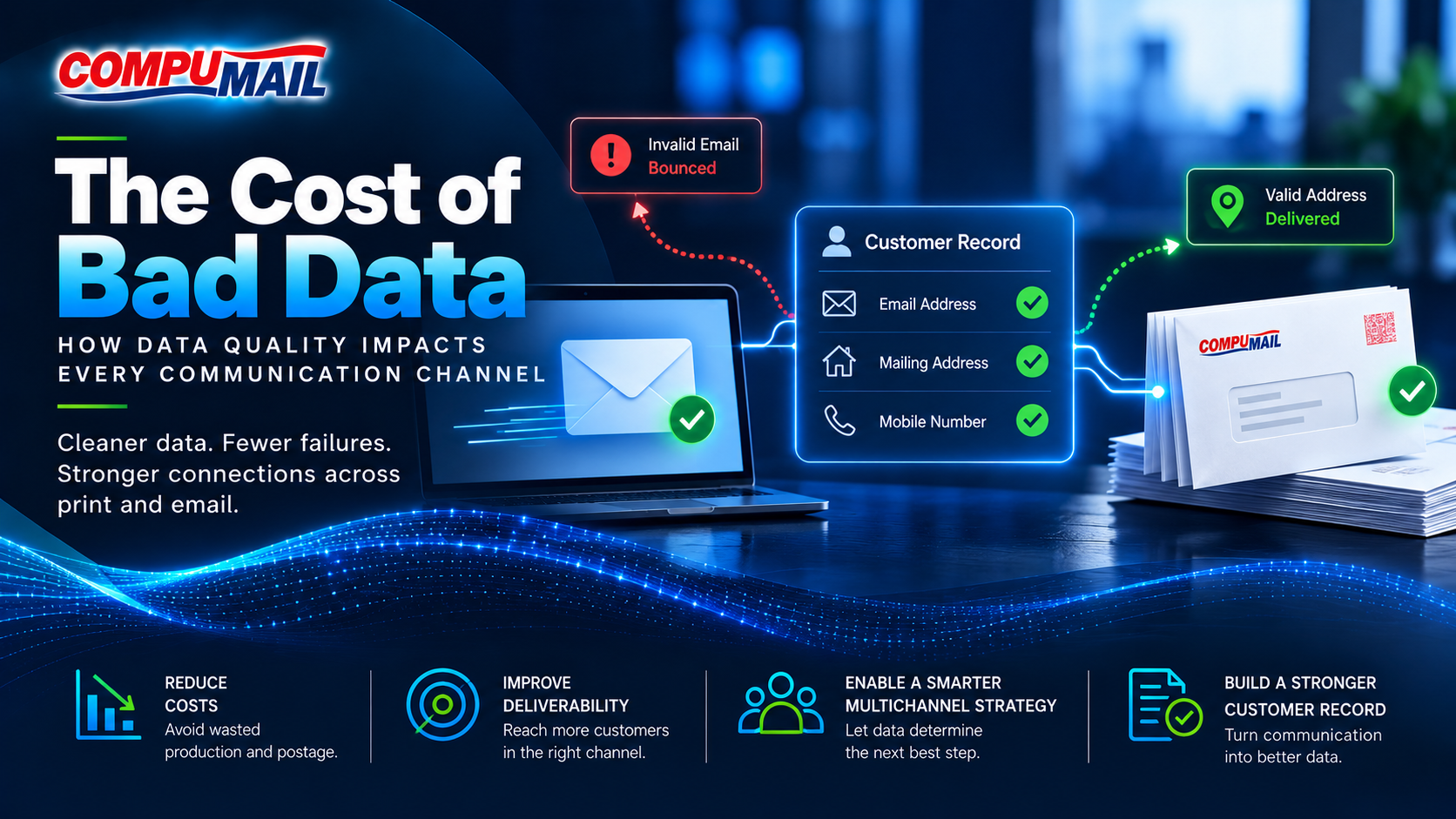
The Cost of Bad Data: How Data Quality Impacts Every Communication Channel
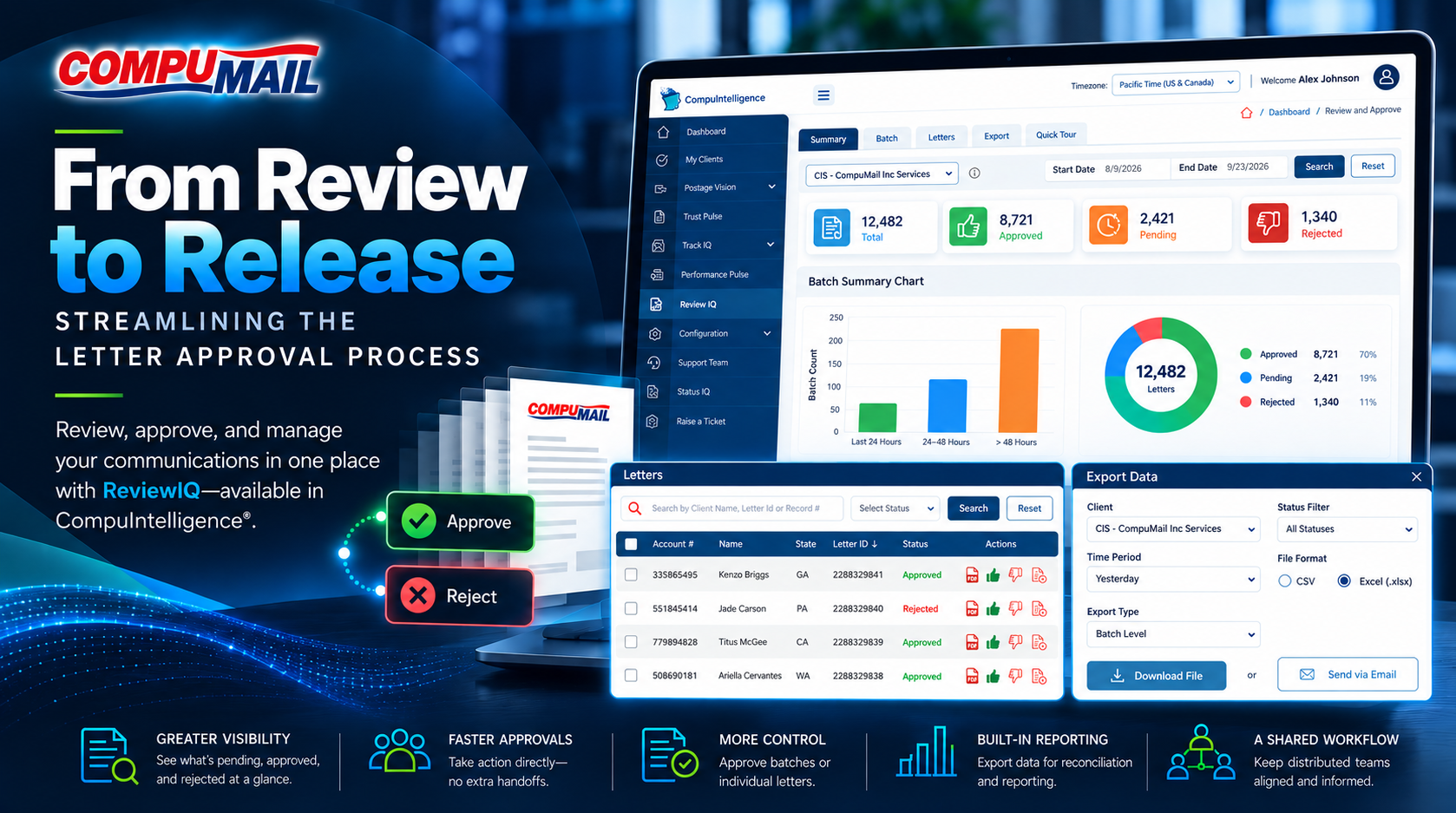
From Review to Release: Streamlining the Letter Approval Process
Reviewing communications before they move into production is an important part of many organizations’ workflows. It gives teams an opportunity to confirm that content, data, and other critical details are correct before communications reach their intended recipients.
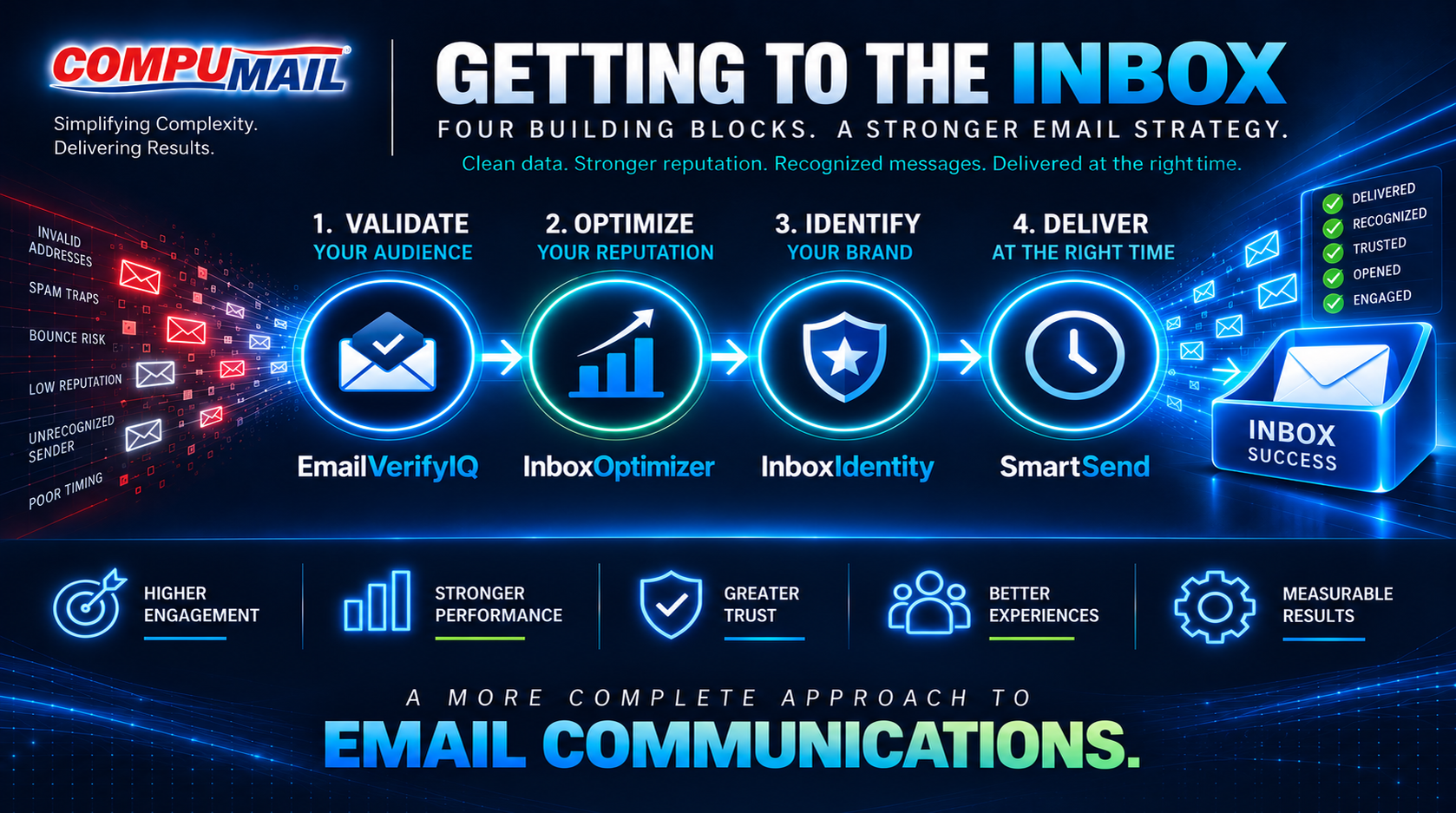
Getting to the Inbox: The Four Building Blocks of Better Email Performance
Today's email ecosystem evaluates a wide range of signals before and after a message is sent. The quality of your recipient data matters. Your sending history and reputation matter. Authentication matters. Recipient behavior matters. Even when a message arrives can influence whether it gets noticed.
.png)
From Blind Spots to Insights: Why Visibility Matters!
Learn how better visibility into production activity, postage spend, address quality, communication workflows, and file activity can help organizations uncover trends, identify issues earlier, and turn communication data into actionable business insights that support smarter decisions.
.png)
What Could You Do With 27% More Space on Your Mailpiece?
Moving from letter-size to legal-size paper creates approximately 27% more content area—opening new opportunities for calls to action, QR codes, regulatory content, and smarter document design.
.png)
Security Isn't a Feature. It's the Foundation.
Whether it's a billing statement, healthcare notice, collection letter, or account notification, organizations are responsible for protecting sensitive consumer information at every stage of the communication lifecycle. That responsibility extends far beyond simply delivering a document.
.png)
A Gold Glove Customer Experience: Precision, Partnership, and Proactive Service from End to End
Baseball fans love the highlight-reel plays. The diving stop, the throw from deep in the hole, the game-saving catch. Those moments earn applause. But ask any coach what wins championships, and the answer is different.
.png)
Don't Leave a Runner on Base: How Address Hygiene Improves Delivery Rates and Reduces Waste
In baseball, getting runners on base is only half the battle. The teams that consistently score are the ones that capitalize on every opportunity instead of leaving runners stranded.
The Rise of the Phygital Consumer: Why Print, Email, and SMS Work Better Together
Discover why today's consumers respond best to integrated print, email, and SMS communication strategies. Learn how omnichannel engagement improves visibility, response rates, consumer experience, and business outcomes.
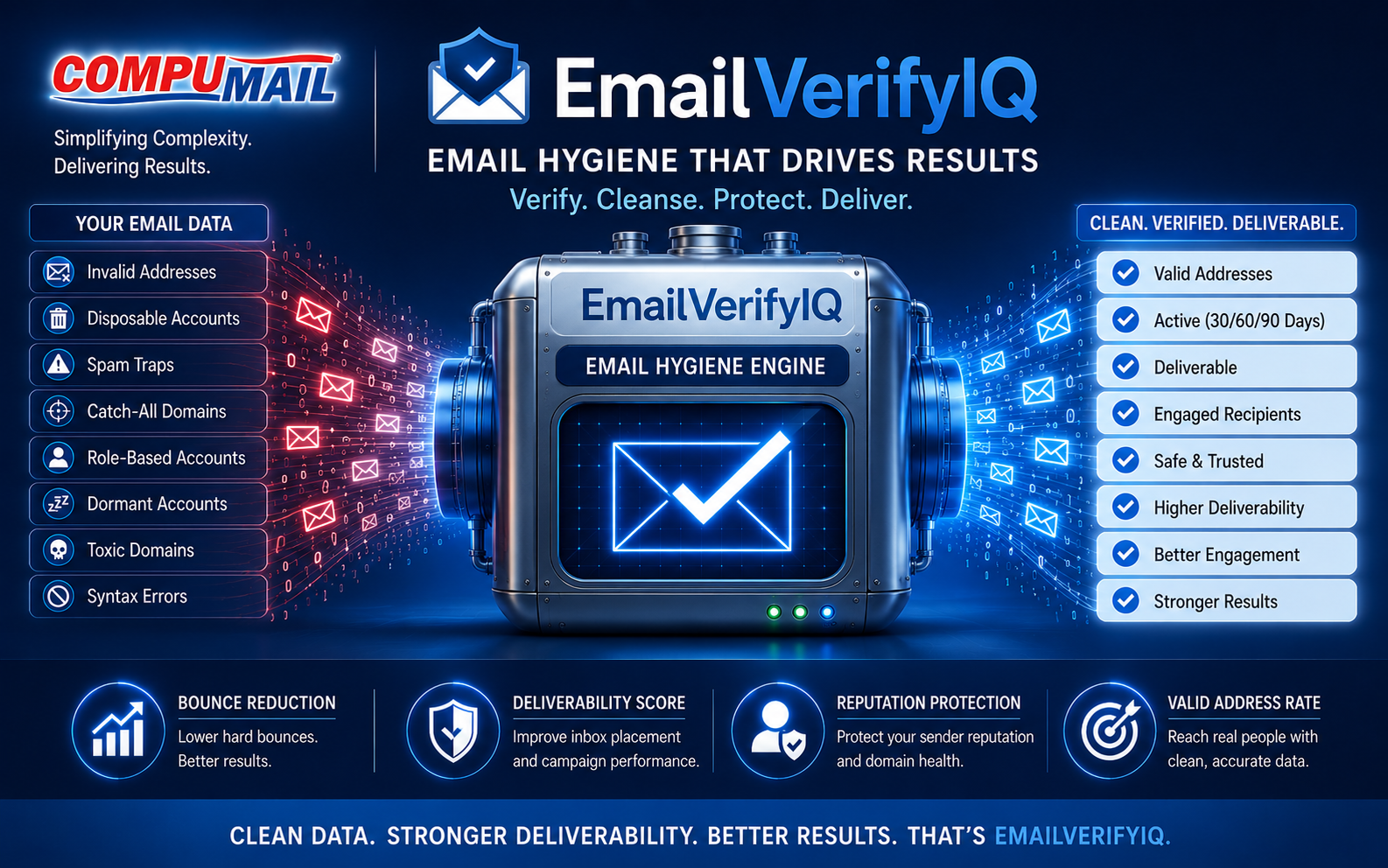
Meet EmailVerifyIQ: Why Email Address Hygiene Matters Just as Much as Address Hygiene
Improve email deliverability, reduce bounce rates, and protect your sender reputation with EmailVerifyIQ. Verify email addresses before deployment and maximize campaign performance.
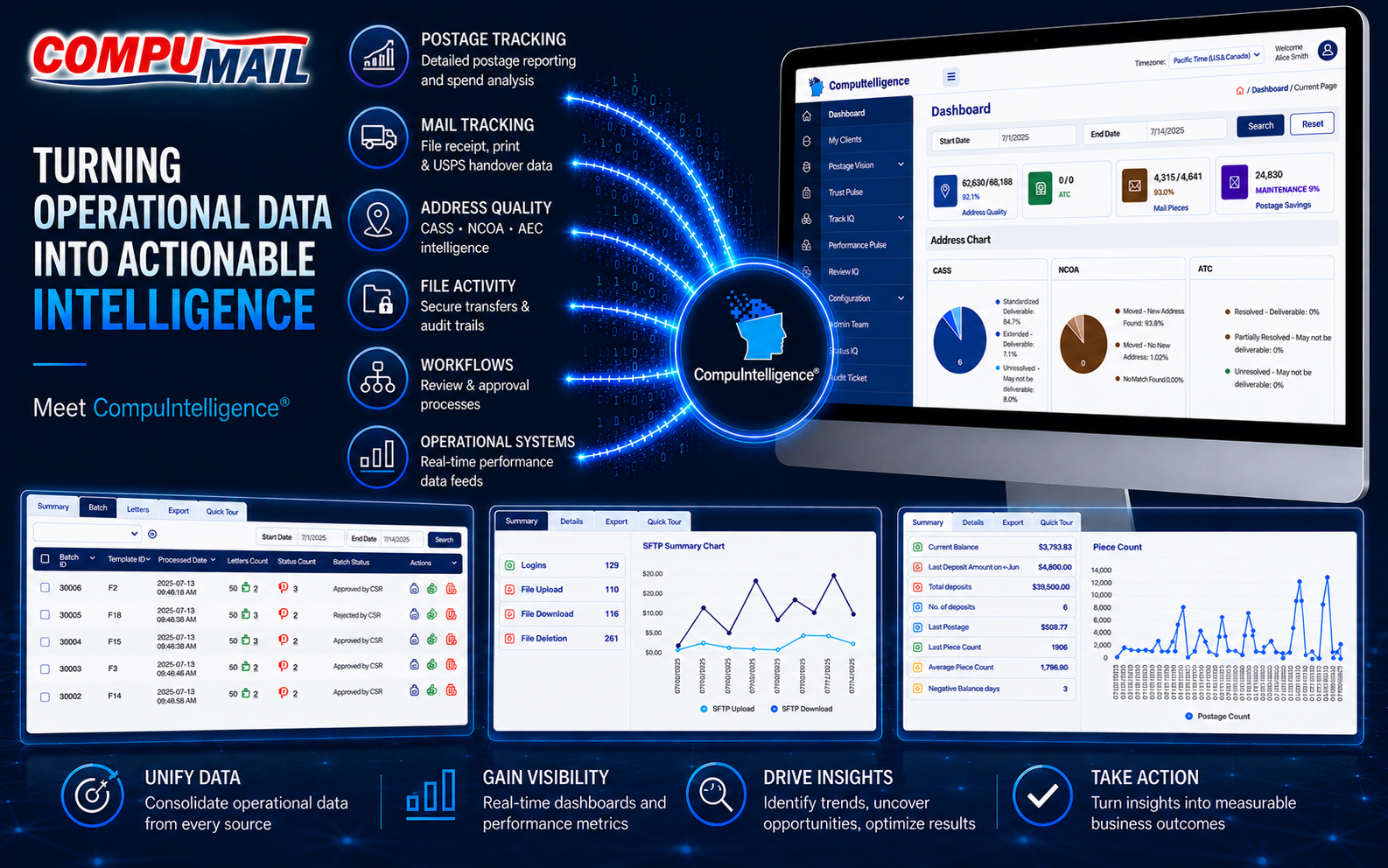
Meet CompuIntelligence® Communication Intelligence & Reporting Platform
In today's business environment, organizations generate more communication data than ever before. Every email, print campaign, SMS notification, compliance review, and consumer interaction creates valuable information.

