Having multiple communication channels isn't enough. Discover how flexible omnichannel and waterfall workflows connect print, email, and digital communications using client-defined business rules. Learn how smarter routing decisions can reduce unnecessary costs, adapt to delivery challenges, and create a more effective consumer journey from first notice to final resolution.


.png)


Every Missed Delivery Is a Missed Opportunity
In baseball, getting runners on base is only half the battle. The teams that consistently score are the ones that capitalize on every opportunity instead of leaving runners stranded. The same principle applies to consumer communications. Every letter you print, prepare, and mail represents an investment. Printing costs, postage, materials, production time, and compliance requirements all add up before your communication ever reaches the mailbox.
But if the address is outdated, incomplete, or inaccurate, that investment never has the opportunity to produce a result. Instead of reaching the intended recipient, your communication becomes undeliverable, creating additional costs, unnecessary delays, and more manual work for your organization.
That's why successful mail programs don't rely on a single address verification process. They use a layered address hygiene strategy designed to improve address quality before mail enters the postal stream and continue learning from every mail piece after it's sent.
The Hidden Cost of Poor Address Quality
Consumer data changes constantly.
- People relocate
- Apartment numbers change
- Street names are entered incorrectly
- Businesses move
- Addresses are recorded with missing or incorrect information
According to the USPS, millions of Americans file permanent change-of-address requests each year, making address quality an ongoing challenge rather than a one-time cleanup.
Without proper address hygiene, organizations often experience:
- Higher postage and printing costs
- Increased undeliverable mail
- Manual return mail processing
- Delayed consumer communications
- Lower response rate
- Compliance risks when required notices never reach the intended recipient
The good news?
Many of these problems can be prevented long before the first envelope is printed.
Step 1: Get Every Player in Position with NCOA®
Imagine discovering that your consumer moved three months ago, but you don't find out until after you've already mailed an important communication. National Change of Address (NCOA) helps prevent that. Using the USPS NCOALink® database, which contains approximately 160 million permanent change-of-address records—mailing lists are compared against recently reported moves before mail is produced.
When a valid forwarding address is available, the mailing address can be updated automatically prior to printing. If a move is confirmed without a forwarding address, the record can be held instead of mailing to an address that is known to be undeliverable. Think of NCOA as advancing the runner before the pitch is thrown. Instead of mailing to yesterday's address, you're giving your communication its best chance to reach today's consumer.
Step 2: Fix Bad Addresses Before They Strike Out with AEC
Not every bad address is caused by someone moving. Sometimes the address itself simply isn't complete enough for USPS automation.
Examples include:
- Misspelled street names
- Missing apartment numbers
- Incorrect abbreviations
- improper formatting
- missing address elements
Address Element Correction (AEC) is designed specifically for these situations. After USPS Coding Accuracy Support System (CASS)™ processing standardizes, validates, and corrects addresses to meet USPS mailing standards, any addresses that still cannot be fully standardized are passed to AEC, which applies additional USPS address correction logic to repair missing or incorrect address elements. The result is a complete, standardized address that can be matched to a valid ZIP+4® and delivered more accurately.
It's the difference between mailing to:
123 Wwetmont
instead of
123 Westmont
One small correction can make the difference between delivery and return.
Step 3: Learn From Every Play with ACS
Even the cleanest mailing list can't predict every move. That's where Address Change Service (ACS) comes into play. ACS works after mail has entered the postal system.
Instead of waiting for paper address correction notices to arrive—or manually processing returned mail—the USPS electronically sends change-of-address information and delivery status updates back to your organization. Depending on the selected USPS endorsement, mail may also be forwarded to the recipient while the updated address is reported electronically.
This allows organizations to:
- Continuously improve consumer records
- Reduce manual proccessing
- Update future mailings faster
- keep databases current without additional effort
Every mailing becomes an opportunity to improve the next one.
Step 4: Turn Return Mail Into Actionable Data with ERM
Traditional return mail creates a surprising amount of hidden work.
Someone must:
- Receive the returned envelope
- Review the reason for the return
- Update internal systems
- Dispose of sensitive documents securley
Electronic Return Mail (ERM) modernizes that entire process. Instead of physically receiving undeliverable mail, the USPS securely destroys eligible mail pieces and provides electronic notifications containing forwarding information (when available) or the reason the mail could not be delivered. Organizations receive structured electronic files that can be processed far more quickly than stacks of returned envelopes. Rather than treating return mail as a manual chore, ERM transforms it into valuable operational data.
Winning Teams Don't Rely on One Good Play
Address quality isn't a single event. It's an ongoing process. The strongest mail programs combine multiple USPS-supported services into a continuous improvement cycle:NCOA updates addresses before mailing.
- NCOA updates addresses before mailing.
- AEC repairs incomplete or inaccurate addresses.
- ACS captures address changes after mailing.
- ERM converts returned mail into electronic intelligence for faster processing.
Together, these services reduce waste, improve deliverability, lower operational costs, and create cleaner consumer data over time. CompuMail's address enhancement workflow is designed around this layered approach, with CASS address standardization and validation, AEC, NCOA, ACS, and ERM working together before, during, and after the mailing process.
Don't Leave Your Communications Stranded
Every undeliverable mail piece represents more than wasted postage. It represents a missed opportunity to connect with a consumer, collect a payment, satisfy a compliance requirement, or strengthen a relationship.
Just like a championship baseball team works to bring every runner home, successful organizations work to maximize every communication they send. A comprehensive address hygiene strategy helps ensure your mail reaches the right person, at the right address, while reducing unnecessary costs and improving the quality of your consumer data with every mailing.
Ready to Improve Your Delivery Rate?
CompuMail's Address Enhancement Solutions combine NCOA, AEC, ACS, and Electronic Return Mail (ERM) into a comprehensive address quality strategy that helps organizations reduce undeliverable mail, improve delivery rates, lower postage waste, and maintain cleaner consumer records.
Contact CompuMail today to learn how a layered address hygiene strategy can help every communication reach home safely.
Latest insights from our articles
Explore a collection of curated articles designed to help you stay ahead in multichannel communication, compliance, and digital transformation.
.png)
From First Notice to Final Resolution: Building an Omnichannel Consumer Journey
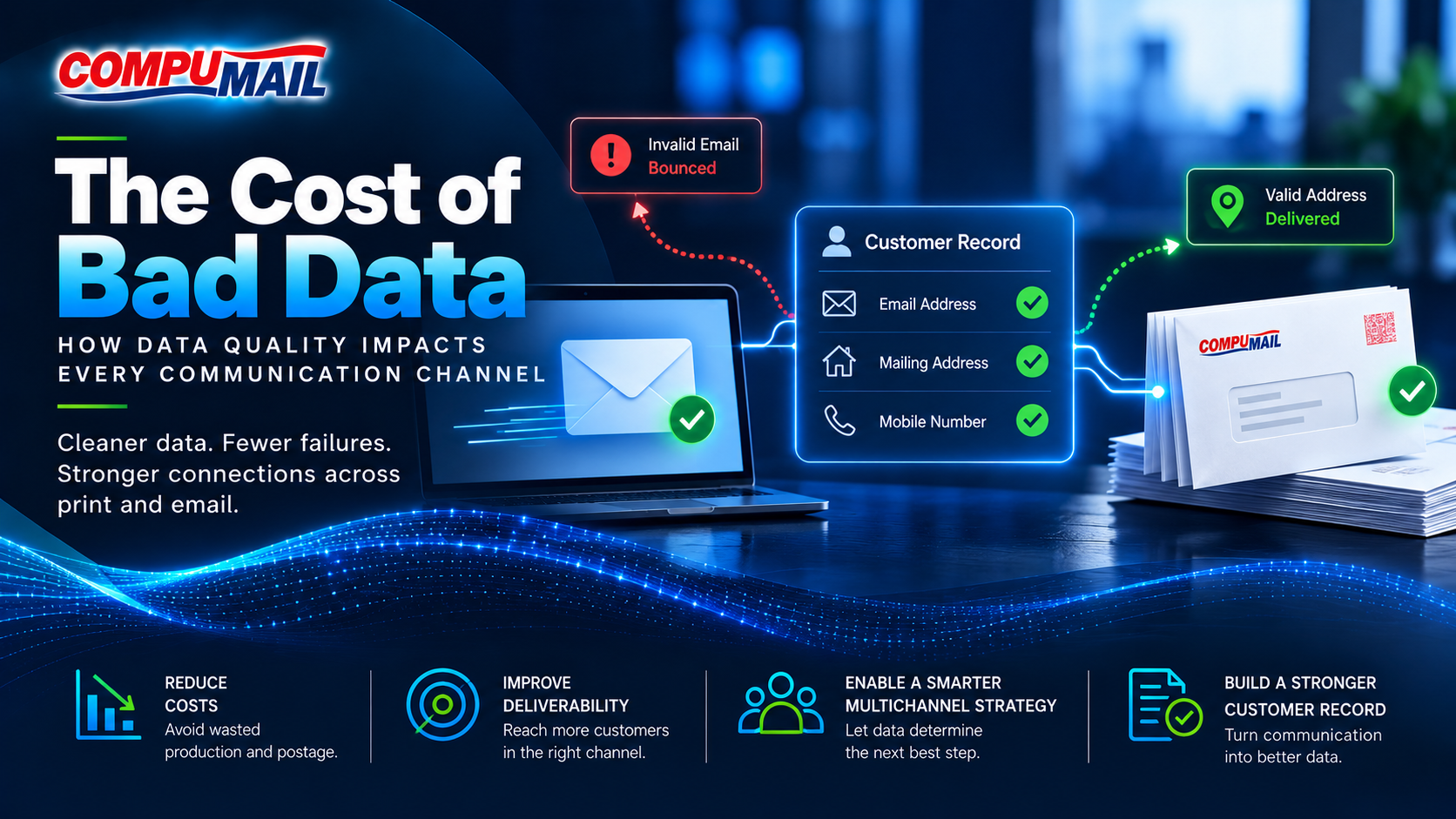
The Cost of Bad Data: How Data Quality Impacts Every Communication Channel
Poor data impacts more than delivery. Inaccurate or outdated postal and email data can lead to returned mail, wasted costs, email bounces, and missed customer communications. Learn how better data quality and address hygiene can improve deliverability, reduce waste, and strengthen your omnichannel communication strategy.
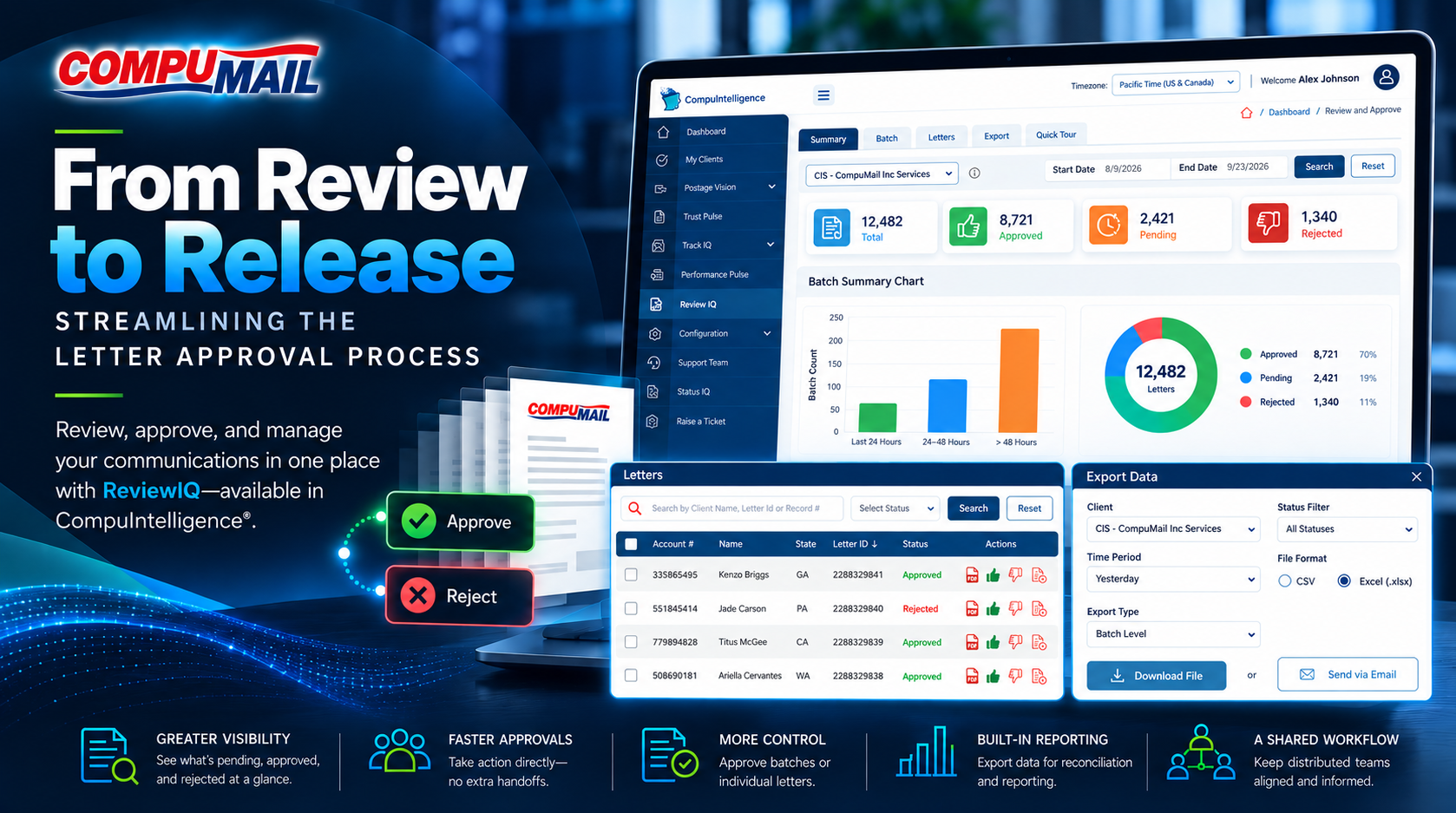
From Review to Release: Streamlining the Letter Approval Process
Reviewing communications before they move into production is an important part of many organizations’ workflows. It gives teams an opportunity to confirm that content, data, and other critical details are correct before communications reach their intended recipients.
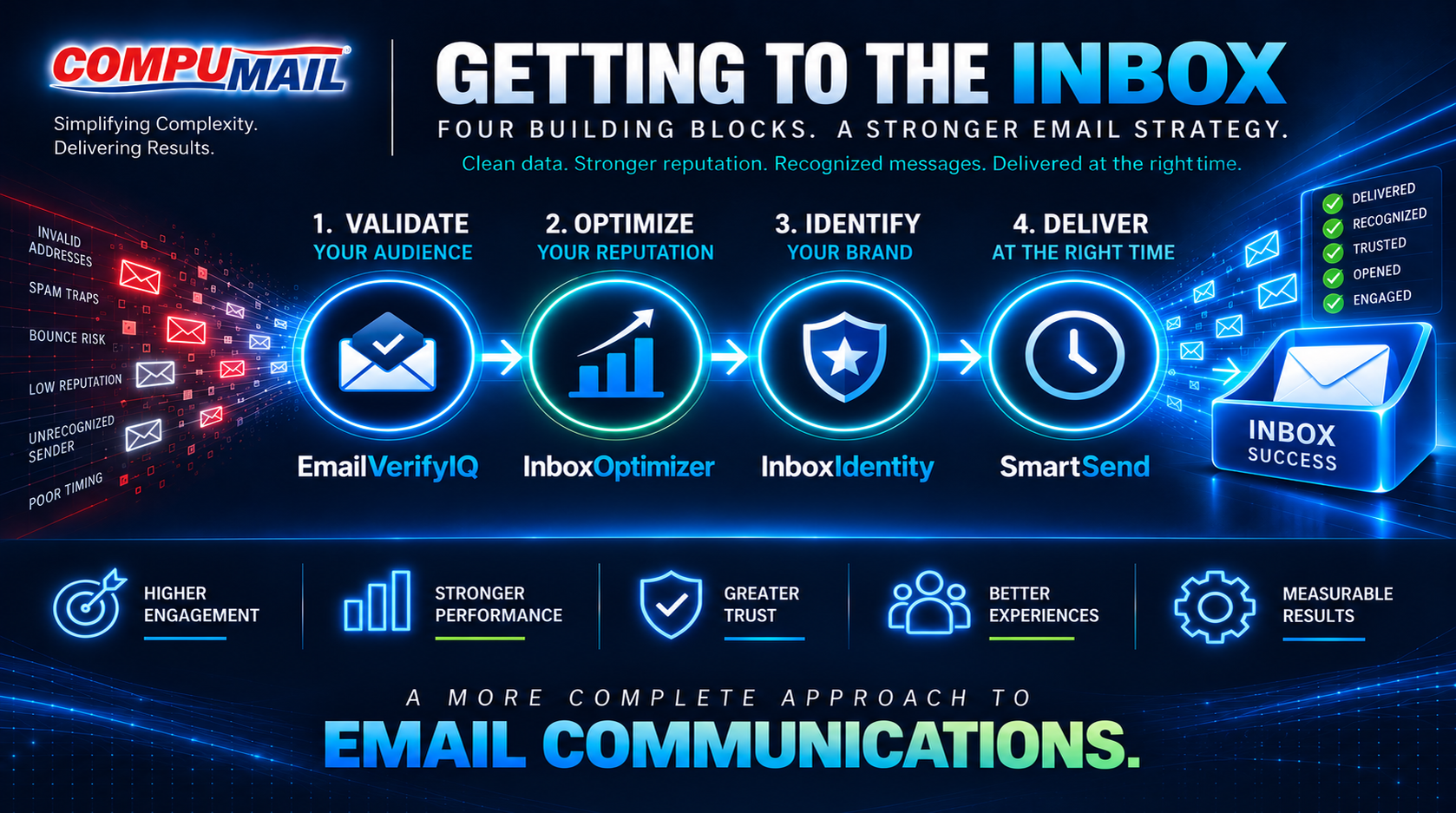
Getting to the Inbox: The Four Building Blocks of Better Email Performance
Today's email ecosystem evaluates a wide range of signals before and after a message is sent. The quality of your recipient data matters. Your sending history and reputation matter. Authentication matters. Recipient behavior matters. Even when a message arrives can influence whether it gets noticed.
.png)
From Blind Spots to Insights: Why Visibility Matters!
Learn how better visibility into production activity, postage spend, address quality, communication workflows, and file activity can help organizations uncover trends, identify issues earlier, and turn communication data into actionable business insights that support smarter decisions.
.png)
What Could You Do With 27% More Space on Your Mailpiece?
Moving from letter-size to legal-size paper creates approximately 27% more content area—opening new opportunities for calls to action, QR codes, regulatory content, and smarter document design.
.png)
Security Isn't a Feature. It's the Foundation.
Whether it's a billing statement, healthcare notice, collection letter, or account notification, organizations are responsible for protecting sensitive consumer information at every stage of the communication lifecycle. That responsibility extends far beyond simply delivering a document.
.png)
A Gold Glove Customer Experience: Precision, Partnership, and Proactive Service from End to End
Baseball fans love the highlight-reel plays. The diving stop, the throw from deep in the hole, the game-saving catch. Those moments earn applause. But ask any coach what wins championships, and the answer is different.
Don't Leave a Runner on Base: How Address Hygiene Improves Delivery Rates and Reduces Waste
In baseball, getting runners on base is only half the battle. The teams that consistently score are the ones that capitalize on every opportunity instead of leaving runners stranded.
.png)
The Rise of the Phygital Consumer: Why Print, Email, and SMS Work Better Together
Discover why today's consumers respond best to integrated print, email, and SMS communication strategies. Learn how omnichannel engagement improves visibility, response rates, consumer experience, and business outcomes.
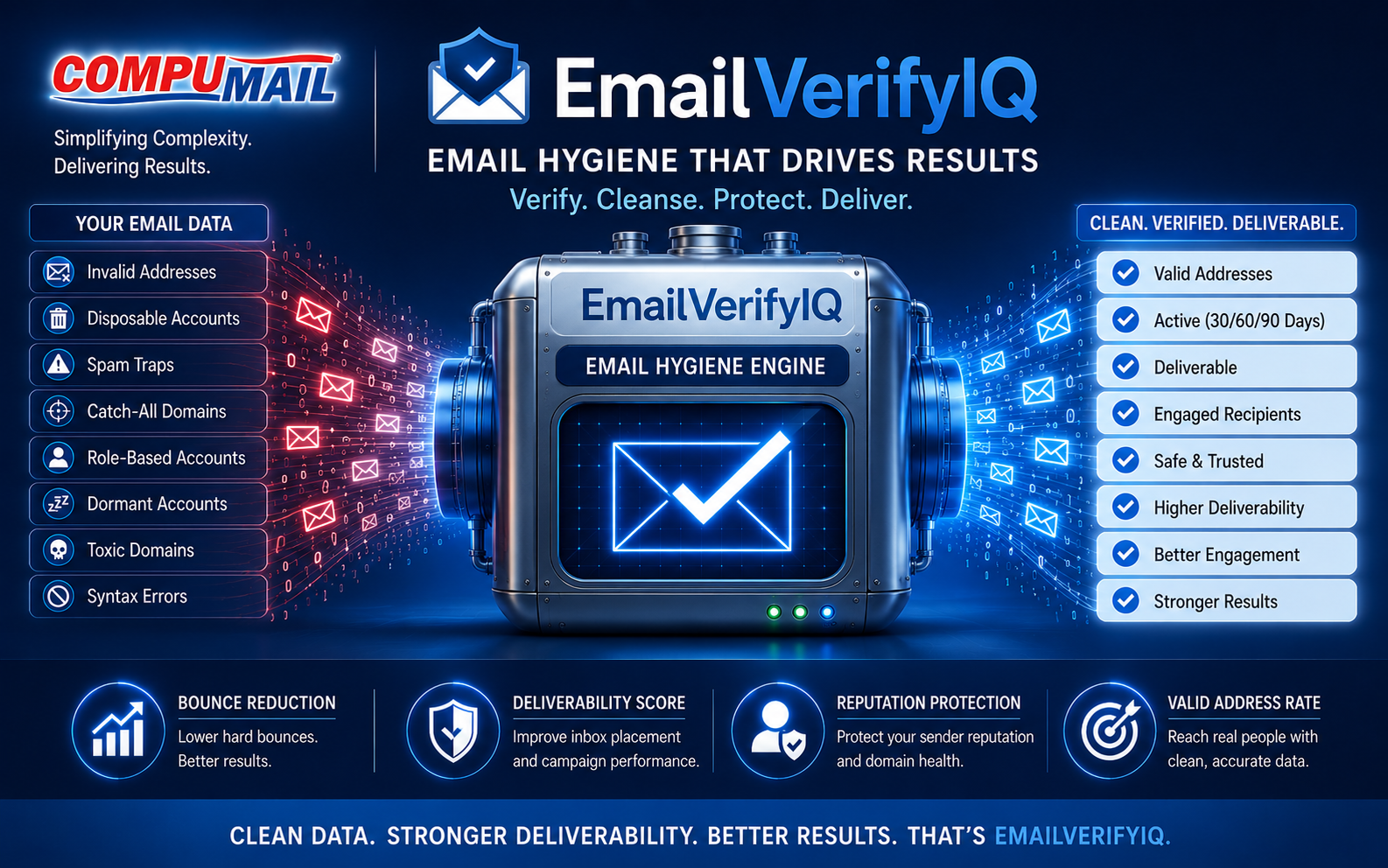
Meet EmailVerifyIQ: Why Email Address Hygiene Matters Just as Much as Address Hygiene
Improve email deliverability, reduce bounce rates, and protect your sender reputation with EmailVerifyIQ. Verify email addresses before deployment and maximize campaign performance.
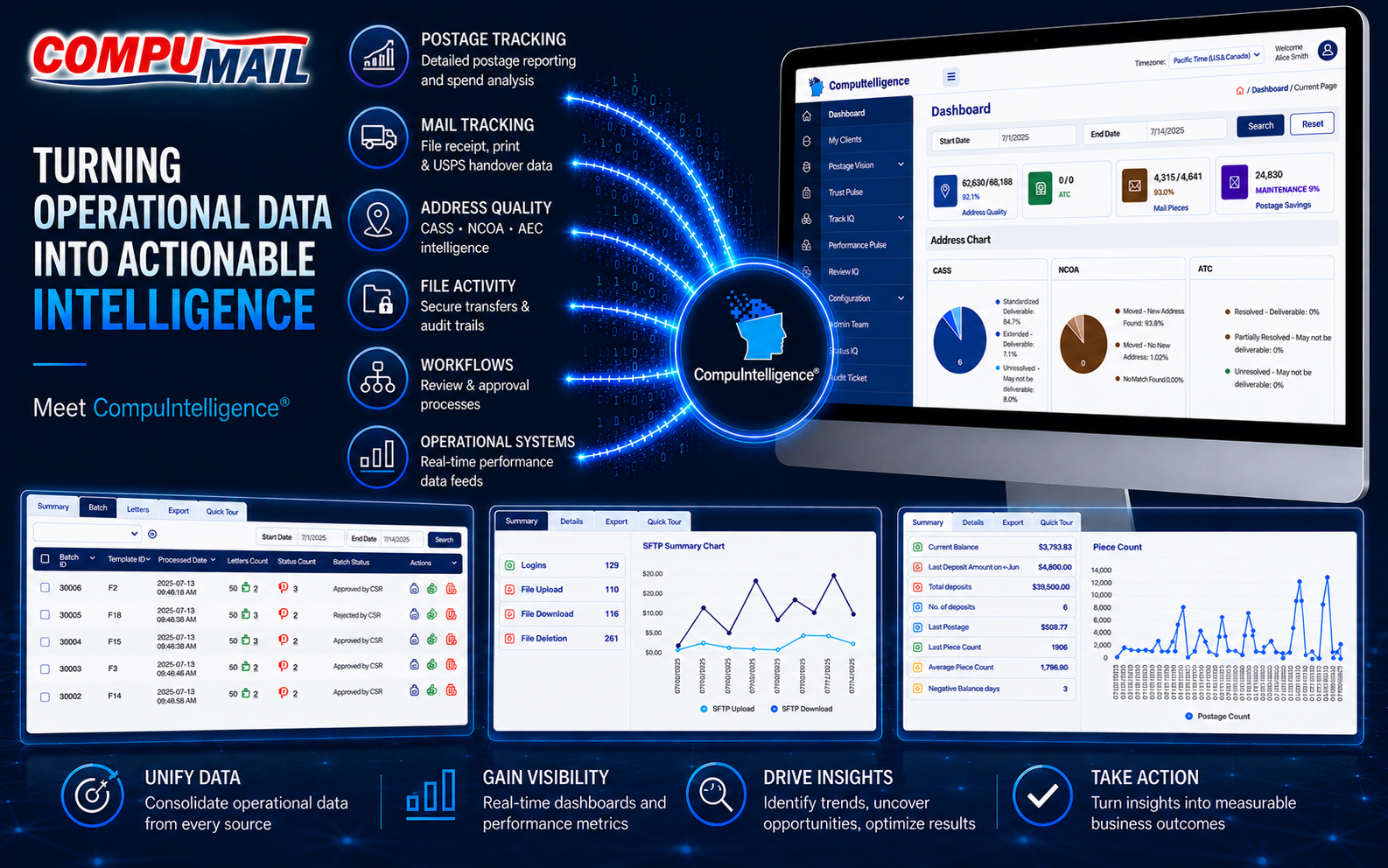
Meet CompuIntelligence® Communication Intelligence & Reporting Platform
In today's business environment, organizations generate more communication data than ever before. Every email, print campaign, SMS notification, compliance review, and consumer interaction creates valuable information.

