Reviewing communications before they move into production is an important part of many organizations’ workflows. It gives teams an opportunity to confirm that content, data, and other critical details are correct before communications reach their intended recipients.


.png)


Every consumer communication carries more than a message; it carries trust.
Whether it's a billing statement, healthcare notice, collection letter, or account notification, organizations are responsible for protecting sensitive consumer information at every stage of the communication lifecycle. That responsibility extends far beyond simply delivering a document. It requires secure systems, disciplined processes, continuous monitoring, and a culture of compliance that evolves alongside changing regulations and emerging cybersecurity threats.
For organizations operating in highly regulated industries, choosing a communications partner isn't simply about print quality, postage optimization, or omnichannel delivery capabilities. It's about selecting a partner that can demonstrate a mature, independently validated commitment to protecting consumer data while helping satisfy complex regulatory requirements.
At CompuMail, security and compliance aren't treated as individual initiatives or annual checkboxes. They're embedded into our operations, technology, and company culture to help ensure every communication is handled with the highest level of care.
Compliance Has Become a Business Requirement
The regulatory landscape continues to grow more complex each year. Organizations face increasing scrutiny from consumers, auditors, regulators, and business partners while defending against an ever-evolving cybersecurity threat landscape.
At the same time, consumers expect the organizations entrusted with their personal information to safeguard it with the highest standards of security and privacy. A single security incident can result in financial loss, regulatory penalties, operational disruption, and lasting reputational damage.
As a result, security has become a key factor in vendor selection. Organizations routinely evaluate service providers through security questionnaires, compliance reviews, third-party audits, and vendor risk assessments before awarding business.
Today, a mature security program isn't simply expected; it's essential.
Security Must Extend Across the Entire Communication Lifecycle
Protecting consumer information requires much more than firewalls and antivirus software. It demands a layered security strategy that safeguards sensitive data from the moment it's received until the final communication is delivered, and beyond.
That begins with secure data transmission using encrypted file transfer methods, including Secure File Transfer Protocol (SFTP), to protect client data as it moves into production. Once received, information is safeguarded through role-based access controls that ensure employees only have access to the systems and information necessary to perform their responsibilities.
Strong authentication practices, including multi-factor authentication (MFA), provide an additional layer of protection against unauthorized access, while continuous system monitoring helps identify and respond to potential security events before they become incidents.
Security extends beyond technology. Production environments are protected through 24/7 facility monitoring, controlled physical access, documented operating procedures, and secure destruction policies that ensure sensitive materials are disposed of appropriately once they have fulfilled their purpose.
Building a secure organization also means investing in people. Background checks, ongoing security awareness training, clearly defined policies, and a culture of accountability help ensure every employee understands their role in protecting client information.
When these administrative, technical, and physical safeguards work together, organizations gain confidence that sensitive consumer information is protected throughout the entire communication lifecycle.
Independent Validation Through Industry-Recognized Standards
Security programs should be measurable, repeatable, and independently validated. Industry certifications and regulatory frameworks provide assurance that established controls have been implemented, tested, and maintained against recognized standards.
CompuMail maintains multiple certifications and compliance programs that demonstrate our commitment to protecting sensitive consumer information across financial services, healthcare, government, collections, and other highly regulated industries.
FISMA (NIST SP 800-171 & NIST SP 800-53)
The Federal Information Security Modernization Act (FISMA), supported by the NIST SP 800-171 and NIST SP 800-53 security frameworks, establishes comprehensive requirements for protecting Controlled Unclassified Information (CUI) and other sensitive government data.
These frameworks address access control, risk management, incident response, system monitoring, configuration management, and continuous security improvement, demonstrating the operational maturity required to support organizations with rigorous security expectations.
SOC 2 Type II
SOC 2 Type II is one of the most respected independent assessments of an organization's operational security controls.
Unlike point-in-time certifications, a Type II audit evaluates how effectively security controls operate over an extended period, validating that established processes are consistently followed rather than simply documented. The assessment examines areas including security, availability, confidentiality, and operational effectiveness, providing clients with confidence that controls are working as intended every day.
PCI DSS v4.0.1
Organizations handling payment card information must maintain strict safeguards to protect sensitive financial data.
PCI DSS v4.0.1 establishes comprehensive requirements for securing payment environments through encryption, strong authentication, vulnerability management, continuous monitoring, and rigorous access controls to help protect cardholder information throughout processing and storage.
HIPAA & HITECH
Healthcare organizations depend on trusted partners capable of protecting Protected Health Information (PHI).
HIPAA and HITECH establish administrative, physical, and technical safeguards designed to preserve the confidentiality, integrity, and availability of sensitive healthcare information while supporting secure healthcare communications.
GLBA
The Gramm-Leach-Bliley Act (GLBA) requires financial institutions to safeguard consumers' nonpublic personal information through comprehensive information security programs and ongoing risk management practices.
Compliance supports strong governance, secure information handling, and the protection of sensitive financial information throughout the consumer communication process.
Compliance Is a Continuous Commitment
Security isn't something organizations achieve once—it's something they continuously maintain.
Cybersecurity threats evolve. Regulations change. New technologies emerge. Maintaining an effective security program requires ongoing investment in people, processes, and technology.
That commitment includes independent audits, regular risk assessments, policy reviews, employee education, vulnerability management, continuous monitoring, and operational improvements designed to strengthen security over time.
This philosophy of continuous improvement helps ensure security remains effective long after an audit has concluded or a certification has been earned.
Why It Matters for Your Organization
Selecting a communications partner with a mature security and compliance program helps reduce operational risk while supporting your own governance and regulatory initiatives.
Organizations benefit from partners that:
- Protect sensitive consumer information throughout the communication lifecycle.
- Maintain independently validated security controls.
- Support vendor risk assessments and third-party due diligence.
- Help simplify audit preparation and compliance reviews.
- Reduce operational and reputational risk.
- Strengthen business continuity and organizational resilience.
- Build consumer trust through secure, responsible information handling.
When security is built into every process rather than added after the fact, organizations gain confidence that their consumer communications are managed with the same level of care they expect from their own internal operations.
Security Built Into Every Communication
Every communication represents an opportunity to strengthen trust with the people you serve. Protecting the sensitive information contained within those communications requires more than technology alone—it requires disciplined processes, experienced professionals, independently validated controls, and an unwavering commitment to continuous improvement.
For decades, CompuMail has invested in building a secure, compliant operating environment that enables organizations to communicate confidently in even the most highly regulated industries. From secure data intake and controlled production environments to independently validated compliance frameworks and ongoing security governance, every aspect of our operation is designed with one objective in mind:
Protecting the information your customers trust you to protect.
Latest insights from our articles
Explore a collection of curated articles designed to help you stay ahead in multichannel communication, compliance, and digital transformation.
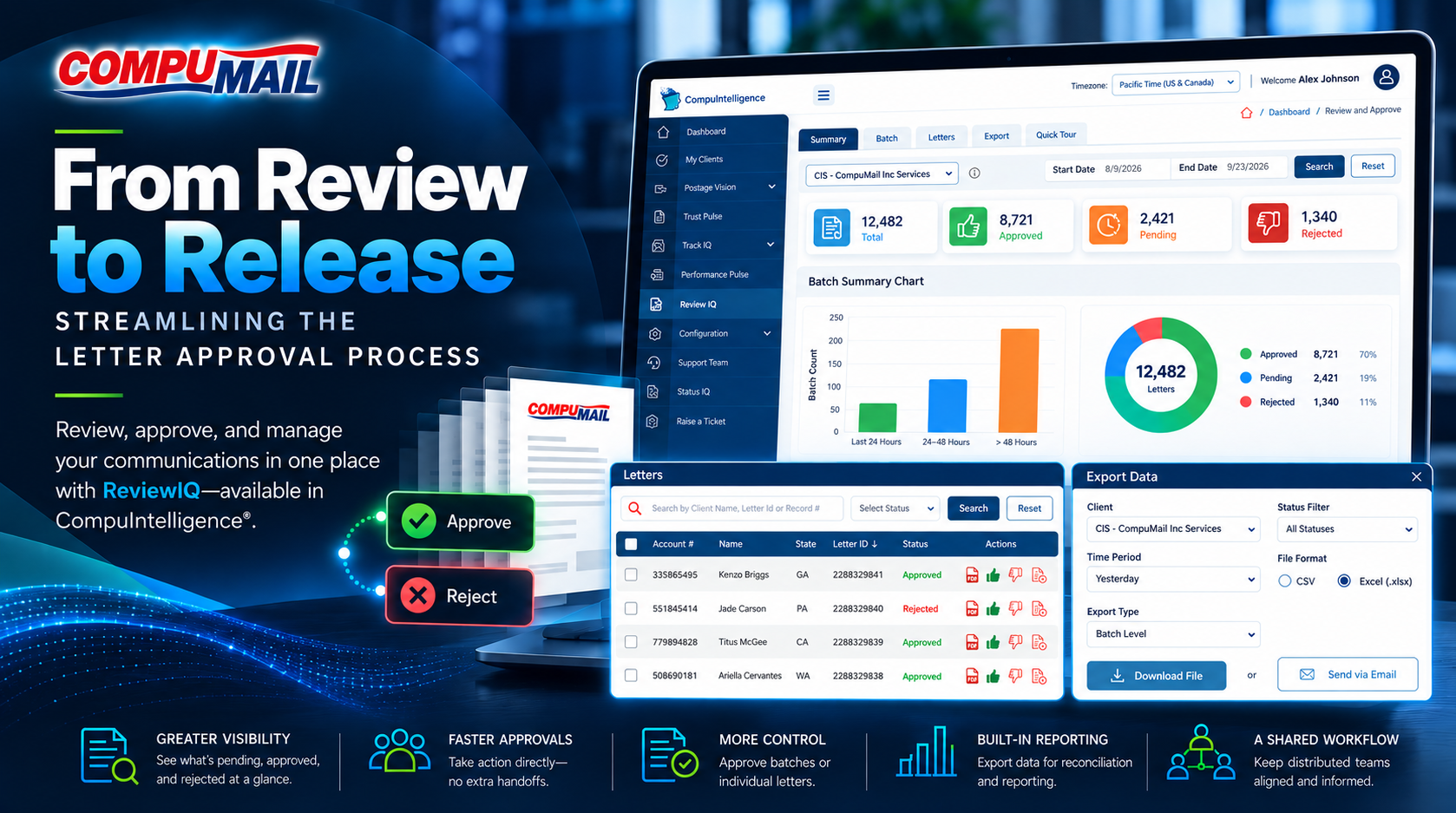
From Review to Release: Streamlining the Letter Approval Process
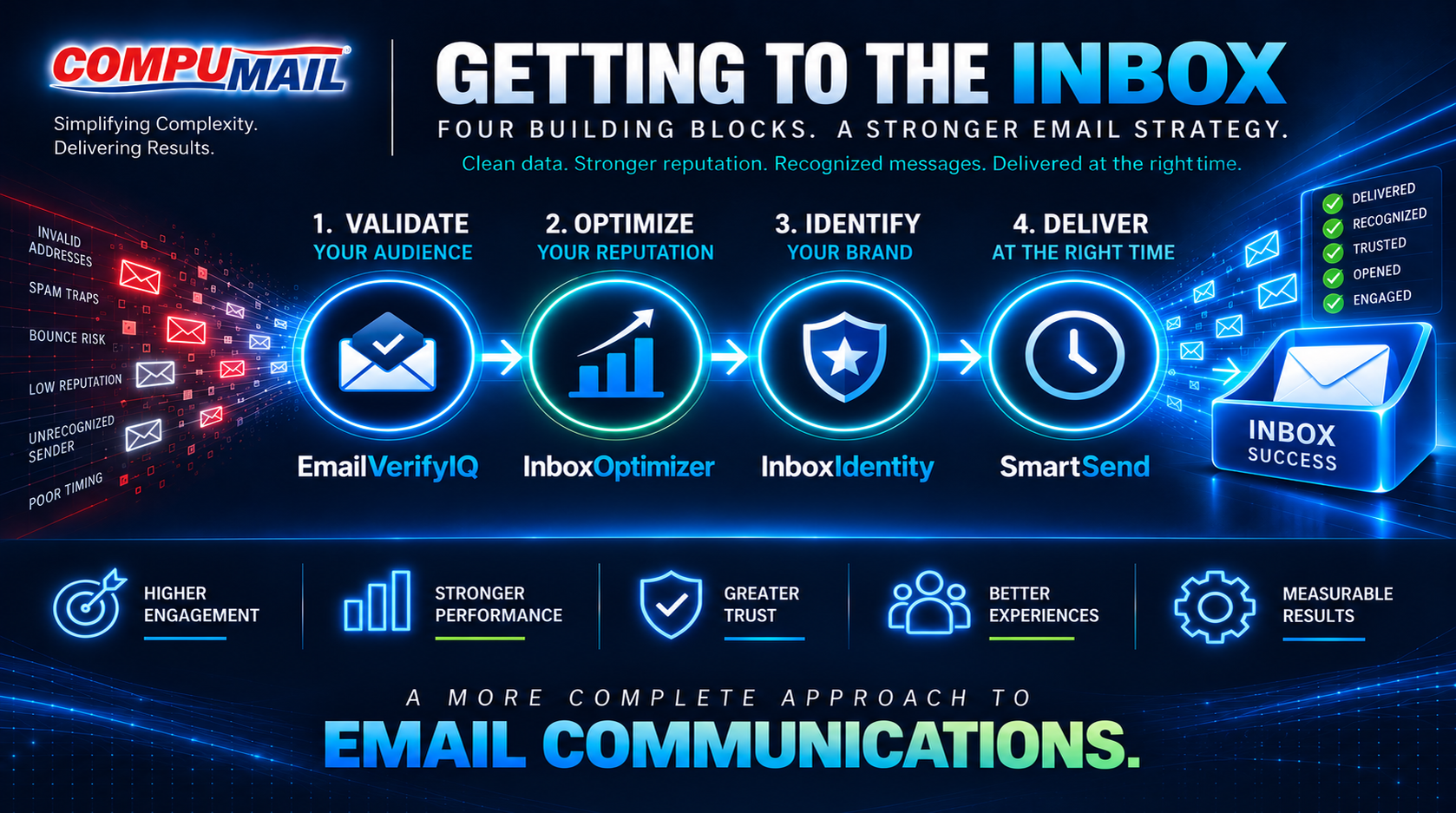
Getting to the Inbox: The Four Building Blocks of Better Email Performance
Today's email ecosystem evaluates a wide range of signals before and after a message is sent. The quality of your recipient data matters. Your sending history and reputation matter. Authentication matters. Recipient behavior matters. Even when a message arrives can influence whether it gets noticed.
.png)
From Blind Spots to Insights: Why Visibility Matters!
Learn how better visibility into production activity, postage spend, address quality, communication workflows, and file activity can help organizations uncover trends, identify issues earlier, and turn communication data into actionable business insights that support smarter decisions.
.png)
What Could You Do With 27% More Space on Your Mailpiece?
Moving from letter-size to legal-size paper creates approximately 27% more content area—opening new opportunities for calls to action, QR codes, regulatory content, and smarter document design.
Security Isn't a Feature. It's the Foundation.
Whether it's a billing statement, healthcare notice, collection letter, or account notification, organizations are responsible for protecting sensitive consumer information at every stage of the communication lifecycle. That responsibility extends far beyond simply delivering a document.
.png)
A Gold Glove Customer Experience: Precision, Partnership, and Proactive Service from End to End
Baseball fans love the highlight-reel plays. The diving stop, the throw from deep in the hole, the game-saving catch. Those moments earn applause. But ask any coach what wins championships, and the answer is different.
.png)
Don't Leave a Runner on Base: How Address Hygiene Improves Delivery Rates and Reduces Waste
In baseball, getting runners on base is only half the battle. The teams that consistently score are the ones that capitalize on every opportunity instead of leaving runners stranded.
.png)
The Rise of the Phygital Consumer: Why Print, Email, and SMS Work Better Together
Discover why today's consumers respond best to integrated print, email, and SMS communication strategies. Learn how omnichannel engagement improves visibility, response rates, consumer experience, and business outcomes.
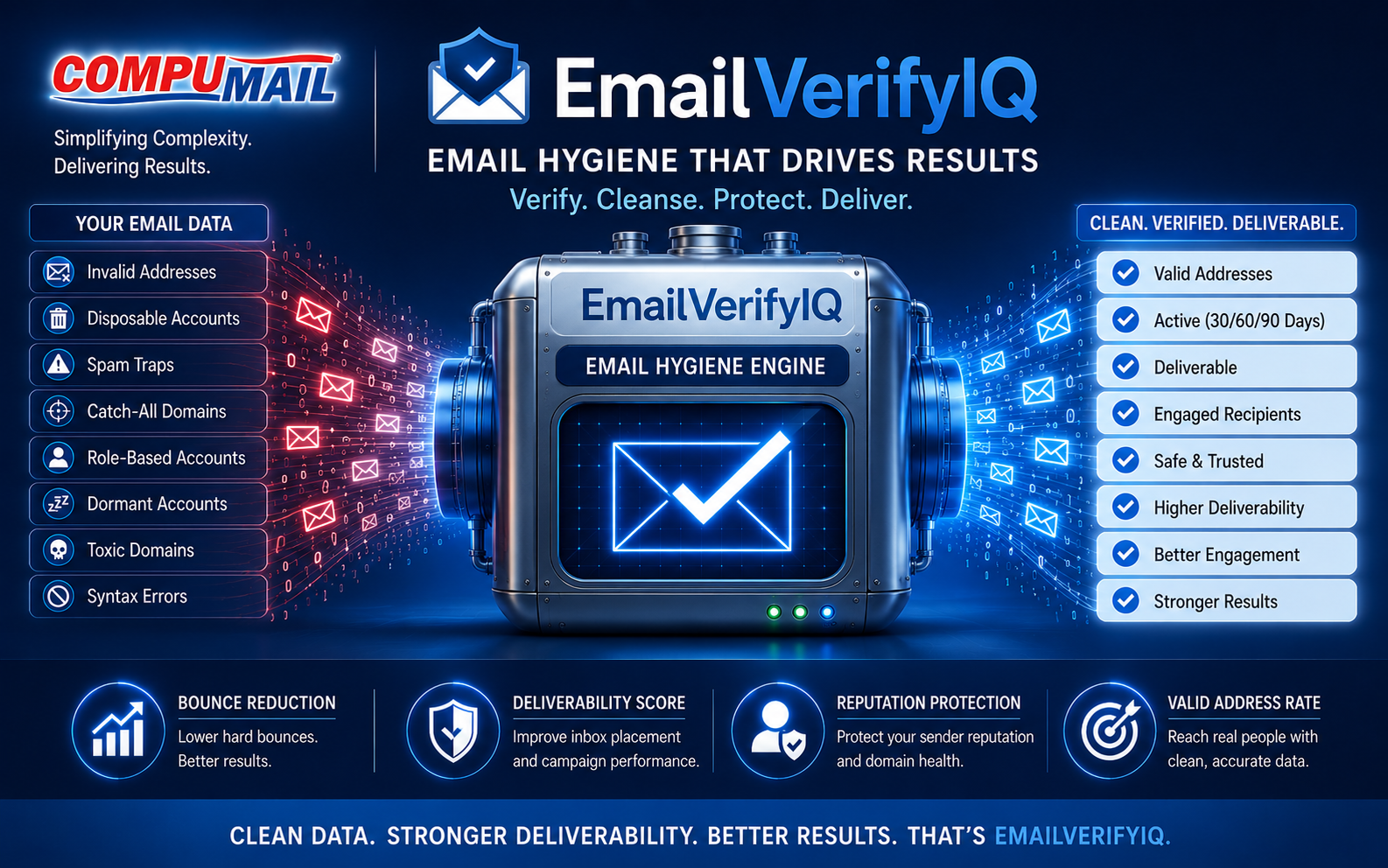
Meet EmailVerifyIQ: Why Email Address Hygiene Matters Just as Much as Address Hygiene
Improve email deliverability, reduce bounce rates, and protect your sender reputation with EmailVerifyIQ. Verify email addresses before deployment and maximize campaign performance.
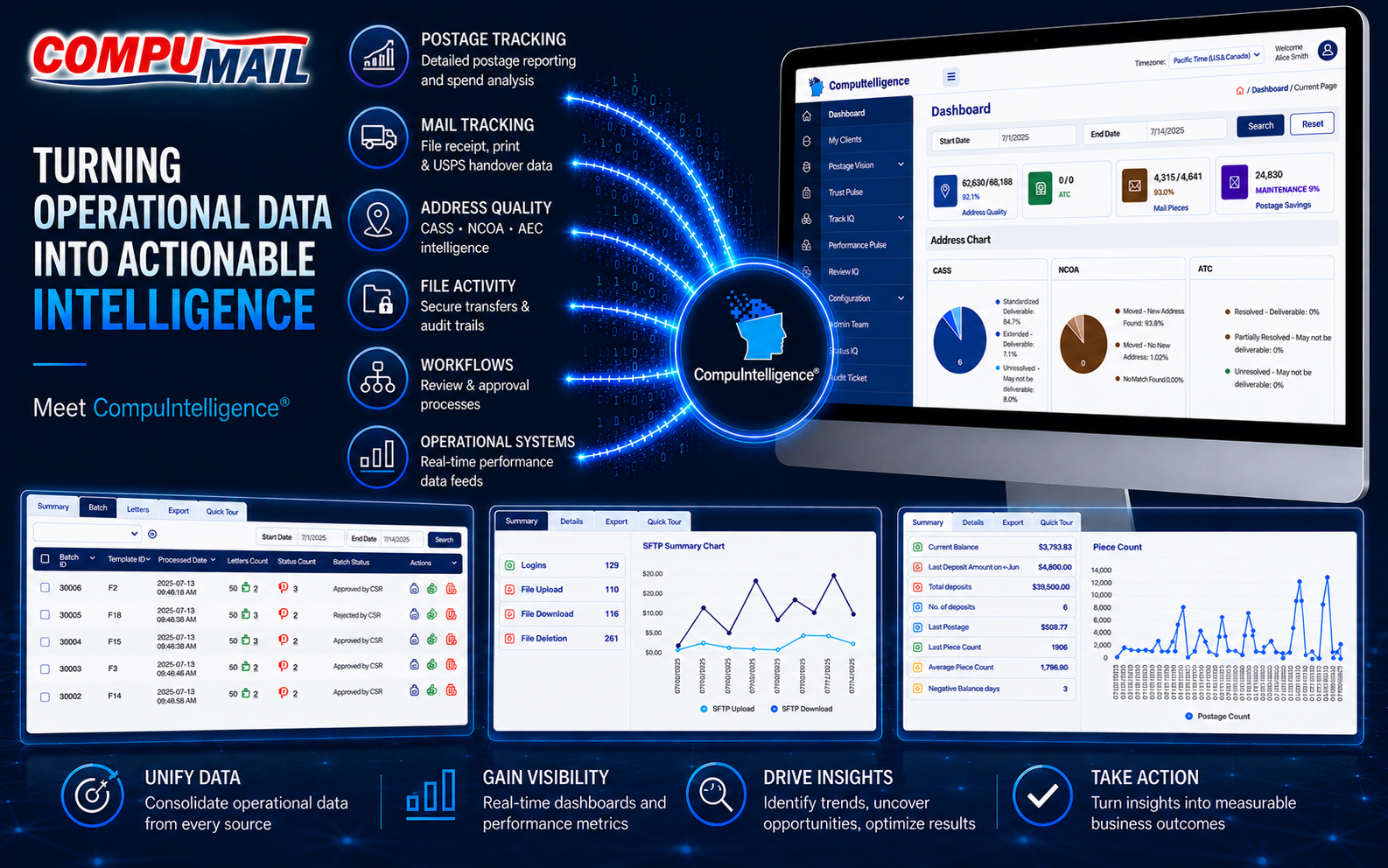
Meet CompuIntelligence® Communication Intelligence & Reporting Platform
In today's business environment, organizations generate more communication data than ever before. Every email, print campaign, SMS notification, compliance review, and consumer interaction creates valuable information.

