Having multiple communication channels isn't enough. Discover how flexible omnichannel and waterfall workflows connect print, email, and digital communications using client-defined business rules. Learn how smarter routing decisions can reduce unnecessary costs, adapt to delivery challenges, and create a more effective consumer journey from first notice to final resolution.


.png)


Reaching a consumer is rarely as simple as sending one message through one channel.
An email may be the fastest and most cost-effective way to begin a conversation, but what happens if that email cannot be delivered? A printed letter may provide another path, but what if business rules determine that physical mail should not be sent? And where do text messaging and other digital communications fit into the journey?
These are the questions that make omnichannel communication more than simply having multiple channels available.
A true omnichannel strategy connects those channels around a defined objective—using data, delivery information, and business rules to determine what should happen next.
For organizations managing high volumes of consumer communications, that can mean building a more intentional path from the first notice to the action or resolution the communication is designed to achieve.
Multichannel vs. Omnichannel: There Is a Difference
Having the ability to communicate through print, email, and text does not automatically create an omnichannel experience.
That is multichannel communication: multiple channels are available, but they may operate independently.
Omnichannel communication is about coordination.
Instead of treating each channel as a separate communication path, an omnichannel strategy considers how those channels can work together.
For example, an organization may choose to begin with email because of its speed and lower delivery cost. If the email is successfully delivered, the workflow may stop there. If it is undeliverable, the communication can move to print.
That creates a simple waterfall:
Email → Delivery Successful → Stop
Email → Undeliverable → Print
But that is only the beginning of what a waterfall strategy can accomplish.
The Waterfall Doesn't Have to Follow a Straight Line
One of the most powerful aspects of an omnichannel strategy is that the communication path does not have to be identical for every consumer.
Business logic can determine which path a communication follows.
Consider a physical mailing that goes through address hygiene and National Change of Address (NCOA) processing. Updated address information could indicate that a consumer has moved to a state where the organization has determined that particular physical communication should not be sent.
Rather than simply stopping the communication, the workflow could apply the client's predefined business rules and route the communication to another approved channel, such as email.
In another scenario, the organization might choose to:
Start with email → Move to print if the email is undeliverable → Incorporate a digital or text-based communication where appropriate.
The important point isn't the specific order.
The important point is that the workflow can be built around the organization's business requirements rather than forcing every communication through the same predetermined path.
That flexibility can be particularly valuable in highly regulated industries where communication requirements, operational rules, account characteristics, and available contact information can vary significantly from one consumer to another.
Start With the Most Appropriate Channel
For many organizations, cost is an important factor in determining where the journey begins.
Email can often provide a fast, cost-effective first attempt. When valid email information is available and the communication is appropriate for that channel, beginning digitally can reduce the number of communications that need to move into physical production.
When an email cannot be delivered, the workflow can automatically move the communication into print.
This approach creates a practical waterfall in which more expensive communication channels are used when necessary rather than by default.
But cost should not be the only consideration.
Client-defined business logic can also account for available data, address quality, delivery status, account characteristics, communication type, or other information supplied as part of the workflow.
The result is a communication strategy built around decision-making rather than duplication.
Data Makes the Journey Possible
An omnichannel strategy is only as effective as the data behind it.
That is why data quality and omnichannel communication are closely connected.
A valid email address creates a digital path. An accurate mailing address creates a physical path. Address hygiene and NCOA processing can identify changes that may affect how a communication should be handled.
Each piece of information creates another opportunity to make a better routing decision.
This is also where organizations can begin incorporating consumer communication preferences into their own strategy.
For example, a link within an email or a QR code on a printed communication could direct consumers to a client-managed portal where they can indicate how they prefer to receive future communications. That preference data can then become part of the information the organization uses when determining future communication instructions.
The goal is not simply to collect more data.
It is to use available data to make each communication path more intentional.
Connecting Communication to Consumer Action
Ultimately, organizations are not sending communications simply for the sake of delivering a message.
They are trying to encourage an action.
Depending on the communication, that action could be making a payment, responding to a notice, reviewing an account, accepting a settlement offer, visiting a payment portal, or completing another requested step.
The communication journey should support that objective.
This is where the relationship between the organization and its communication provider becomes especially important.
CompuMail can manage the delivery and routing of communications based on established business logic, while the client maintains visibility into consumer actions that occur within its own systems.
For example, a consumer may receive an email and follow a link to the client's payment portal. Or they may scan a QR code from a printed letter and complete an action online.
That response happens within the client's environment.
If the client wants that activity to influence future communications, the resulting information can be incorporated into subsequent instructions or workflows provided to CompuMail.
In this way, the communication journey can extend beyond delivery while still allowing each organization to maintain control over its consumer interactions and business rules.
Building the Logic Behind the Journey
At CompuMail, omnichannel communication begins with understanding what the client is trying to accomplish.
Through CompuFlow, incoming client data can be evaluated and processed according to defined business rules that determine how communications should move through the workflow.
Those rules can be relatively simple:
Send email → If undeliverable → Send print
Or they can become more sophisticated based on the organization's requirements:
Evaluate data → Apply business rules → Determine appropriate channel → Process communication → Route exceptions to an alternate path
Print, email, and digital messaging options can then work together as components of a broader communication strategy.
Rather than requiring organizations to adapt their processes to a rigid communication model, the objective is to build the workflow around the organization's business logic.
From First Notice to Final Resolution
The consumer journey is rarely a straight line.
Contact information changes. Emails bounce. Mailing addresses change. Business rules differ. Some consumers respond immediately, while others may require another communication through a different channel.
An effective omnichannel strategy recognizes that reality.
It creates a framework where communications can move intelligently between available channels based on the information and business rules available at each stage.
And as organizations gain additional insight into consumer preferences and responses within their own systems, that information can help inform what happens next.
The result is not simply more communication.
It is more intentional communication—using the right available channel, applying the right business logic, and creating a clearer path from first notice to final resolution.
At CompuMail, we help organizations build flexible communication workflows that bring print, email, data processing, and digital delivery options together around their unique business requirements.
Ready to explore what an omnichannel waterfall could look like for your organization?
Latest insights from our articles
Explore a collection of curated articles designed to help you stay ahead in multichannel communication, compliance, and digital transformation.
From First Notice to Final Resolution: Building an Omnichannel Consumer Journey
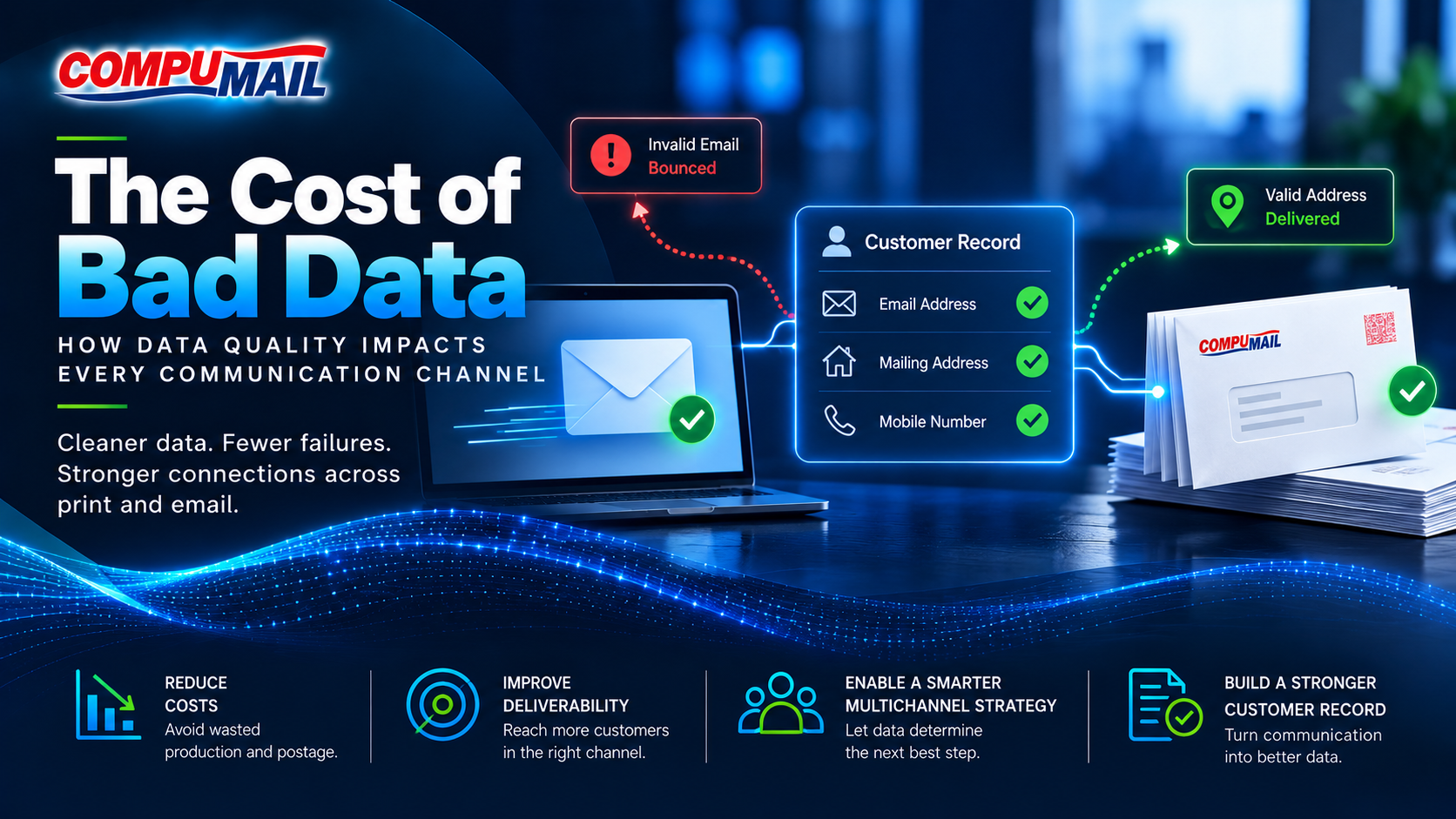
The Cost of Bad Data: How Data Quality Impacts Every Communication Channel
Poor data impacts more than delivery. Inaccurate or outdated postal and email data can lead to returned mail, wasted costs, email bounces, and missed customer communications. Learn how better data quality and address hygiene can improve deliverability, reduce waste, and strengthen your omnichannel communication strategy.
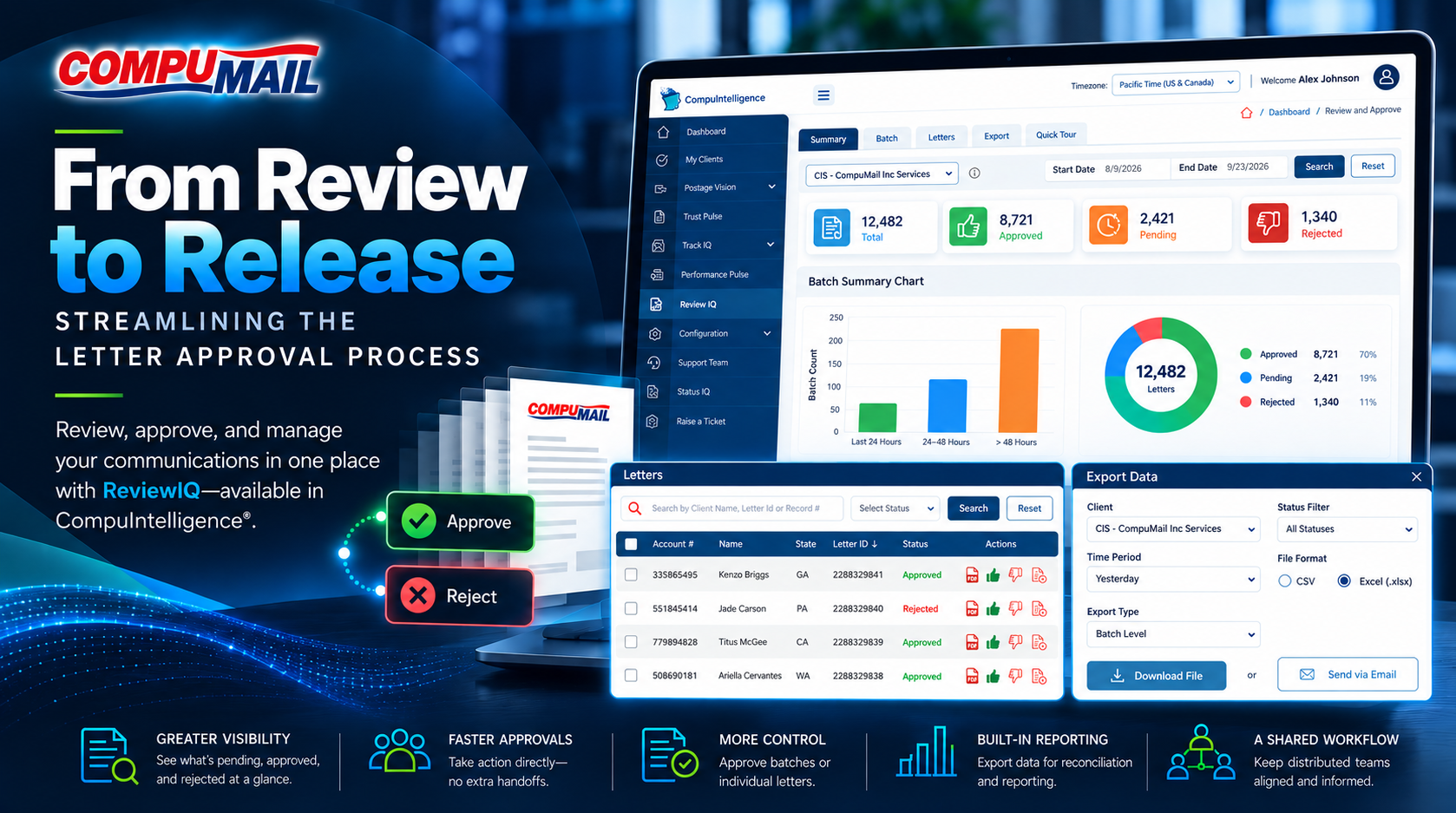
From Review to Release: Streamlining the Letter Approval Process
Reviewing communications before they move into production is an important part of many organizations’ workflows. It gives teams an opportunity to confirm that content, data, and other critical details are correct before communications reach their intended recipients.
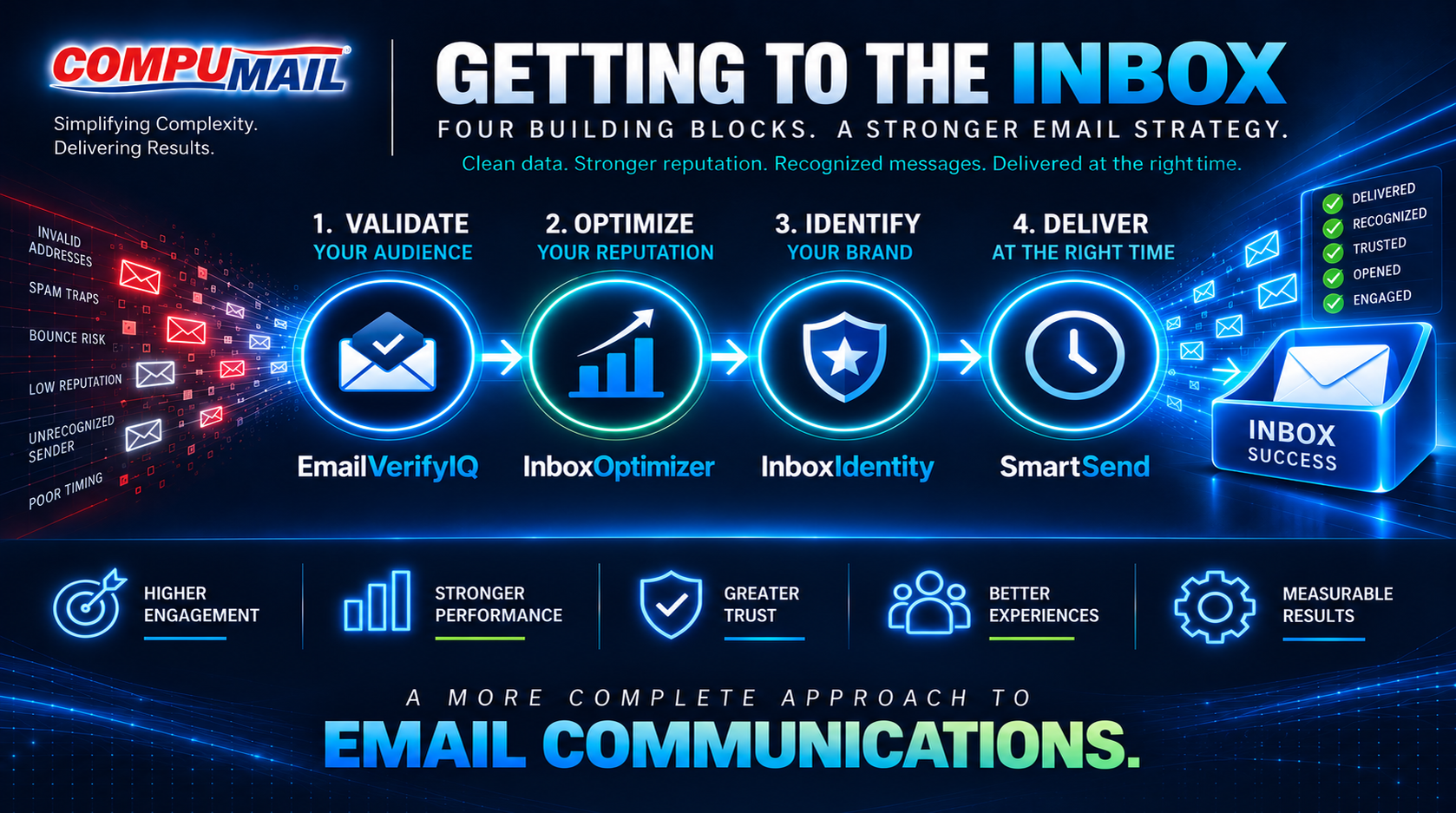
Getting to the Inbox: The Four Building Blocks of Better Email Performance
Today's email ecosystem evaluates a wide range of signals before and after a message is sent. The quality of your recipient data matters. Your sending history and reputation matter. Authentication matters. Recipient behavior matters. Even when a message arrives can influence whether it gets noticed.
.png)
From Blind Spots to Insights: Why Visibility Matters!
Learn how better visibility into production activity, postage spend, address quality, communication workflows, and file activity can help organizations uncover trends, identify issues earlier, and turn communication data into actionable business insights that support smarter decisions.
.png)
What Could You Do With 27% More Space on Your Mailpiece?
Moving from letter-size to legal-size paper creates approximately 27% more content area—opening new opportunities for calls to action, QR codes, regulatory content, and smarter document design.
.png)
Security Isn't a Feature. It's the Foundation.
Whether it's a billing statement, healthcare notice, collection letter, or account notification, organizations are responsible for protecting sensitive consumer information at every stage of the communication lifecycle. That responsibility extends far beyond simply delivering a document.
.png)
A Gold Glove Customer Experience: Precision, Partnership, and Proactive Service from End to End
Baseball fans love the highlight-reel plays. The diving stop, the throw from deep in the hole, the game-saving catch. Those moments earn applause. But ask any coach what wins championships, and the answer is different.
.png)
Don't Leave a Runner on Base: How Address Hygiene Improves Delivery Rates and Reduces Waste
In baseball, getting runners on base is only half the battle. The teams that consistently score are the ones that capitalize on every opportunity instead of leaving runners stranded.
.png)
The Rise of the Phygital Consumer: Why Print, Email, and SMS Work Better Together
Discover why today's consumers respond best to integrated print, email, and SMS communication strategies. Learn how omnichannel engagement improves visibility, response rates, consumer experience, and business outcomes.
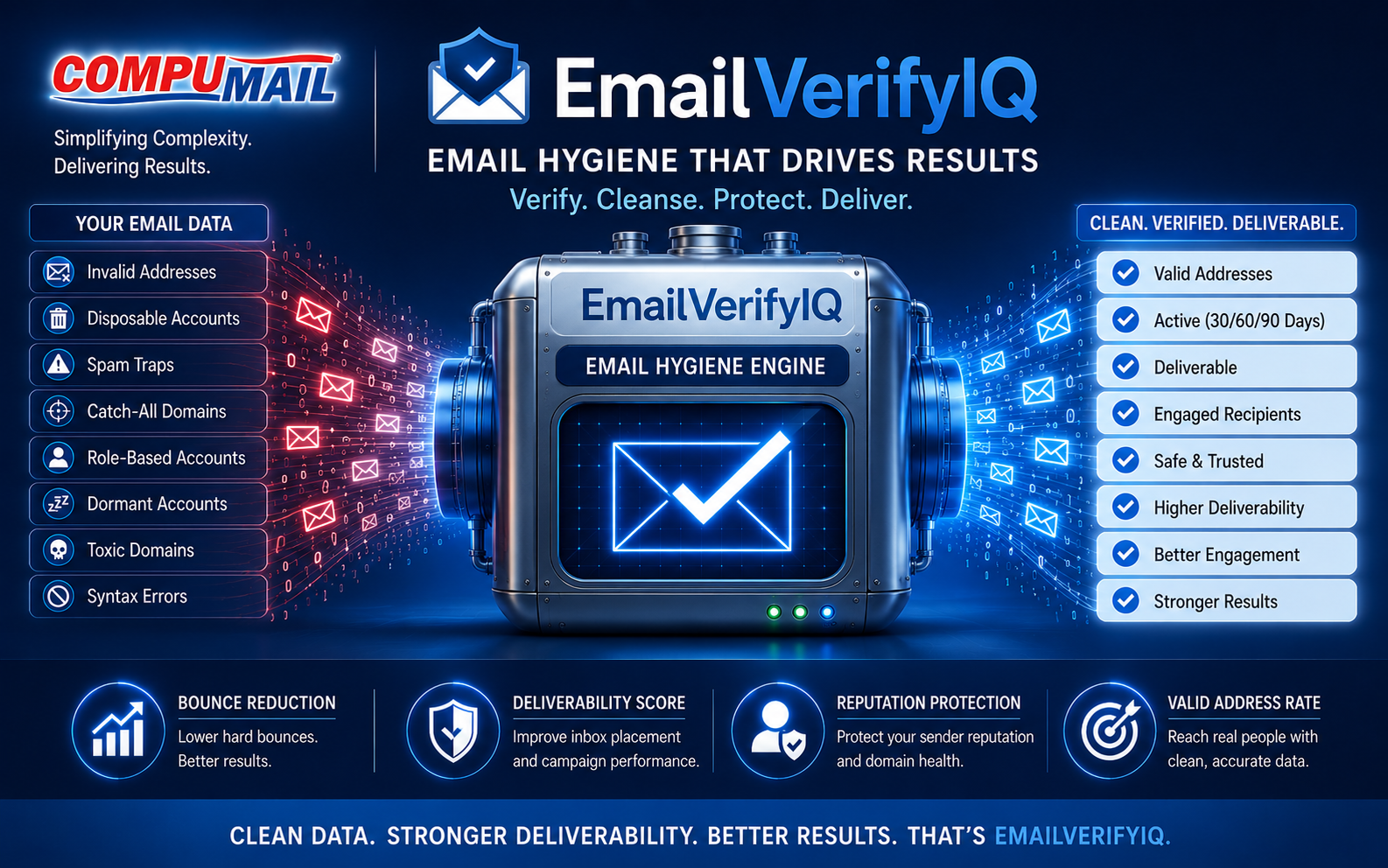
Meet EmailVerifyIQ: Why Email Address Hygiene Matters Just as Much as Address Hygiene
Improve email deliverability, reduce bounce rates, and protect your sender reputation with EmailVerifyIQ. Verify email addresses before deployment and maximize campaign performance.
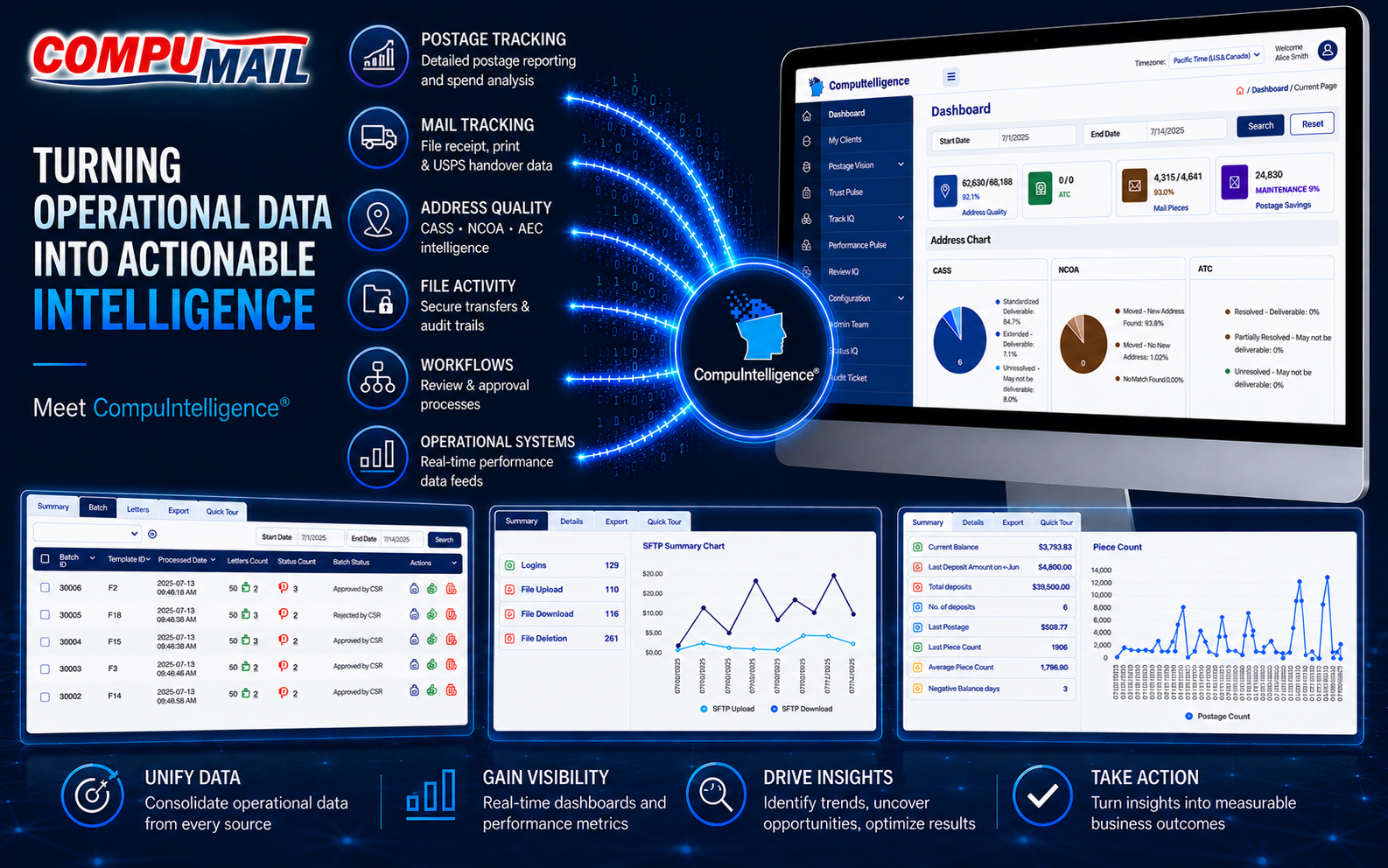
Meet CompuIntelligence® Communication Intelligence & Reporting Platform
In today's business environment, organizations generate more communication data than ever before. Every email, print campaign, SMS notification, compliance review, and consumer interaction creates valuable information.

