Having multiple communication channels isn't enough. Discover how flexible omnichannel and waterfall workflows connect print, email, and digital communications using client-defined business rules. Learn how smarter routing decisions can reduce unnecessary costs, adapt to delivery challenges, and create a more effective consumer journey from first notice to final resolution.


.png)


When it comes to consumer communications, every inch of the mailpiece matters.
For many organizations, the standard 8.5" × 11" letter has long been the default. But today's communications are often being asked to do more. Required disclosures, state-specific language, account information, payment options, customer service details, and other mandatory content can quickly consume the available space.
At the same time, organizations may want to incorporate stronger calls to action, QR codes, self-service options, or other elements designed to make the communication easier for recipients to act on.
Sometimes the answer isn't removing content.
It's creating more room for it.
Moving from standard 8.5" × 11" letter-size paper to 8.5" × 14" legal-size paper provides approximately 27% more content area—an additional 25.5 square inches of space that can be used to make a communication work harder.
More Room for the Content That Matters
For organizations operating in highly regulated industries, available white space can disappear quickly.
Required legal language, state-specific disclosures, account details, payment information, and other mandatory content all need a place on the page. As more information is added, important messaging can begin competing for the recipient's attention.
That's not just a design consideration.
USPS direct-mail best practices specifically caution against overwhelming recipients with too much copy or imagery that an offer or call to action gets lost. USPS also recommends making calls to action prominent and incorporating response mechanisms such as QR codes when appropriate.
For communications already carrying significant required content, additional space can provide valuable breathing room.
Instead of squeezing another message into an already crowded 8.5" × 11" design—or potentially adding another page—a legal-size format can create room for elements such as:
- Prominent calls to action
- QR codes linking to payment or self-service portals
- Additional payment options and instructions
- Customer service information
- Educational or account-specific messaging
- Required regulatory or state-specific content
- Improved white space and visual hierarchy
The goal isn't simply to fit more onto the page.
It's to create enough space for the right information to stand out.
Bridge the Physical and Digital Experience
That additional space can also help turn a traditional printed communication into an entry point to a digital experience.
A strategically placed QR code, for example, can allow a recipient to move directly from a physical mailpiece to a payment portal, account page, informational resource, or another digital destination.
USPS encourages the use of QR codes and other response mechanisms to make mail more actionable. Its research into financial-sector direct mail specifically recommends QR codes, campaign-specific telephone numbers, and personalized URLs as ways to create a seamless path for recipients to respond.
The physical mailpiece doesn't have to compete with digital channels.
It can help drive recipients to them.
A clear “Scan to Make a Payment” or “Scan to View Your Options” call to action can create a direct bridge between the printed communication and the next step you want the recipient to take.
Make the Mailpiece Measurable
The opportunity becomes even more powerful when those interactions can be measured.
QR codes can incorporate campaign or tracking information that helps organizations understand how recipients are engaging with a communication. USPS identifies response tracking as an important direct-mail practice and recommends tools such as QR codes, unique telephone numbers, and personalized URLs to help measure results.
That creates an opportunity to move beyond simply asking whether the redesigned communication looks better.
Organizations can begin asking:
Did it perform better?
For example, a company could compare response activity between an existing letter-size communication and a redesigned legal-size version containing a more prominent QR code and call to action.
With the appropriate tracking strategy, that interaction can become another measurable data point—providing insight that can be used to refine future communications.
The additional space isn't valuable simply because it's there.
It's valuable because of what you can do with it—and what you can learn from it.
Legal Size Doesn't Have to Mean Every Letter
Moving to legal-size paper doesn't necessarily mean converting every communication an organization sends.
One of the biggest opportunities comes from using the format selectively.
CompuMail can use business rules and data supplied with a communication to determine when a legal-size version should be produced. Depending on the application, that decision could be driven by a letter code, communication type, state, account characteristic, or another available data element.
For example, a communication requiring extensive state-specific language might be produced using a legal-size template, while a simpler communication remains on standard letter-size paper.
A different letter type might use the additional space specifically for a QR code and stronger payment call to action.
This creates an opportunity to optimize the format around the needs of the individual communication instead of treating every document the same.
More Space Is Only Part of the Equation
Simply making a document three inches longer doesn't automatically make it more effective.
How that additional space is used matters.
Document design should help guide the recipient through the communication—establishing a clear hierarchy between required information, important account details, calls to action, and supporting content.
USPS guidance similarly emphasizes choosing the mailpiece's format and layout around the communication objective rather than simply minimizing cost. It also recommends tracking responses to understand whether the mailpiece is achieving that objective.
That's where thoughtful document design and print optimization become important.
A well-designed legal-size communication can provide more separation between regulatory content and action-oriented messaging, give QR codes and CTAs greater prominence, and make complex information easier to navigate.
The objective isn't to fill every additional square inch.
It's to put those additional square inches to work.
Rethink the Space You Already Have
Sometimes improving a consumer communication doesn't require completely reinventing it.
It may simply require looking at the mailpiece differently.
Moving from an 8.5" × 11" sheet to an 8.5" × 14" sheet provides approximately 27% more content area. For communications already competing for limited white space, that additional room can create new opportunities for regulatory content, clearer calls to action, QR codes, payment information, improved readability, and measurable digital engagement.
Combined with intelligent business rules, thoughtful document design, and response tracking, a seemingly simple format change can become part of a much larger communication optimization strategy.
At CompuMail, our Document Design Services help organizations evaluate how their existing communications can work harder—from regulatory communication design and dynamic content to QR codes, calls to action, and print optimization.
What could you do with 27% more space on your mailpiece?
Let us take a look at one of your existing communications and help you find out.
Latest insights from our articles
Explore a collection of curated articles designed to help you stay ahead in multichannel communication, compliance, and digital transformation.
.png)
From First Notice to Final Resolution: Building an Omnichannel Consumer Journey
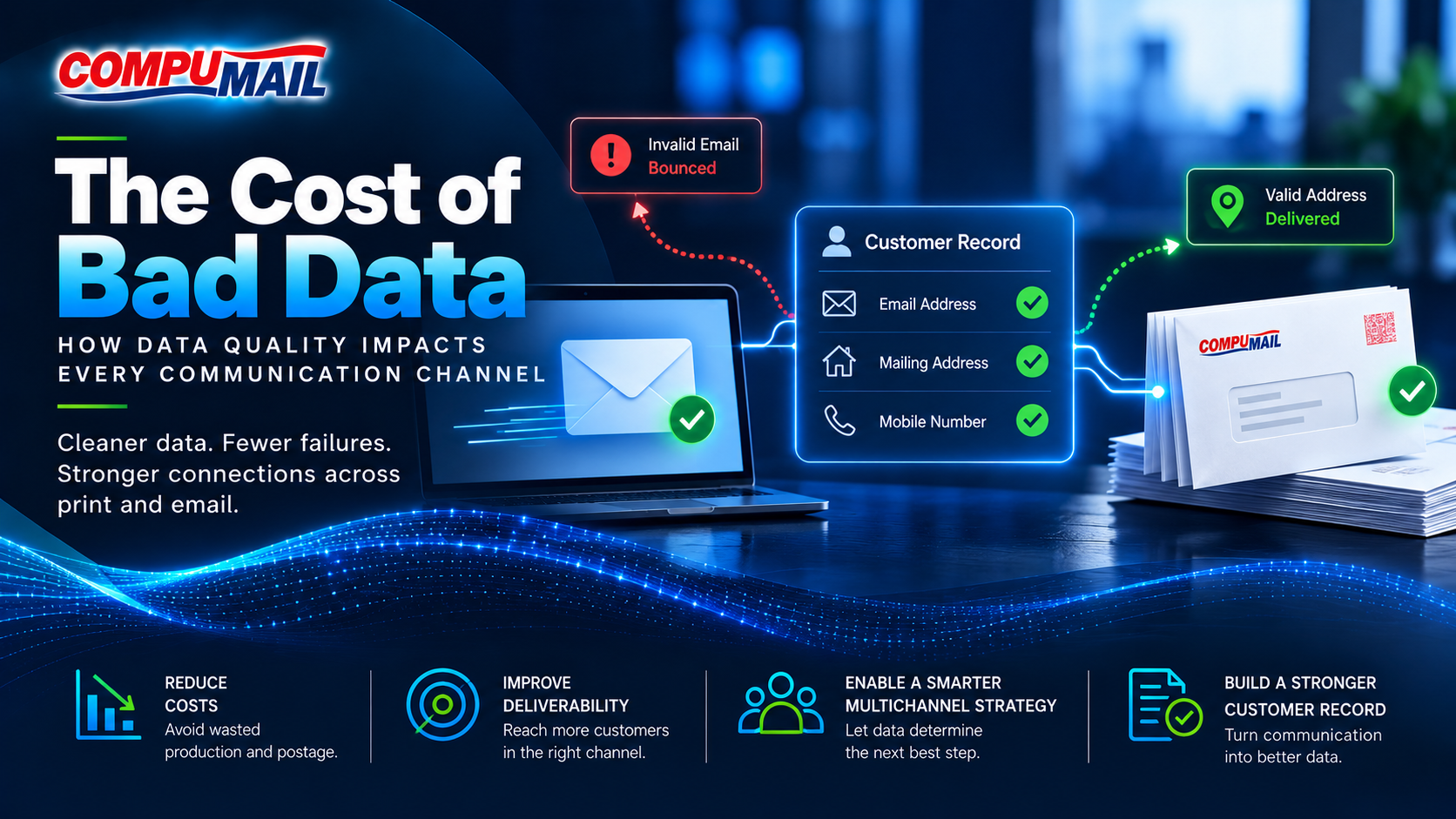
The Cost of Bad Data: How Data Quality Impacts Every Communication Channel
Poor data impacts more than delivery. Inaccurate or outdated postal and email data can lead to returned mail, wasted costs, email bounces, and missed customer communications. Learn how better data quality and address hygiene can improve deliverability, reduce waste, and strengthen your omnichannel communication strategy.
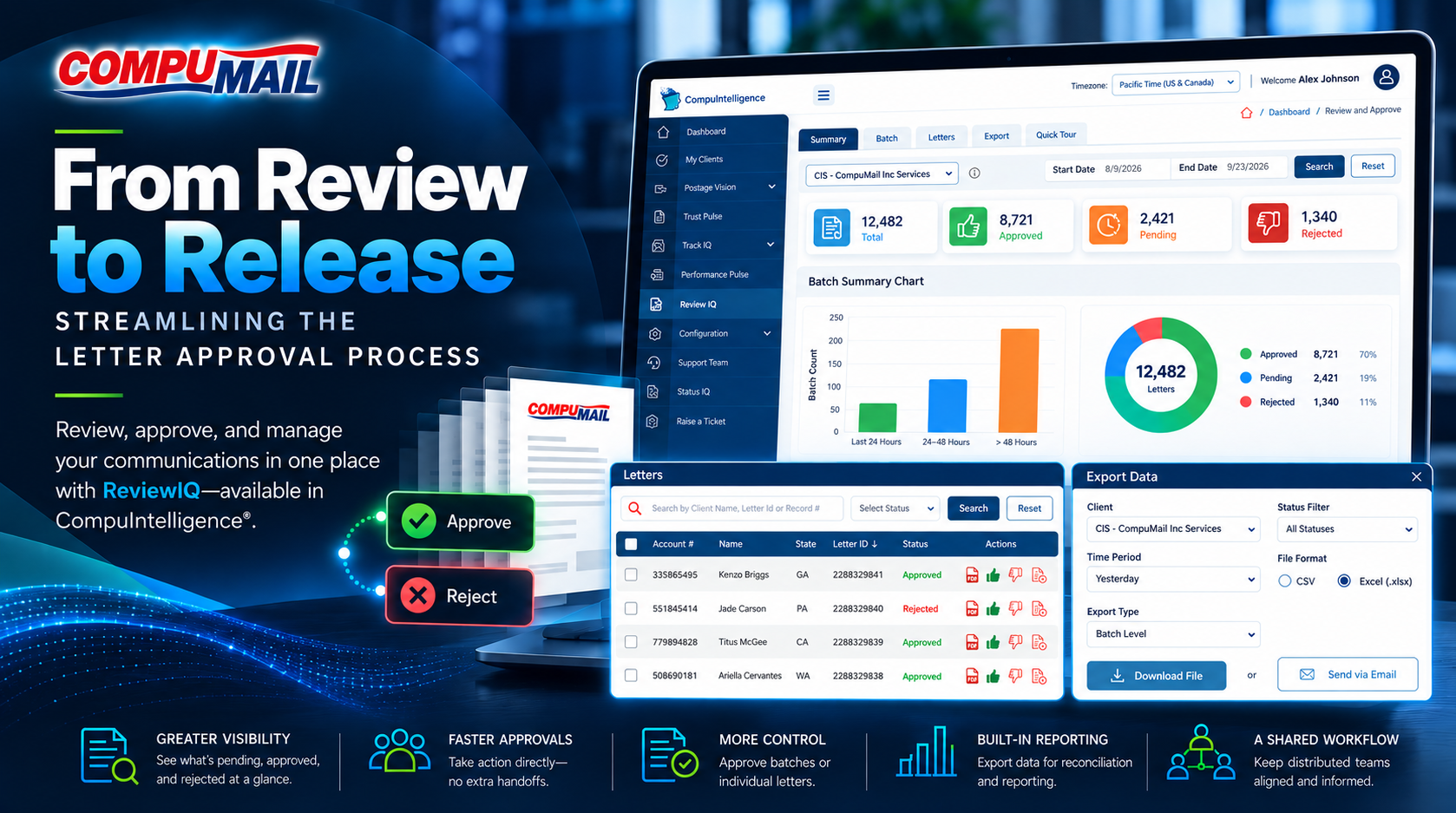
From Review to Release: Streamlining the Letter Approval Process
Reviewing communications before they move into production is an important part of many organizations’ workflows. It gives teams an opportunity to confirm that content, data, and other critical details are correct before communications reach their intended recipients.
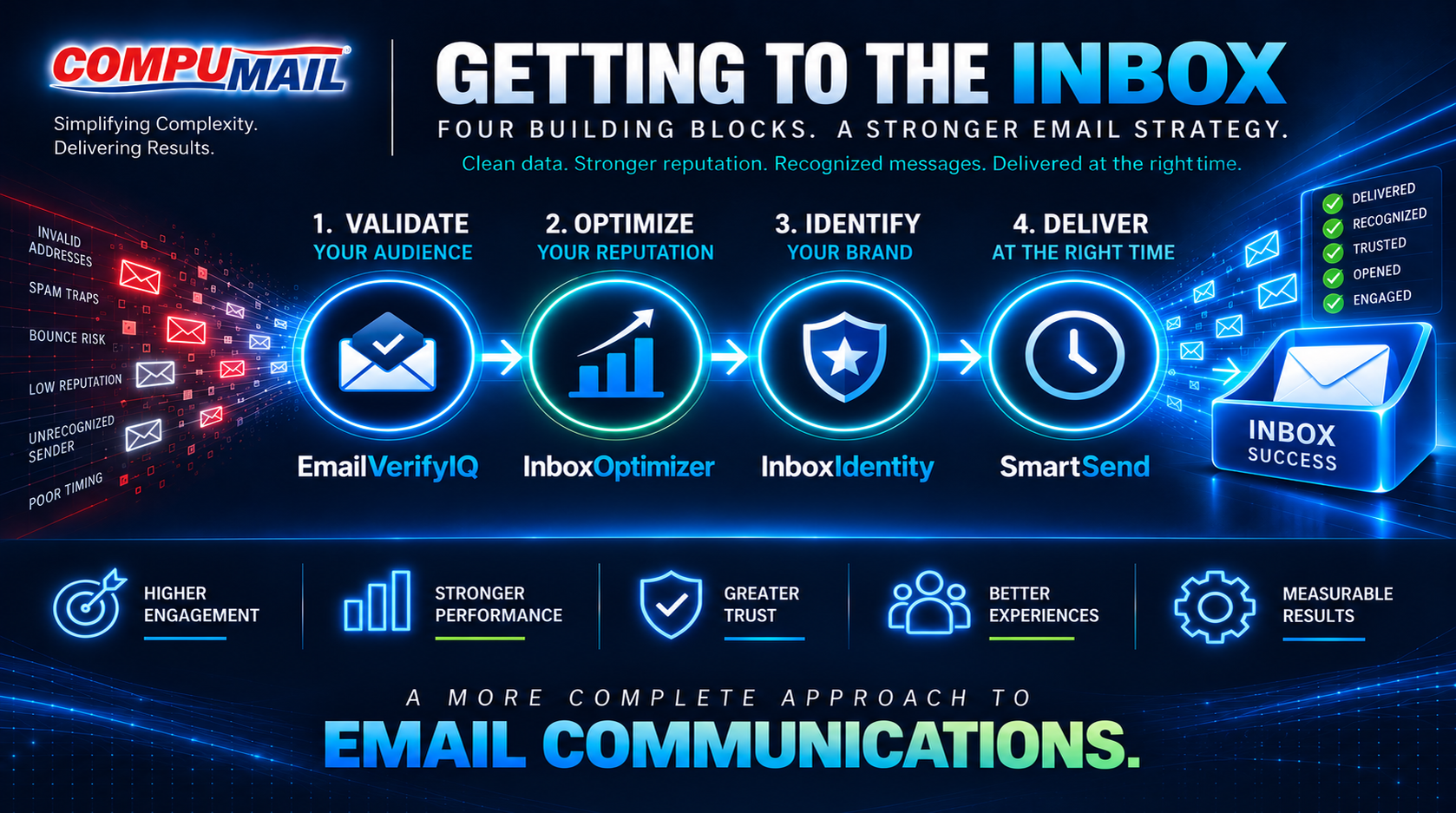
Getting to the Inbox: The Four Building Blocks of Better Email Performance
Today's email ecosystem evaluates a wide range of signals before and after a message is sent. The quality of your recipient data matters. Your sending history and reputation matter. Authentication matters. Recipient behavior matters. Even when a message arrives can influence whether it gets noticed.
.png)
From Blind Spots to Insights: Why Visibility Matters!
Learn how better visibility into production activity, postage spend, address quality, communication workflows, and file activity can help organizations uncover trends, identify issues earlier, and turn communication data into actionable business insights that support smarter decisions.
What Could You Do With 27% More Space on Your Mailpiece?
Moving from letter-size to legal-size paper creates approximately 27% more content area—opening new opportunities for calls to action, QR codes, regulatory content, and smarter document design.
.png)
Security Isn't a Feature. It's the Foundation.
Whether it's a billing statement, healthcare notice, collection letter, or account notification, organizations are responsible for protecting sensitive consumer information at every stage of the communication lifecycle. That responsibility extends far beyond simply delivering a document.
.png)
A Gold Glove Customer Experience: Precision, Partnership, and Proactive Service from End to End
Baseball fans love the highlight-reel plays. The diving stop, the throw from deep in the hole, the game-saving catch. Those moments earn applause. But ask any coach what wins championships, and the answer is different.
.png)
Don't Leave a Runner on Base: How Address Hygiene Improves Delivery Rates and Reduces Waste
In baseball, getting runners on base is only half the battle. The teams that consistently score are the ones that capitalize on every opportunity instead of leaving runners stranded.
.png)
The Rise of the Phygital Consumer: Why Print, Email, and SMS Work Better Together
Discover why today's consumers respond best to integrated print, email, and SMS communication strategies. Learn how omnichannel engagement improves visibility, response rates, consumer experience, and business outcomes.
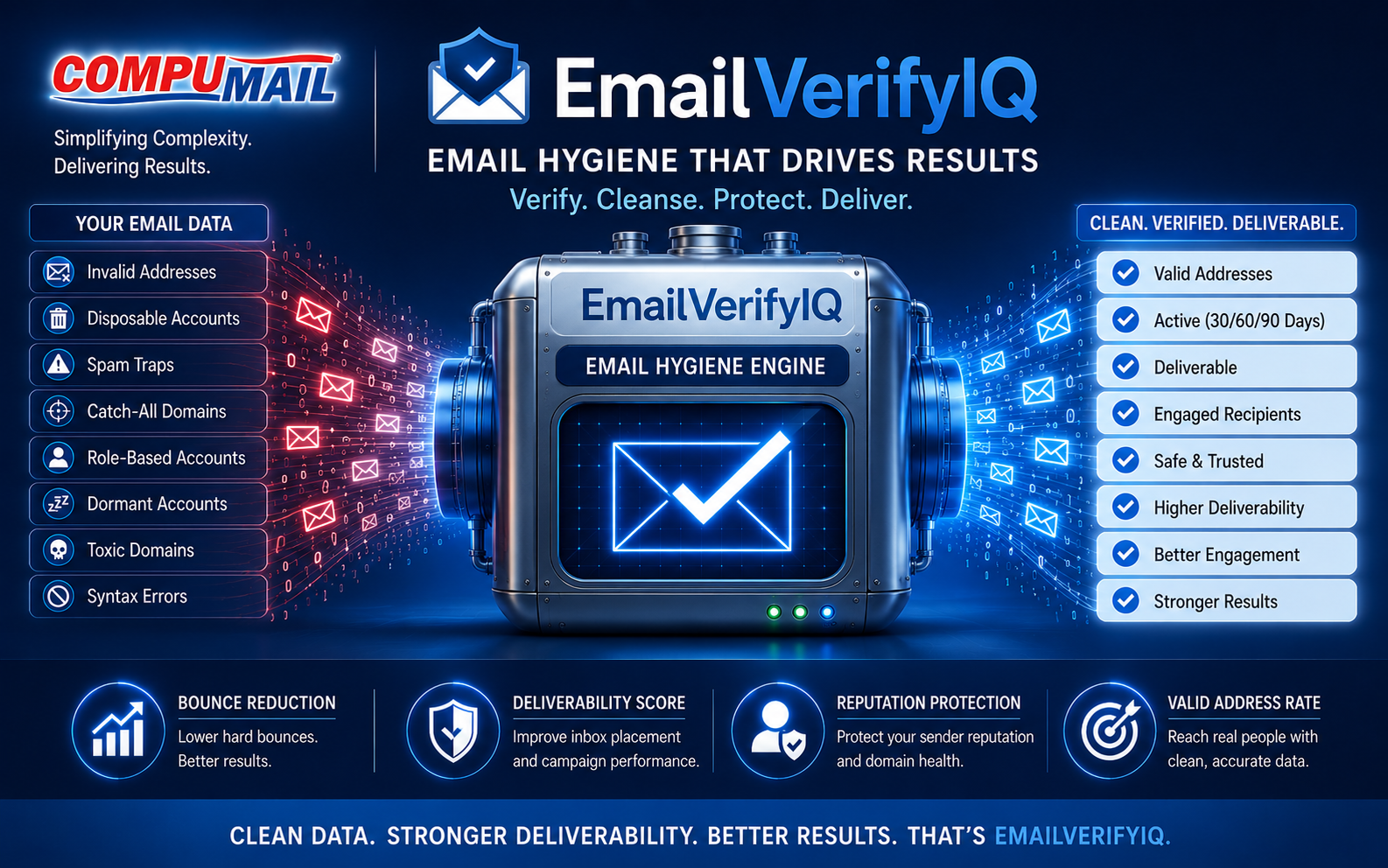
Meet EmailVerifyIQ: Why Email Address Hygiene Matters Just as Much as Address Hygiene
Improve email deliverability, reduce bounce rates, and protect your sender reputation with EmailVerifyIQ. Verify email addresses before deployment and maximize campaign performance.
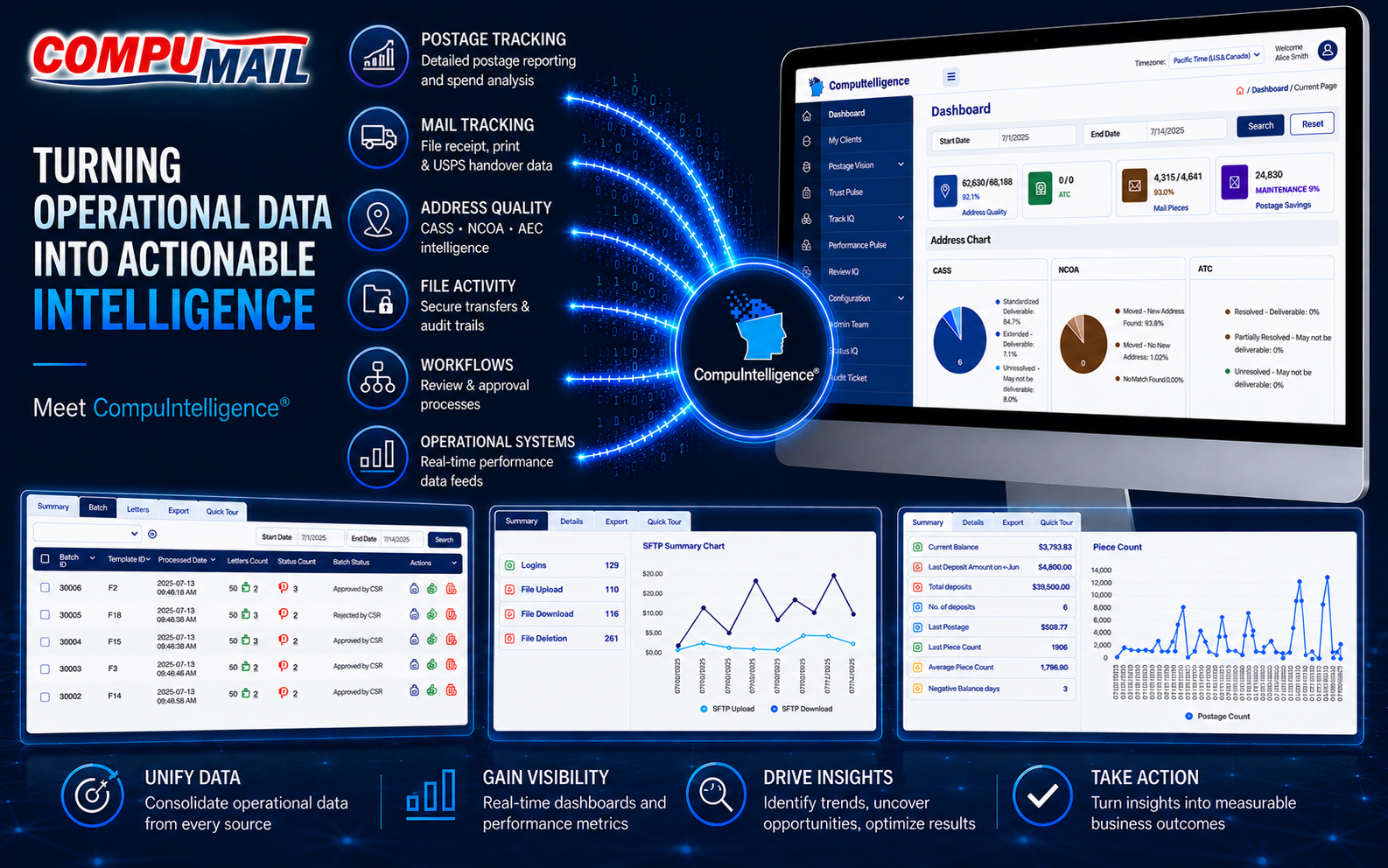
Meet CompuIntelligence® Communication Intelligence & Reporting Platform
In today's business environment, organizations generate more communication data than ever before. Every email, print campaign, SMS notification, compliance review, and consumer interaction creates valuable information.

