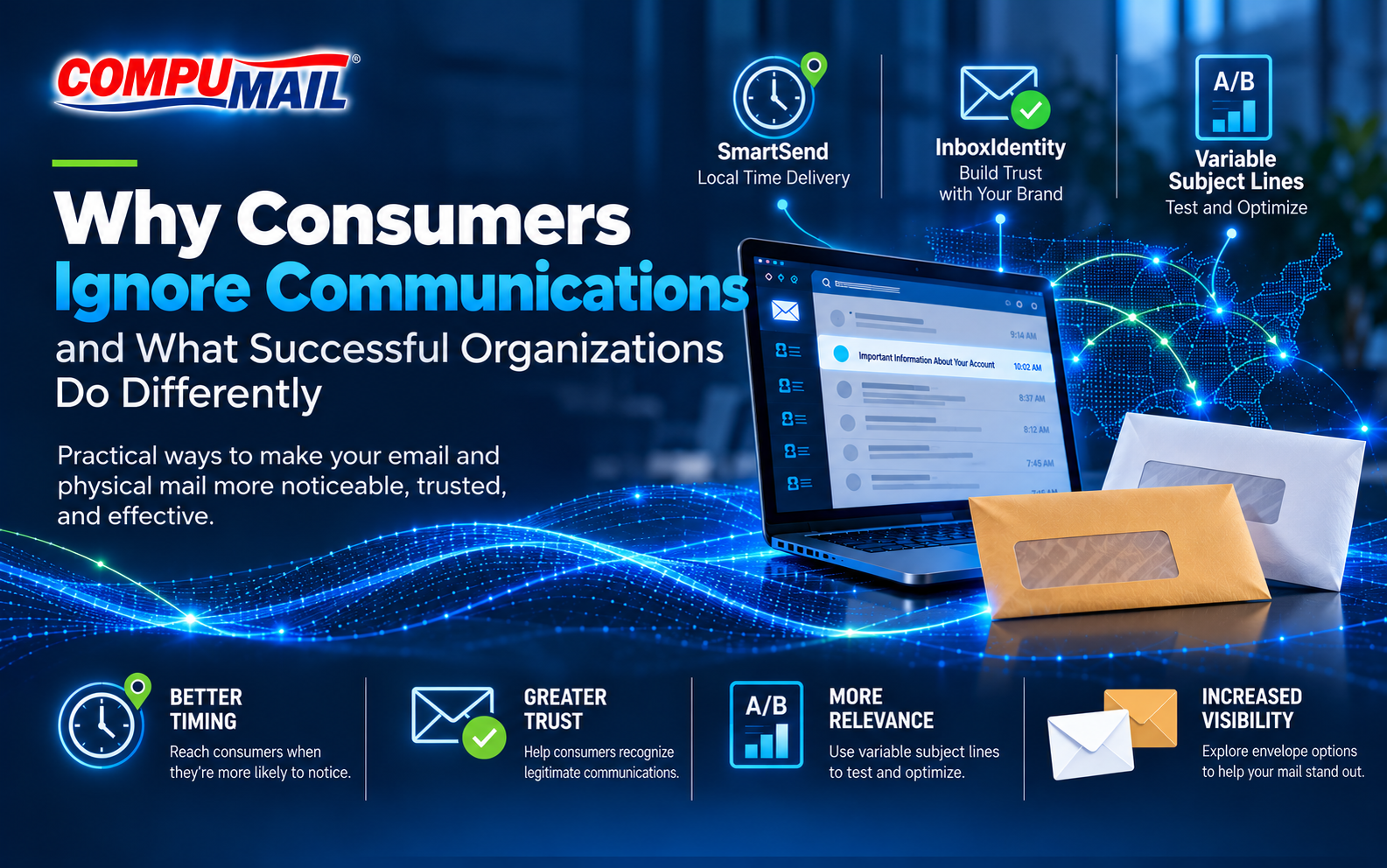
In a world of overflowing inboxes, crowded mailboxes, and constant digital distractions, simply reaching a consumer is no longer enough. Organizations need to think beyond delivery and focus on what makes a communication worth noticing.




In a world of overflowing inboxes, crowded mailboxes, and constant digital distractions, simply reaching a consumer is no longer enough. Organizations need to think beyond delivery and focus on what makes a communication worth noticing.
Every day, consumers encounter messages competing for their attention. Emails arrive alongside promotional offers, account notifications, and potential scams. Physical mail competes with bills, advertisements, and other correspondence. Even important communications can be overlooked when they arrive at the wrong time, appear unfamiliar, or fail to communicate their purpose clearly.
For organizations managing high volumes of customer communications, this creates a significant challenge.
A message can be successfully delivered without ever being read. An email can reach the inbox but go unopened. A letter can arrive at the correct address but sit untouched.
The difference between delivery and engagement often comes down to how, when, and why a communication reaches its intended audience.
Organizations that recognize this distinction can build more thoughtful communication strategies that improve visibility, reinforce trust, and create opportunities for meaningful engagement.
An important consideration is that improving communication visibility should never come at the expense of accuracy, transparency, or compliance. Effective strategies help consumers recognize and understand legitimate communications without creating misleading impressions or unnecessary pressure.
1. Timing Matters: Reaching Consumers When They're More Likely to Notice
Consider an organization sending thousands of emails to consumers across the United States.
If every message is distributed at 9:00 AM Eastern Time, recipients on the West Coast may receive their communications at 6:00 AM. Meanwhile, consumers in other regions experience the same campaign at entirely different points in their daily routines.
The message may be identical, but the circumstances surrounding its arrival are not.
While there is no universally perfect time to send an email, organizations can take steps to make delivery timing more intentional.
Local time zone delivery allows organizations to schedule communications based on the recipient's geographic time zone rather than relying on a single nationwide send time.
For example, a campaign intended to reach consumers at 10:00 AM local time can be distributed in stages as that time arrives across different regions.
This approach creates a more consistent delivery experience and provides opportunities to evaluate whether localized scheduling improves engagement.
How CompuMail Helps
CompuMail's SmartSend service supports email delivery based on recipients' local time zones, allowing organizations to move beyond one-size-fits-all scheduling.
Rather than treating an entire audience as though everyone lives in the same location, SmartSend helps organizations execute a more geographically aware email strategy.
For regulated communications, delivery schedules should also be evaluated and approved by the organization's legal and compliance teams to ensure alignment with applicable contact restrictions and communication requirements.
2. Trust Matters: Helping Consumers Recognize Legitimate Communications
Consumers have good reasons to be cautious about unfamiliar messages.
Phishing attempts, fraudulent notifications, and impersonation scams have made email recipients increasingly aware of the risks associated with opening messages or clicking unfamiliar links.
For legitimate organizations, this creates an additional obstacle: even an important and properly delivered communication may be ignored if the recipient cannot confidently identify its sender.
Building trust begins with consistent branding, recognizable sender information, and appropriate email authentication.
One technology that can support brand recognition is Brand Indicators for Message Identification (BIMI).
BIMI is an email standard that enables participating mailbox providers to display a brand logo alongside authenticated messages when applicable requirements are satisfied.
Although BIMI does not guarantee logo display across every email platform, it can help participating organizations create a more recognizable presence in supported inboxes.
Implementing BIMI involves more than simply uploading a company logo. Depending on the organization's environment and the mailbox providers involved, implementation may require:
- Preparing and validating an eligible brand logo.
- Configuring DNS records.
- Establishing appropriate DMARC authentication and alignment.
- Completing applicable logo verification requirements.
- Monitoring implementation and authentication performance.
How CompuMail Helps
CompuMail's InboxIdentity service helps organizations navigate BIMI implementation, including logo preparation and verification, DNS configuration, DMARC alignment, implementation support, and ongoing monitoring.
The objective is to help organizations establish the technical foundation needed to support recognizable, authenticated email communications.
When consumers can more easily recognize who is contacting them, organizations have an opportunity to reduce uncertainty before a message is even opened.
3. Relevance Matters: Giving Consumers a Reason to Open the Message
Even a recognizable email delivered at an appropriate time still faces another challenge: the subject line.
A subject line is often the first piece of information a consumer evaluates when deciding whether an email deserves attention.
Generic subject lines can blend into a crowded inbox. Overly aggressive or misleading subject lines may create distrust. And subject lines that fail to reflect the actual message can leave recipients confused or disengaged.
Effective subject lines should be clear, relevant, concise, and consistent with the communication's purpose.
For organizations sending large volumes of communications, testing different approaches can help identify what resonates with specific audiences.
Using Variable-Driven Subject Lines
Variable-driven subject lines allow organizations to introduce controlled variations into email messaging without requiring a separate email template for every subject line.
For example, an organization might compare two straightforward approaches:
Version A: "Important Information About Your Account"
Version B: "An Update Regarding Your Account"
By testing variations across appropriately selected audiences, organizations can evaluate which approach generates stronger engagement while maintaining consistency in the underlying communication.
CompuMail supports variable-driven subject lines, providing organizations with flexibility to test different messaging approaches without requiring modifications to the underlying email template for each variation.
When using variable content, organizations should also consider the total character length of the resulting subject line. Longer subject lines may be truncated depending on the recipient's email application or device, potentially hiding important information.
The objective is not simply to generate more opens, but to create clear, accurate expectations about the message being delivered.
As with all consumer communications, subject-line content and testing strategies should be reviewed and approved by the organization's legal and compliance teams before implementation.
4. Physical Mail Still Matters: Standing Out in a Crowded Mailbox
Email may dominate many communication strategies, but physical mail continues to serve an important role, particularly for formal notices, account correspondence, and other communications where a tangible document is appropriate.
However, physical delivery presents its own visibility challenge.
When several similarly sized white envelopes arrive together, individual pieces can be difficult to distinguish at a glance.
Organizations have opportunities to make their physical communications more noticeable through thoughtful format and presentation choices.
Envelope Color, Size, and Presentation
Envelope selection can influence the first impression a physical communication makes.
Depending on the communication type, organizations may consider alternative envelope colors, larger formats, or other presentation elements that help distinguish their correspondence from standard mail.
For example, an envelope with a different color may be more noticeable among traditional white envelopes, while a larger format may be appropriate for communications containing multiple documents or requiring a different presentation.
Consistent and appropriate sender identification can also help recipients recognize the organization behind the communication.
These choices should always be driven by the communication's purpose, production considerations, postal requirements, and applicable compliance guidelines.
How CompuMail Helps
CompuMail works with organizations to explore envelope formats and presentation options that align with their communication objectives.
Whether the goal is to differentiate certain types of correspondence, accommodate specific document requirements, or evaluate alternative envelope styles, our team can help identify available options and discuss what may be appropriate for a particular mailing program.
The goal is not to make every piece of mail look urgent. It is to make appropriate communications easier to recognize and distinguish.
Organizations interested in exploring envelope options are encouraged to contact CompuMail to discuss available formats and production considerations.
5. Importance Matters: When a Communication Requires Additional Accountability
Not every communication carries the same level of importance.
A routine account update, a general notification, and a legally significant notice may require very different delivery strategies.
For communications where mailing documentation or evidence of delivery is important, organizations may need more than standard First-Class Mail.
Certified Mail and Electronic Return Receipts
USPS Certified Mail provides a mailing receipt and tracking information that can document mailing and delivery activity.
When combined with an electronic return receipt, it can also provide an electronic record of the delivery signature or other applicable delivery confirmation.
These services introduce additional cost and operational considerations, but they can be valuable when an organization has a legitimate business or legal need for documented mailing and delivery.
Certified Mail also creates a different recipient experience than ordinary correspondence because delivery may require a signature or involve a delivery notice and subsequent pickup.
That additional formality can make a communication more noticeable, although it does not guarantee that the recipient will read or respond to the contents.
How CompuMail Helps
CompuMail supports USPS Certified Mail and Certified Mail with Electronic Return Receipt, providing organizations with additional mailing and delivery documentation options for qualifying communications.
Because these services involve additional costs and may carry specific legal or regulatory implications, organizations should carefully evaluate when their use is appropriate.
The decision to use Certified Mail, Electronic Return Receipt, or any other delivery method should be made by the organization's legal and compliance teams based on the communication's purpose and applicable requirements.
CompuMail provides the production and mailing services necessary to execute approved communication strategies but does not determine legal requirements or provide legal advice.
Certified Mail should be selected because the communication warrants that delivery method, not simply as a way to create a sense of urgency.
6. The Bigger Picture: A Coordinated Communication Strategy
Improving communication engagement rarely comes down to one individual change.
A better subject line cannot compensate for an invalid email address. A recognizable brand logo cannot guarantee that a message will be opened. And a distinctive envelope cannot overcome an inaccurate mailing address.
Successful communication strategies consider the entire journey.
That includes:
- Data quality: Ensuring mailing addresses and email addresses are accurate before communications are distributed.
- Delivery strategy: Choosing appropriate channels and scheduling messages intentionally.
- Recognition: Making it easier for consumers to identify legitimate communications.
- Presentation: Using clear messaging and appropriate physical or digital formats.
- Measurement: Evaluating delivery, engagement, and other available performance indicators to guide improvements.
For organizations using multiple communication channels, these considerations become even more important.
A consumer who does not receive an email may need to be contacted through physical mail. Another may require a formal notice delivered using a specific mailing method.
An omnichannel approach can help organizations coordinate these interactions based on business rules, delivery outcomes, and available consumer preferences.
The objective is not to overwhelm consumers with additional messages. It is to create a more thoughtful process for delivering the right communication through the right channel at the appropriate time.
7. Test, Measure, and Continuously Improve
One of the most important differences between organizations that simply distribute communications and those that continually improve their strategies is their willingness to test assumptions.
Rather than assuming one subject line will outperform another, test both.
Rather than assuming a single delivery time works equally well across the country, evaluate the potential benefits of localized scheduling.
Rather than automatically selecting the same envelope for every communication, consider whether different formats better support particular communication types.
And rather than measuring success solely by the number of messages sent, evaluate the performance indicators that are available and relevant to the communication's purpose.
For email, those indicators may include delivery rates, bounce rates, and appropriately interpreted engagement metrics. Open rates alone can be unreliable because privacy features and automated email activity may affect tracking.
For physical mail, organizations can evaluate mailing costs, returned mail, delivery tracking information where available, and other relevant operational measures.
When downstream response data is available from an organization's own systems, it can provide additional insight into whether communication strategies are achieving their intended outcomes.
Small, measured improvements across multiple parts of the communication process can contribute to a more effective overall strategy.
Final Thoughts: Being Delivered Is Not the Same as Being Noticed
Consumers are not necessarily ignoring communications because the information is unimportant.
Sometimes the message arrives at an inconvenient time. Sometimes the sender is unfamiliar. Sometimes the subject line provides little reason to open the email. And sometimes a physical letter simply looks like everything else in the mailbox.
Organizations cannot control every factor influencing consumer attention, but they can make more informed decisions about how communications are prepared, presented, and delivered.
From localized email scheduling and recognizable sender branding to subject-line testing, distinctive envelope options, and documented mailing services, there are practical opportunities to improve communication strategies across both digital and physical channels.
At CompuMail, we help organizations explore and implement these options as part of a broader approach to customer communications.
Because successful communication isn't just about reaching the right address. It's about giving the message the best appropriate opportunity to be recognized, understood, and acted upon.
Ready to Explore Ways to Improve Your Communication Strategy?
Contact CompuMail to learn more about our email and print communication capabilities, including SmartSend, InboxIdentity, variable-driven subject lines, envelope options, and Certified Mail services.
Legal & Compliance Disclaimer
This article is provided for general educational and informational purposes only and does not constitute legal advice. CompuMail is a communications service provider and does not provide legal counsel, determine regulatory requirements, or advise organizations on the legality of specific communication strategies.
All communication content, subject lines, delivery schedules, envelope designs, mailing methods, and related practices should be reviewed and approved by each organization's legal and compliance teams before implementation.
Organizations are responsible for ensuring their communications comply with all applicable federal, state, and local laws, industry regulations, and contractual requirements. The strategies discussed in this article are examples of available communication approaches and should not be interpreted as recommendations for use in any particular legal or regulatory circumstance.
Latest insights from our articles
Explore a collection of curated articles designed to help you stay ahead in multichannel communication, compliance, and digital transformation.
Why Consumers Ignore Communications and What Successful Organizations Do Differently
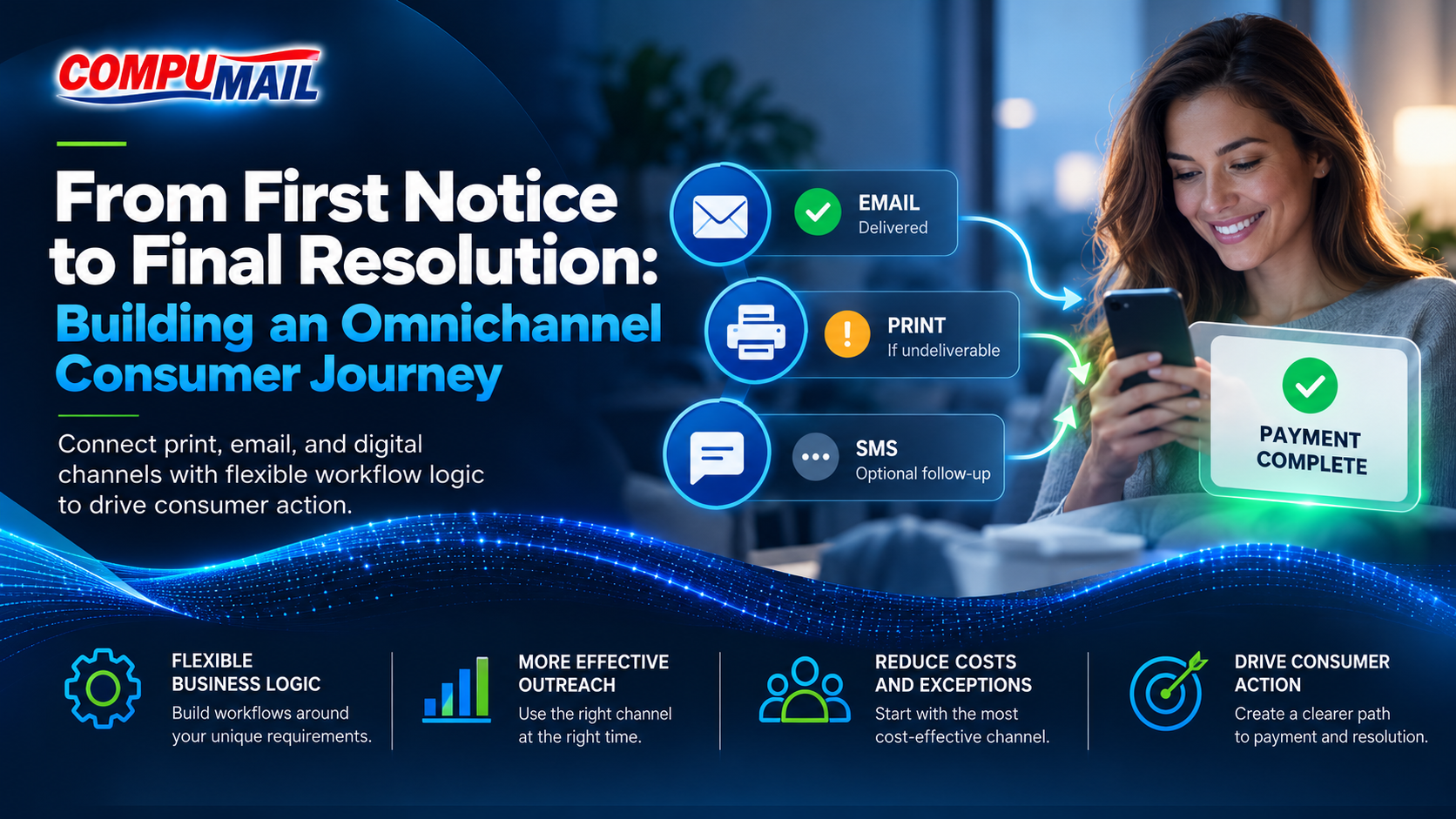
From First Notice to Final Resolution: Building an Omnichannel Consumer Journey
Having multiple communication channels isn't enough. Discover how flexible omnichannel and waterfall workflows connect print, email, and digital communications using client-defined business rules. Learn how smarter routing decisions can reduce unnecessary costs, adapt to delivery challenges, and create a more effective consumer journey from first notice to final resolution.
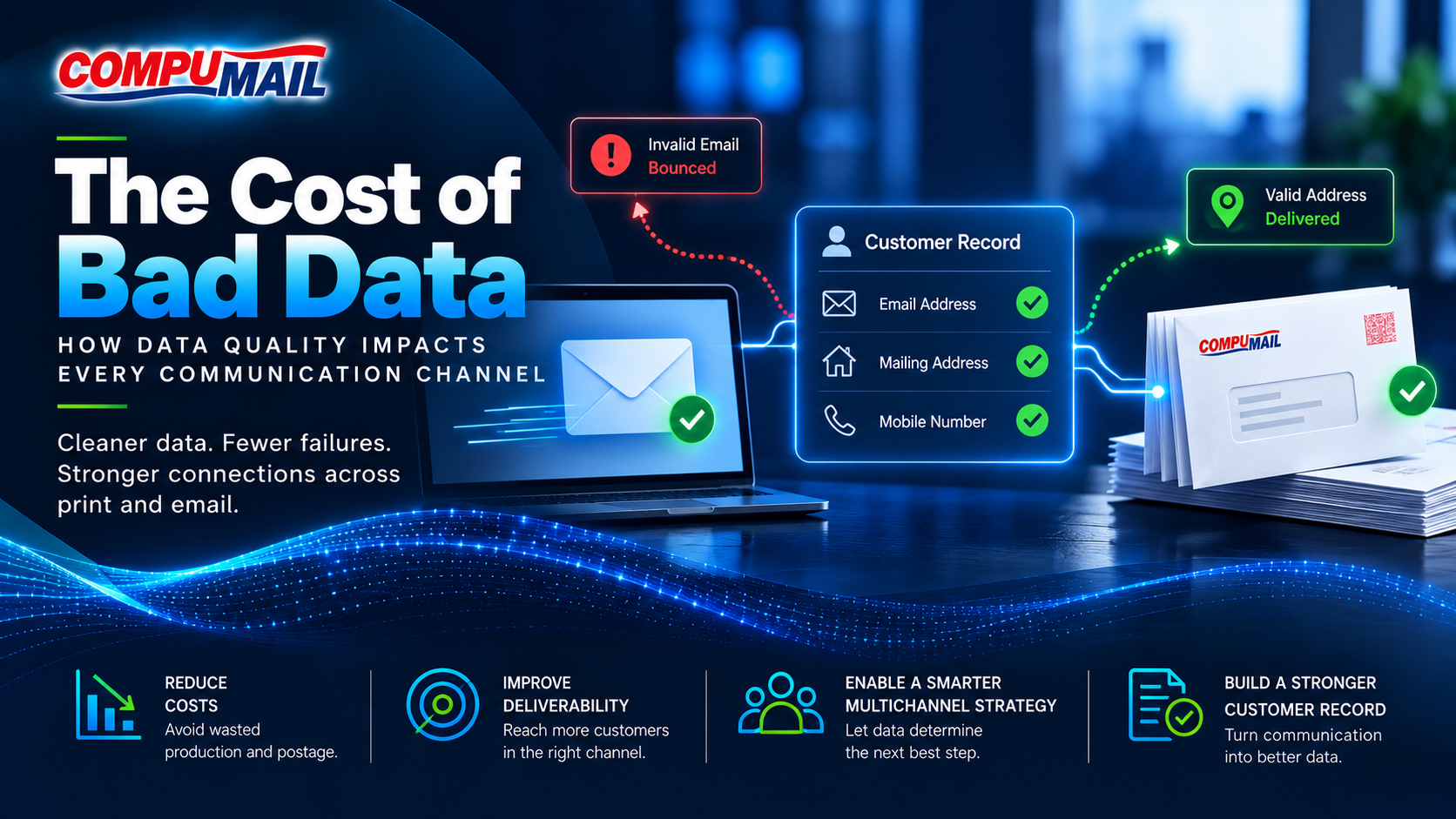
The Cost of Bad Data: How Data Quality Impacts Every Communication Channel
Poor data impacts more than delivery. Inaccurate or outdated postal and email data can lead to returned mail, wasted costs, email bounces, and missed customer communications. Learn how better data quality and address hygiene can improve deliverability, reduce waste, and strengthen your omnichannel communication strategy.
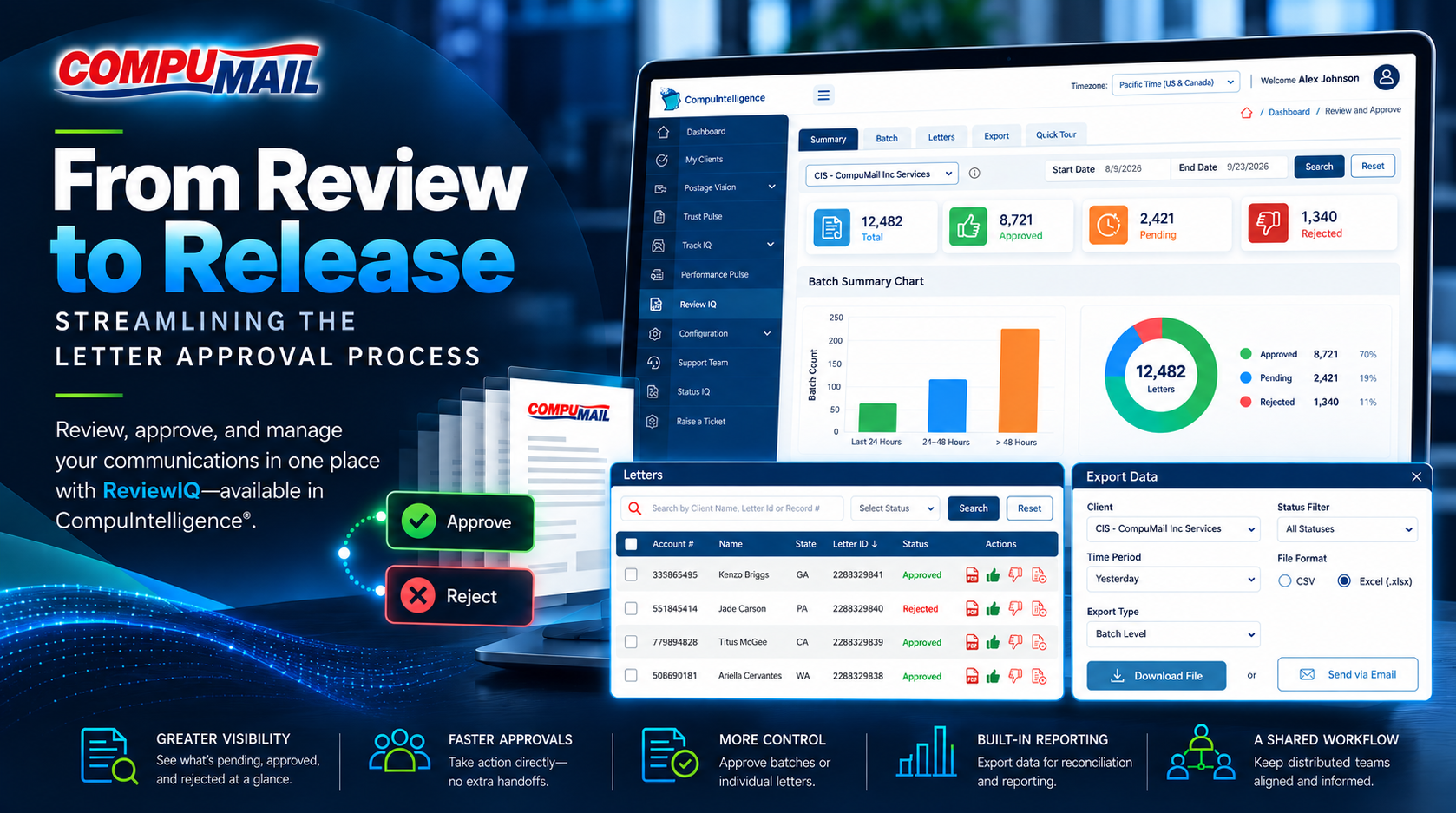
From Review to Release: Streamlining the Letter Approval Process
Reviewing communications before they move into production is an important part of many organizations’ workflows. It gives teams an opportunity to confirm that content, data, and other critical details are correct before communications reach their intended recipients.
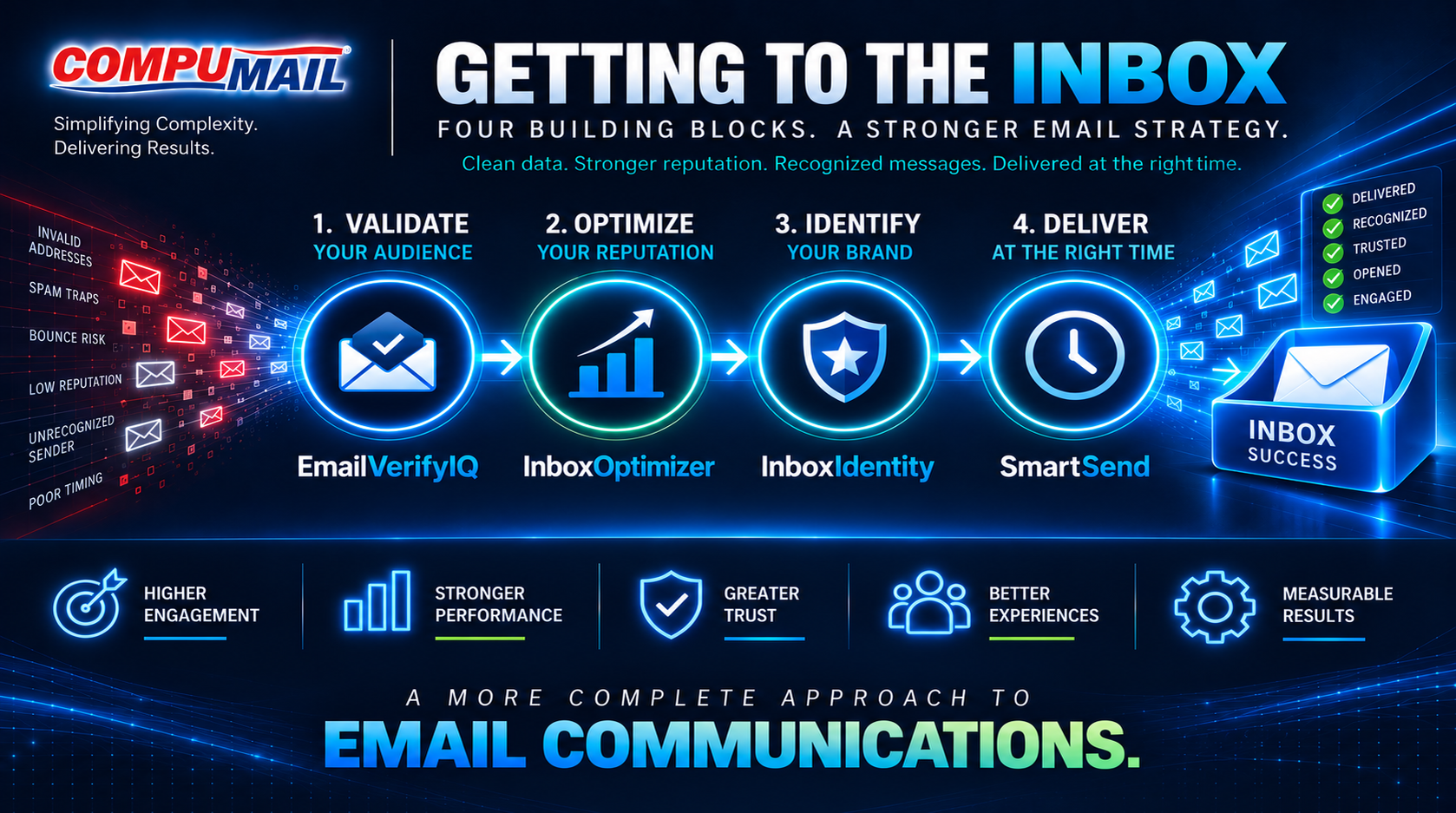
Getting to the Inbox: The Four Building Blocks of Better Email Performance
Today's email ecosystem evaluates a wide range of signals before and after a message is sent. The quality of your recipient data matters. Your sending history and reputation matter. Authentication matters. Recipient behavior matters. Even when a message arrives can influence whether it gets noticed.
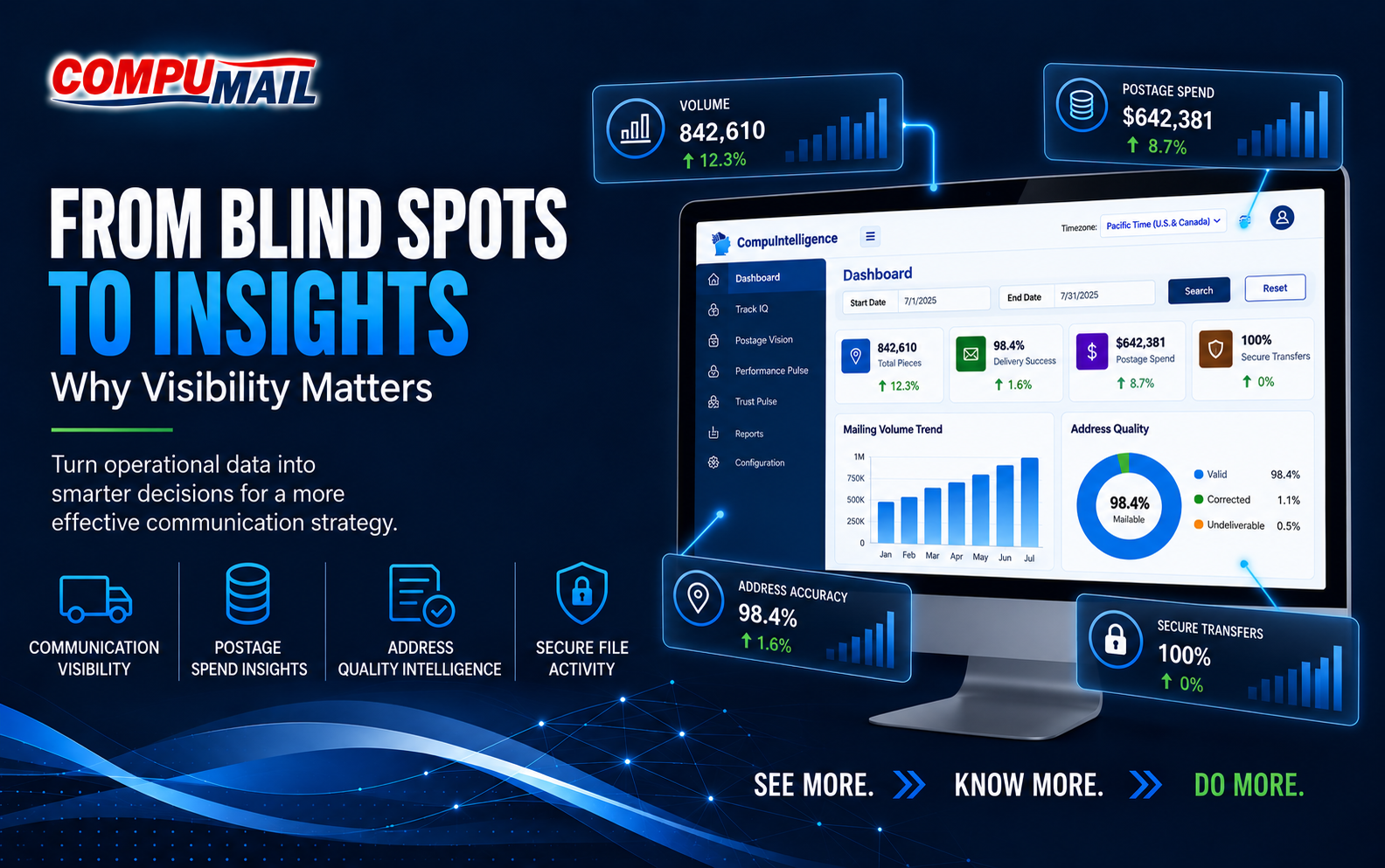
From Blind Spots to Insights: Why Visibility Matters!
Learn how better visibility into production activity, postage spend, address quality, communication workflows, and file activity can help organizations uncover trends, identify issues earlier, and turn communication data into actionable business insights that support smarter decisions.
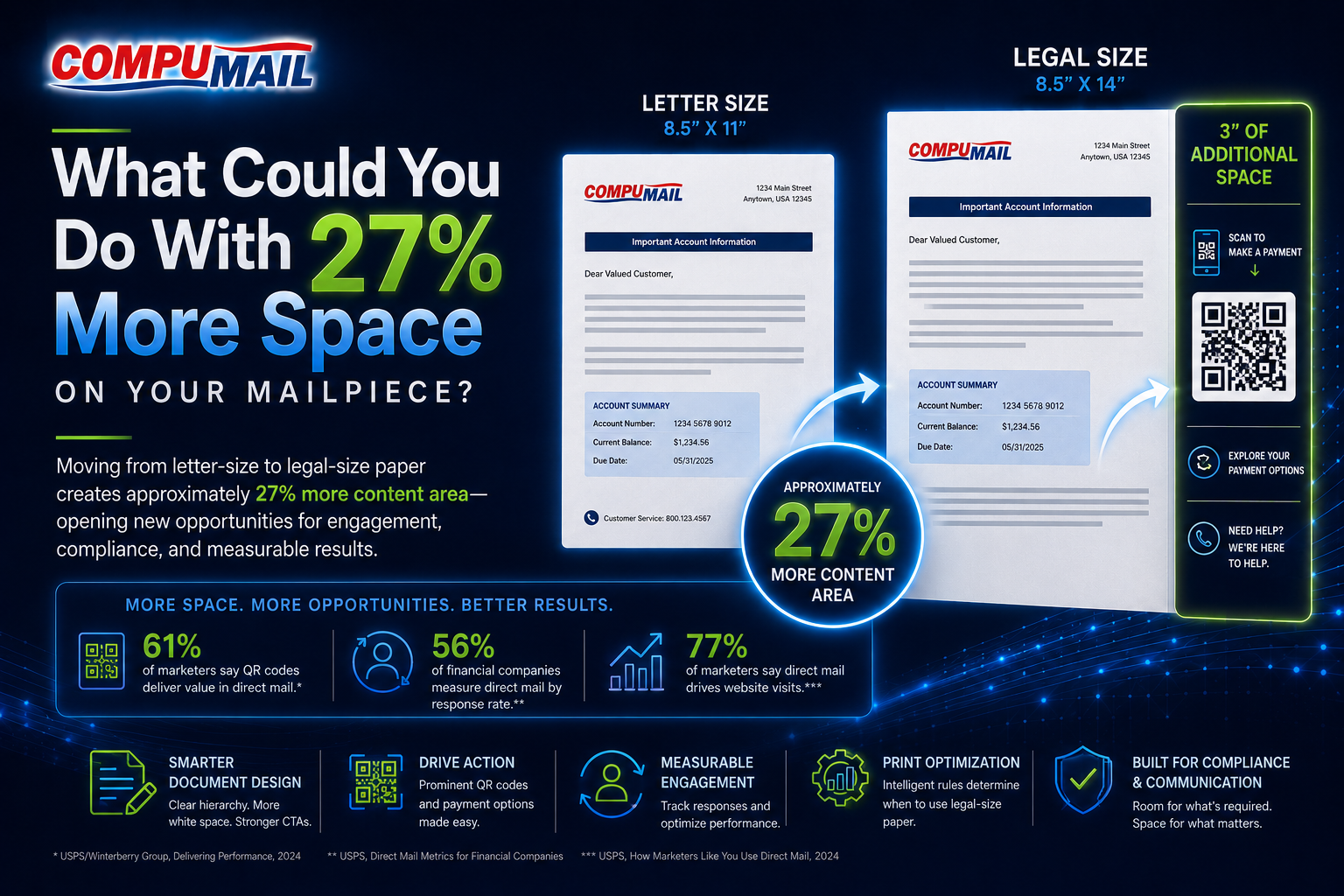
What Could You Do With 27% More Space on Your Mailpiece?
Moving from letter-size to legal-size paper creates approximately 27% more content area—opening new opportunities for calls to action, QR codes, regulatory content, and smarter document design.
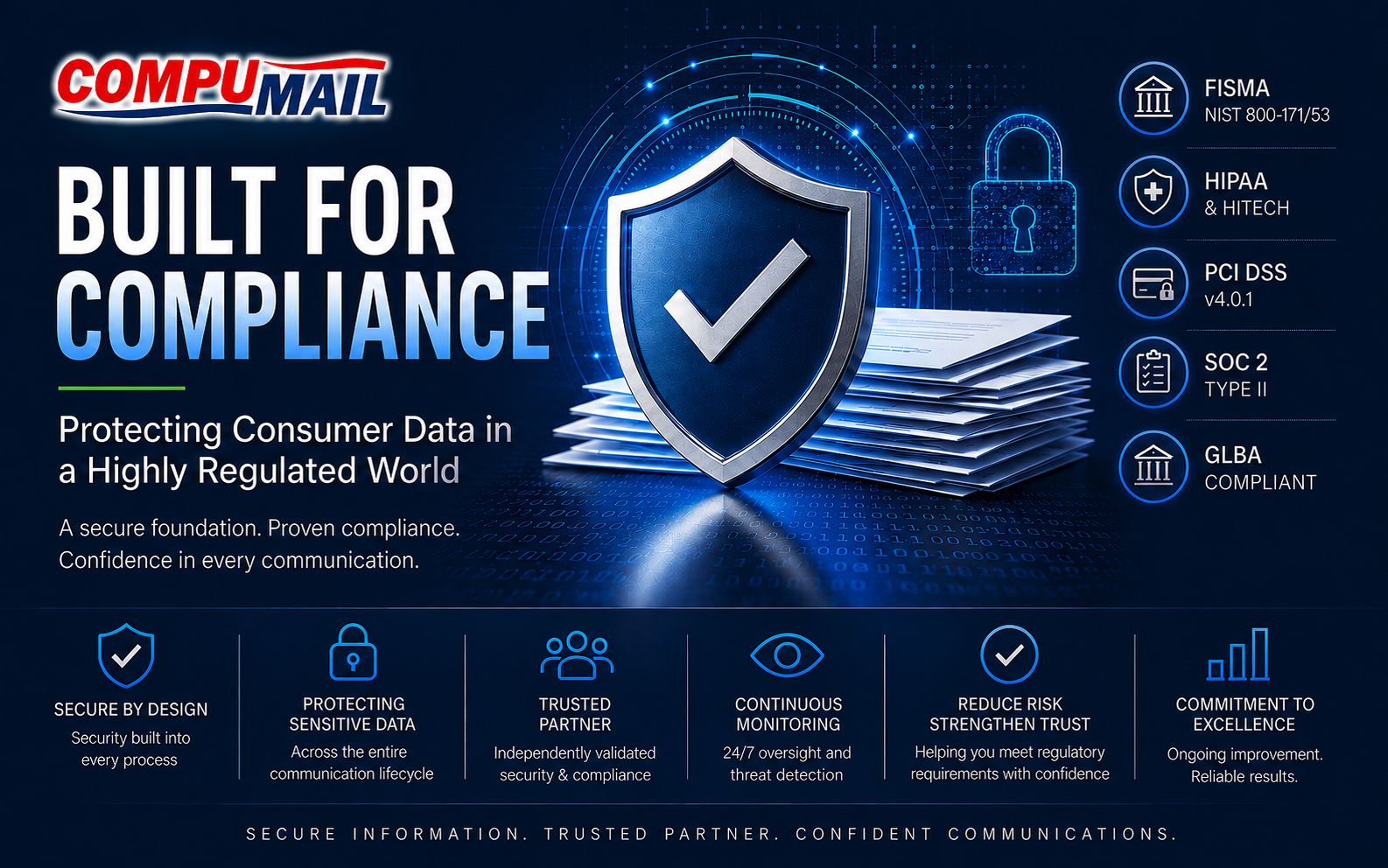
Security Isn't a Feature. It's the Foundation.
Whether it's a billing statement, healthcare notice, collection letter, or account notification, organizations are responsible for protecting sensitive consumer information at every stage of the communication lifecycle. That responsibility extends far beyond simply delivering a document.

A Gold Glove Customer Experience: Precision, Partnership, and Proactive Service from End to End
Baseball fans love the highlight-reel plays. The diving stop, the throw from deep in the hole, the game-saving catch. Those moments earn applause. But ask any coach what wins championships, and the answer is different.

Don't Leave a Runner on Base: How Address Hygiene Improves Delivery Rates and Reduces Waste
In baseball, getting runners on base is only half the battle. The teams that consistently score are the ones that capitalize on every opportunity instead of leaving runners stranded.

The Rise of the Phygital Consumer: Why Print, Email, and SMS Work Better Together
Discover why today's consumers respond best to integrated print, email, and SMS communication strategies. Learn how omnichannel engagement improves visibility, response rates, consumer experience, and business outcomes.
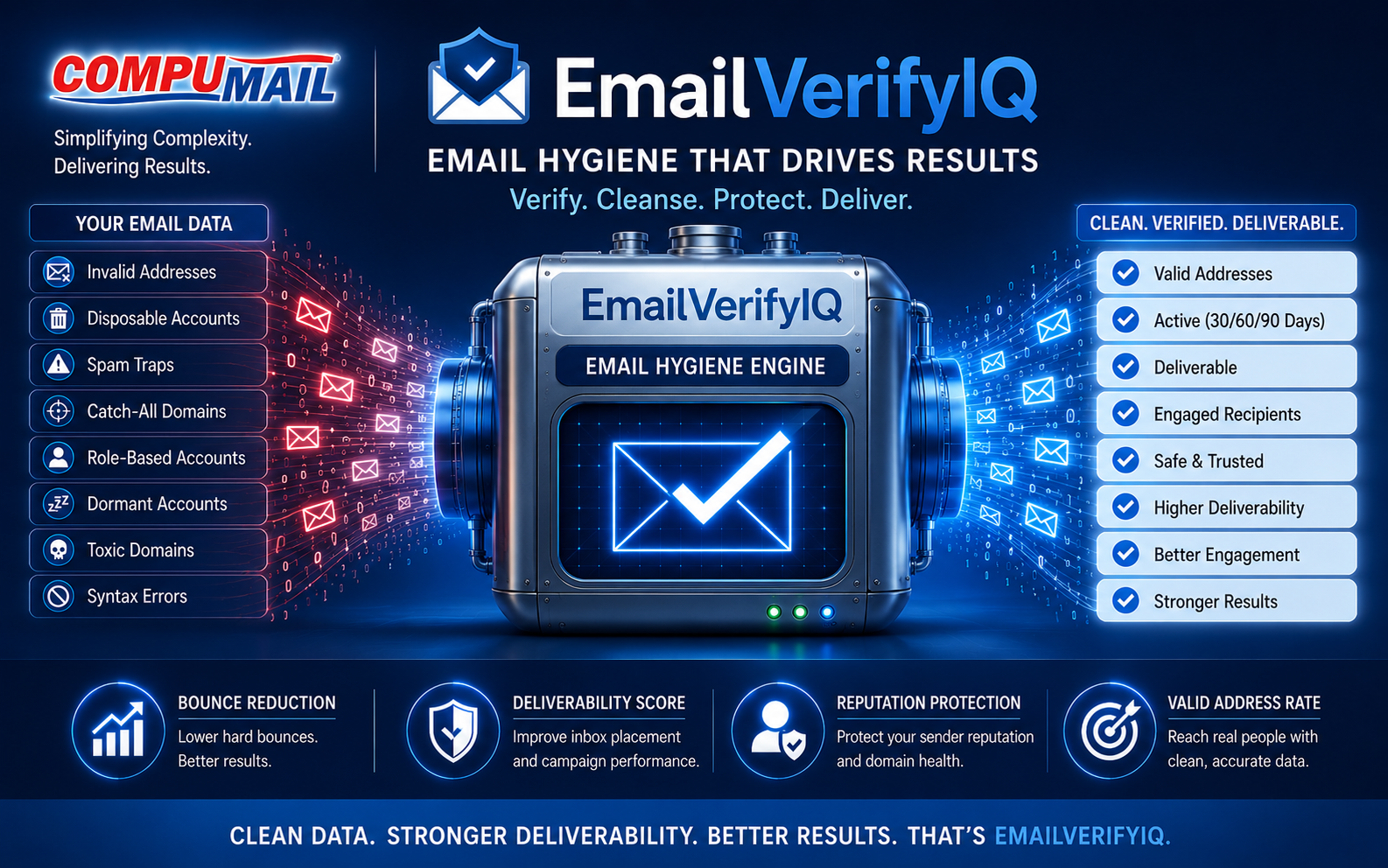
Meet EmailVerifyIQ: Why Email Address Hygiene Matters Just as Much as Address Hygiene
Improve email deliverability, reduce bounce rates, and protect your sender reputation with EmailVerifyIQ. Verify email addresses before deployment and maximize campaign performance.
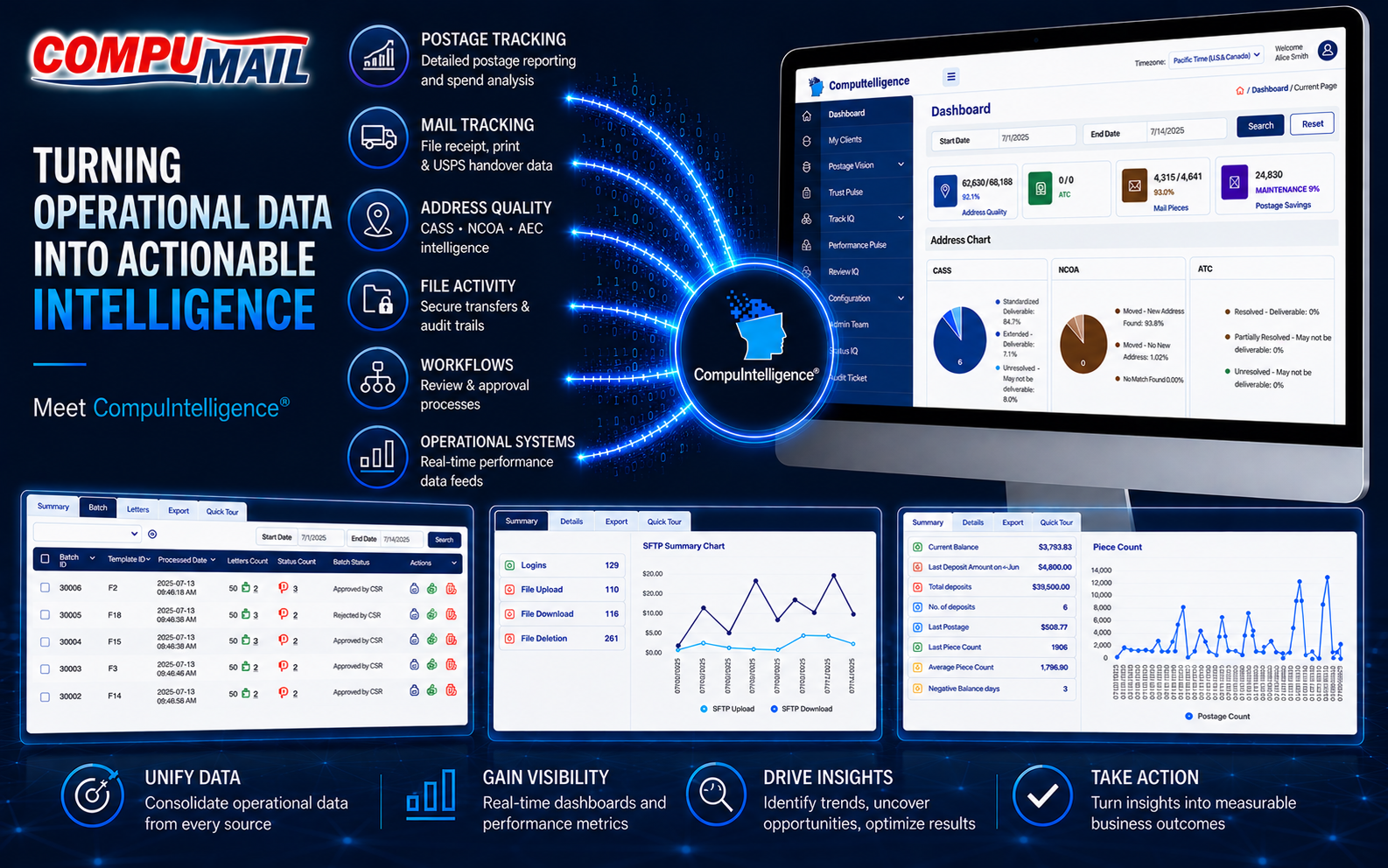
Meet CompuIntelligence® Communication Intelligence & Reporting Platform
In today's business environment, organizations generate more communication data than ever before. Every email, print campaign, SMS notification, compliance review, and consumer interaction creates valuable information.

