Learn how Electronic Return Mail helps organizations reduce physical return mail, capture UAA data faster, improve visibility, and support compliance requirements.


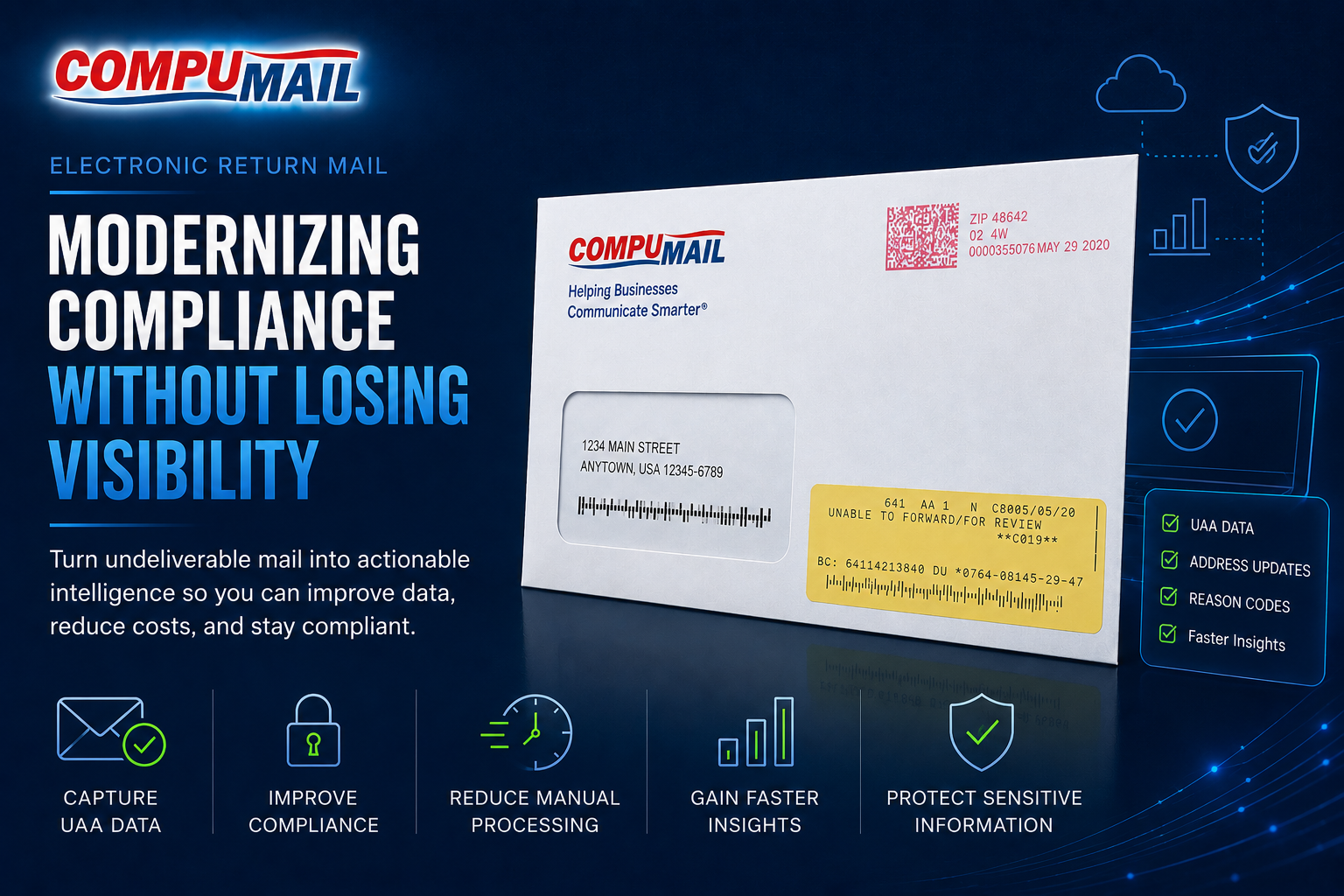


Every returned mailpiece tells you something.
The recipient may have moved. The address may be incomplete. The property may be vacant. The intended recipient may be unknown at that address.
Whatever the reason, an undeliverable mailpiece represents more than a piece of paper that failed to reach its destination. It represents valuable information about the effectiveness of your customer communications.
And at scale, those failed communications can add up quickly.
Consider an organization mailing one million First-Class Mail® pieces per month. At a 3% Undeliverable as Addressed (UAA) rate, that organization would generate 30,000 undeliverable pieces every month.
Beyond the original cost of printing, materials, and postage, those returns can create additional expenses associated with manual handling, rework, customer service activity, delayed payments, and operational inefficiencies.
The challenge becomes even more significant as communication volumes grow.
For organizations sending thousands of statements, notices, collection letters, healthcare communications, and other critical documents, knowing when and why a communication fails to reach its intended recipient is increasingly important.
Yet many organizations still manage return mail much as they did years ago: physical pieces are returned, collected, sorted, opened, reviewed, scanned, and manually reconciled with customer records.
Electronic Return Mail (ERM) provides a more efficient approach by transforming undeliverable mail information into actionable electronic data while helping organizations maintain the visibility and control they need.
At CompuMail, we help organizations modernize this traditionally manual process while accounting for the operational and compliance requirements that can make return mail more complicated than it first appears.
Return Mail Is More Than Returned Paper
When the United States Postal Service (USPS) identifies a mailpiece as Undeliverable as Addressed (UAA), the reason matters.
A consumer may have moved and left a forwarding address. An address may be insufficient. A building may be vacant. A recipient may no longer be associated with the address.
USPS Address Change Service (ACS) can provide electronic notifications containing change-of-address information and other reasons for nondelivery, depending on the applicable service and mailpiece configuration.
That information can help organizations identify inaccurate customer data, improve future communications, reduce repeated mail failures, and make more informed decisions about how to communicate with a consumer going forward.
The problem is that traditional physical return-mail processes can make accessing that information unnecessarily slow and labor-intensive.
Returned pieces may need to be received, handled, opened, reviewed, categorized, scanned, entered into internal systems, and ultimately stored or destroyed. Each additional manual step requires time and resources and can introduce another opportunity for delays or errors.
The question organizations should be asking is not simply:
"What do we do with our returned mail?"
It should be:
"How do we turn return mail into usable information as efficiently as possible?"
What Is Electronic Return Mail?
Electronic Return Mail modernizes the way organizations receive information about undeliverable physical mail.
With the right USPS services and mailpiece configuration, organizations can capture information about undeliverable mail electronically instead of relying solely on the physical piece to make its way back through the mailstream.
Depending on the circumstances and services configured, that information may include:
- The reason a mailpiece could not be delivered
- Change-of-address information when available
- Standardized USPS nondelivery information
- Data that can be reconciled with the original communication or customer record
CompuMail's Electronic Return Mail service manages this process as part of the overall mail workflow and provides return information electronically to our clients.
The result is a more streamlined process that turns what was traditionally a physical mail-handling function into useful data that can be incorporated into existing business processes.
Faster Information. Less Manual Handling.
Consider what happens when thousands of physical pieces are returned to an organization.
Someone must receive them. Someone must sort them. In many workflows, someone must open or scan them, identify why each piece was returned, and determine what happens next.
Multiply those steps across thousands of returned communications, and the operational cost becomes much larger than the cost of the returned envelope itself.
Electronic Return Mail can help organizations reduce that burden by providing return information in a structured electronic format.
Instead of waiting for physical mail to work its way through a manual process, organizations can receive actionable return information electronically and integrate it into downstream workflows.
That can help support:
- Faster identification of undeliverable addresses
- Reduced manual mail handling and processing
- Better visibility into communication outcomes
- More efficient customer-record maintenance
- Reduced risk of repeatedly mailing to known bad addresses
- Improved reporting and reconciliation
- Less dependence on physical return-mail storage and processing
Most importantly, it makes return mail visible as data rather than simply treating it as an operational byproduct of sending physical communications.
The Intelligent Mail Barcode Creates Opportunities for Greater Visibility
Modern mail can provide more information than what appears on the face of an envelope.
The Intelligent Mail® barcode (IMb®) and USPS address-correction services can help connect a physical mailpiece with electronic information about its processing and nondelivery outcomes.
When configured appropriately, mailers can receive electronic information related to address corrections and reasons for nondelivery.
But taking advantage of that intelligence requires more than simply placing a barcode on an envelope.
Postal service options, mailpiece configuration, data management, reporting, and downstream workflows all need to work together.
The USPS uses Service Type Identifiers (STIDs) within the Intelligent Mail barcode to identify requested services and determine how certain undeliverable mailpieces should be handled.
These options can affect whether a mailpiece is forwarded, returned, disposed of, or processed through an eligible electronic notification or Secure Destruction workflow.
For organizations, understanding and managing every postal configuration, service option, endorsement, and data stream shouldn't have to become another internal operational responsibility.
That's where an experienced communications partner can help.
CompuMail manages the postal and production complexities behind the scenes so our clients can focus on what matters most: receiving useful information about communications that did not reach their intended destination.
That distinction matters as organizations modernize their communication strategies.
Industry discussions surrounding digital communications increasingly emphasize the challenges of integrating new technology with existing systems, coordinating communication channels, and maintaining appropriate compliance controls.
As highlighted in AccountsRecovery.net's article, The Consumer Is Ready. Is Your Tech?, modernizing customer communications requires more than simply adopting additional digital tools. Organizations also need to connect those capabilities with existing workflows and make communication data actionable.
Electronic Return Mail shouldn't create another technology problem to solve.
It should remove one.
Security Matters After a Mailpiece Becomes Undeliverable
Sensitive information doesn't stop being sensitive just because a mailpiece couldn't be delivered.
Statements, collection letters, healthcare communications, account notifications, and other regulated communications may contain personally identifiable information or other confidential consumer data.
Traditional physical return mail introduces additional handling. Returned pieces may travel back through the postal network before being received, sorted, opened, scanned, stored, or ultimately destroyed.
For eligible workflows, electronic return-mail services can significantly reduce that physical handling.
USPS Secure Destruction, for example, is an opt-in service that allows qualifying undeliverable First-Class Mail® letters and flats containing protected personal information to be securely shredded and recycled by the Postal Service rather than returned to the sender.
Participating mailers can receive electronic notices identifying pieces processed for Secure Destruction, while applicable ACS notices are provided separately.
The specific information available depends on the USPS services and mailpiece configuration.
This approach can reduce the costs and handling associated with physical returns while limiting unnecessary movement of documents containing sensitive information.
For organizations operating in highly regulated environments, reducing unnecessary handling of sensitive physical documents can be an important part of a broader information-security strategy.
However, Secure Destruction and electronic return-mail workflows must be evaluated alongside any applicable record-retention, audit, and documentation requirements.
Compliance Is Not Always One-Size-Fits-All
Modernizing return mail does not mean every organization—or every mailpiece—should be handled the same way.
Industry requirements, state regulations, document types, internal policies, and specific business needs can affect how organizations manage undeliverable communications.
Nevada provides a good example.
Nevada regulations governing collection agencies specifically address records associated with certain collection letters returned as undeliverable.
Under NAC 649.280, machine-derived form letters, including specified records relating to letters returned as undeliverable, are considered records for purposes of the state's collection-agency record-retention requirements.
NRS 649.335 generally requires collection agencies to retain records concerning each account for at least six years following completion of the last transaction concerning that account.
The regulation is particularly noteworthy because it specifically addresses documentation of returned collection letters.
Under NAC 649.280, relevant records include a copy of a letter returned as undeliverable, together with the returned envelope or a record from a third-party delivery service evidencing the return. Proof of mailing and proof of delivery are also addressed by the regulation.
This distinction is important.
A return-mail strategy should not simply assume that eliminating physical returns is appropriate in every circumstance. Organizations need to understand the requirements that apply to their communications and determine whether the documentation produced by a particular electronic workflow satisfies those requirements.
Electronic return information and legally sufficient evidence of a returned communication are not necessarily the same thing.
CompuMail can help.
In addition to our standard Electronic Return Mail service, we can work with clients that have state-specific, regulatory, audit, or physical-retention requirements to develop an appropriate return-mail workflow.
That may involve evaluating the types of return information available, identifying documentation requirements, and determining whether a standard electronic process or a specialized approach is appropriate.
The goal is not to force every communication into the same process.
The goal is to modernize wherever possible without sacrificing the compliance, documentation, or visibility your organization requires.
Turn Undeliverable Mail into Actionable Intelligence
Return mail should not be the end of the communication lifecycle.
It should be feedback.
When organizations capture return information electronically, they can use it to improve what happens next.
Patterns in UAA mail can identify recurring address-quality problems. Change-of-address information can help inform appropriate account-maintenance workflows. Nondelivery information can help teams determine whether additional research or customer outreach is needed.
And as organizations increasingly combine print with email, SMS, portals, and other digital communication channels, understanding when one channel fails becomes even more valuable.
Return-mail intelligence can become another signal in a broader omnichannel communication strategy.
For example, an undeliverable physical mailing may indicate that an address needs further review before another notice is sent. Depending on the organization's business rules, available contact information, consumer preferences, and applicable regulations, that information may also help determine whether another communication channel is appropriate.
This is where coordinated omnichannel and waterfall communication strategies can provide additional value.
Rather than treating print, email, and digital communications as disconnected processes, organizations can use communication outcomes to help guide subsequent actions.
Over time, that creates a feedback loop:
Send. Monitor. Identify. Learn. Improve.
Electronic Return Mail becomes even more valuable when considered alongside proactive address-hygiene strategies such as CASS™, NCOALink®, and other address-quality services.
Address hygiene helps organizations improve address quality before a mailpiece enters the mailstream.
Electronic Return Mail provides intelligence about what happened after it was mailed.
Together, they provide a more complete approach to managing physical communication data across the mail lifecycle.
Modernizing Return Mail Without Adding Complexity
Organizations do not need another disconnected system or another complicated process to manage.
They need useful information.
As organizations continue modernizing their communication strategies, many of the remaining challenges involve execution, integration, governance, and compliance rather than simply determining which communication channels to use.
Return mail should be viewed through the same lens.
CompuMail's Electronic Return Mail service simplifies the return-mail process by managing postal configuration and return-data workflows behind the scenes while delivering information electronically to clients.
That means organizations can reduce the operational burden associated with physical return mail while gaining more efficient access to valuable UAA information.
And when unique requirements mean a standard electronic workflow isn't appropriate, our team can work with you to understand those requirements and develop a solution that fits.
Because modernizing return mail isn't simply about getting rid of returned envelopes.
It's about turning a traditionally manual process into actionable intelligence—without losing the visibility, security, or compliance your organization depends on.
Frequently Asked Questions About Electronic Return Mail
What is Electronic Return Mail?
Electronic Return Mail (ERM) is a process that provides organizations with electronic information about undeliverable physical mail. By leveraging appropriate USPS services and mailpiece configurations, organizations can reduce reliance on manual return-mail handling and use nondelivery information to support more efficient business processes.
Does Electronic Return Mail eliminate physical returned mail?
For eligible mailpieces and properly configured workflows, Electronic Return Mail can reduce or eliminate the need to receive physical returns. However, certain communications may require specialized handling because of regulatory, documentation, audit, or business requirements.
How does Electronic Return Mail differ from address hygiene?
Address hygiene helps identify and correct address-quality issues before mail is sent. Electronic Return Mail provides information about undeliverable communications after mailing. Together, these approaches help organizations improve address data, reduce repeated mail failures, and make more informed communication decisions.
Can Electronic Return Mail support regulatory compliance?
Electronic Return Mail can support compliance-focused workflows by making nondelivery information available electronically and helping organizations document communication outcomes. However, requirements vary by industry, jurisdiction, document type, and applicable record-retention rules. Organizations should confirm that their chosen workflow provides the evidence and documentation required for their particular circumstances.
Ready to Modernize Your Return Mail Process?
Whether your organization processes large volumes of physical returns, needs faster access to UAA information, wants to reduce manual handling, or must meet specialized regulatory requirements, CompuMail can help you choose the right approach.
Contact CompuMail to learn how Electronic Return Mail can help simplify your return-mail workflow while maintaining the visibility and control your organization needs.
Sources & References
The following postal-service resources, industry publications, and regulatory references provide additional context for the information discussed in this article.
- United States Postal Service — Address Change Service (ACS)
Official USPS information about electronic change-of-address and nondelivery notifications, service options, and related address-correction capabilities.
https://postalpro.usps.com/address-quality/ACS
- United States Postal Service — Secure Destruction
Official USPS information regarding Secure Destruction eligibility, electronic notifications, enrollment requirements, and handling of qualifying undeliverable First-Class Mail.
https://postalpro.usps.com/node/426
- United States Postal Service — Traditional ACS Resources
USPS technical guides and resources relating to Address Change Service, Intelligent Mail barcodes, Service Type Identifiers, and electronic address-correction workflows.
https://postalpro.usps.com/address-quality-solutions/traditional-acs
- AccountsRecovery.net — The Consumer Is Ready. Is Your Tech?
Published August 28, 2026. Industry discussion of digital communication adoption, integration challenges, and the importance of connecting consumer engagement data with existing systems and workflows.
https://www.accountsrecovery.net/2026/08/28/the-consumer-is-ready-is-your-tech/
- Nevada Administrative Code — NAC 649.280
Requirements concerning machine-derived form letters, documentation of undeliverable collection letters, and associated records.
https://www.leg.state.nv.us/nac/NAC-649.html
- Nevada Revised Statutes — NRS 649.335
Statutory requirements governing the retention and examination of collection-agency records and accounts.
https://www.leg.state.nv.us/nrs/NRS-649.html
Regulatory information is provided for general educational purposes and should not be interpreted as legal advice. Organizations should consult qualified legal or compliance professionals regarding requirements applicable to their specific communications and operations.
Latest insights from our articles
Explore a collection of curated articles designed to help you stay ahead in multichannel communication, compliance, and digital transformation.
Electronic Return Mail: Modernizing Compliance Without Losing Visibility

Why Consumers Ignore Communications and What Successful Organizations Do Differently
In a world of overflowing inboxes, crowded mailboxes, and constant digital distractions, simply reaching a consumer is no longer enough. Organizations need to think beyond delivery and focus on what makes a communication worth noticing.

From First Notice to Final Resolution: Building an Omnichannel Consumer Journey
Having multiple communication channels isn't enough. Discover how flexible omnichannel and waterfall workflows connect print, email, and digital communications using client-defined business rules. Learn how smarter routing decisions can reduce unnecessary costs, adapt to delivery challenges, and create a more effective consumer journey from first notice to final resolution.
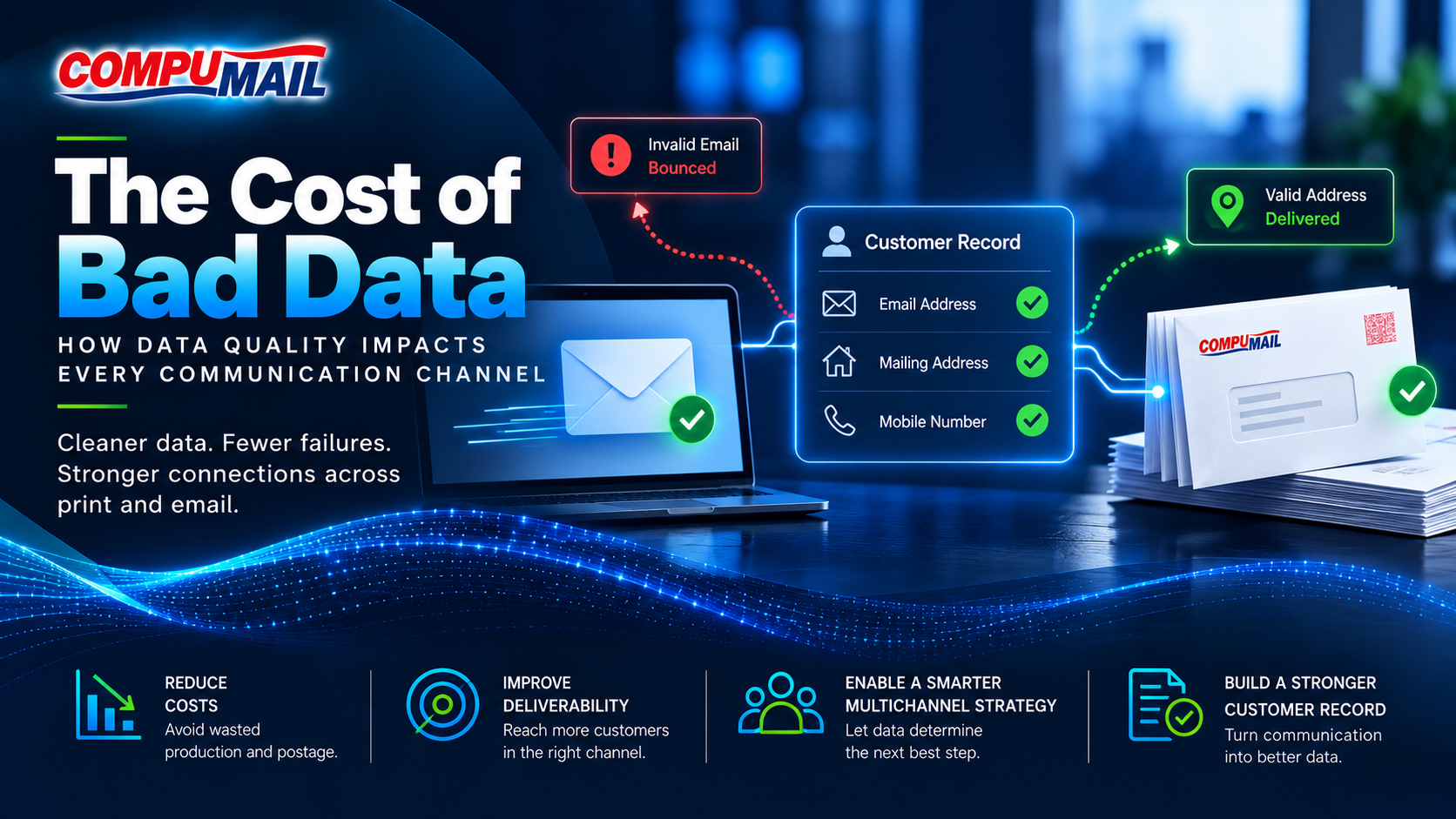
The Cost of Bad Data: How Data Quality Impacts Every Communication Channel
Poor data impacts more than delivery. Inaccurate or outdated postal and email data can lead to returned mail, wasted costs, email bounces, and missed customer communications. Learn how better data quality and address hygiene can improve deliverability, reduce waste, and strengthen your omnichannel communication strategy.
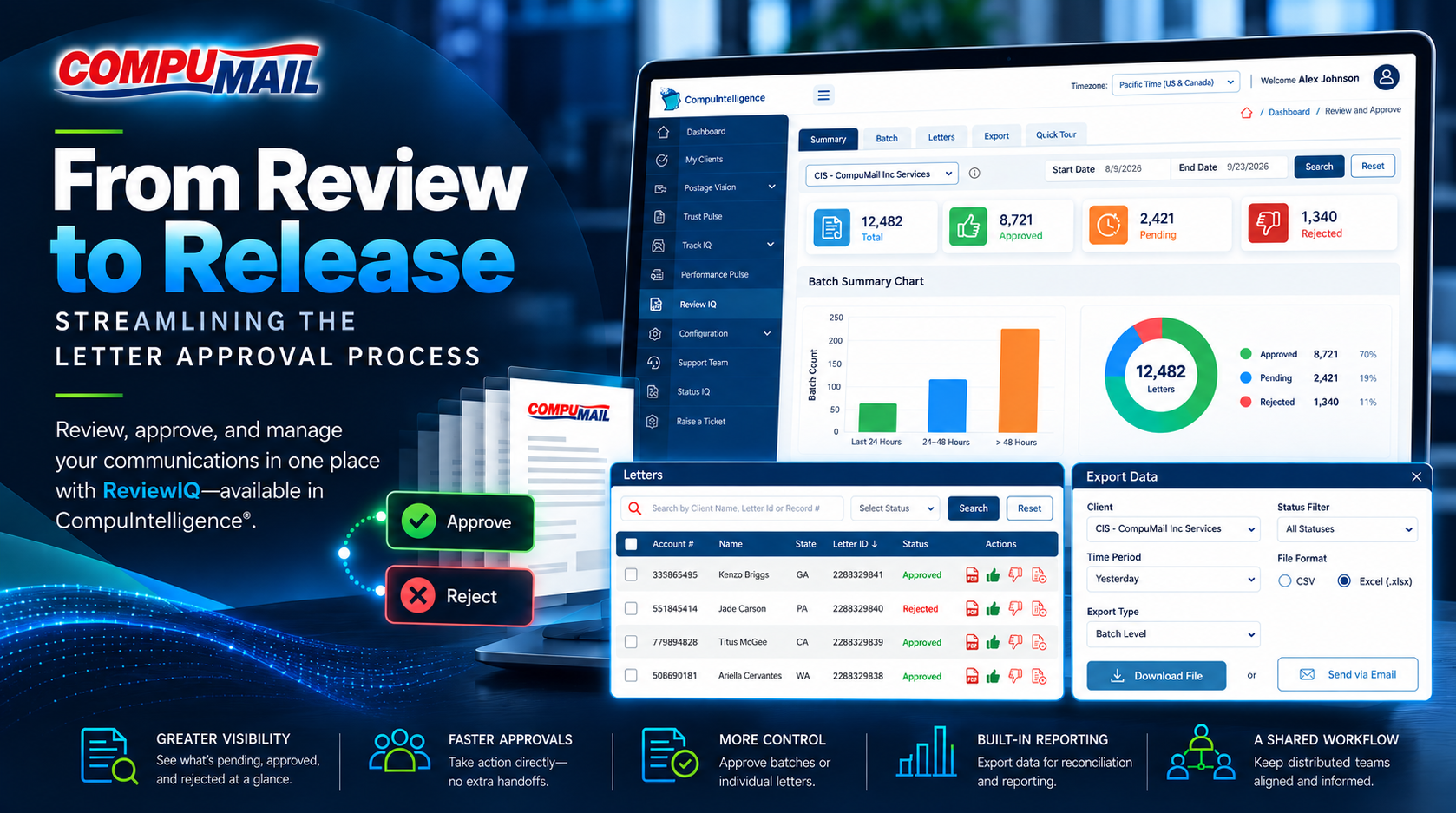
From Review to Release: Streamlining the Letter Approval Process
Reviewing communications before they move into production is an important part of many organizations’ workflows. It gives teams an opportunity to confirm that content, data, and other critical details are correct before communications reach their intended recipients.
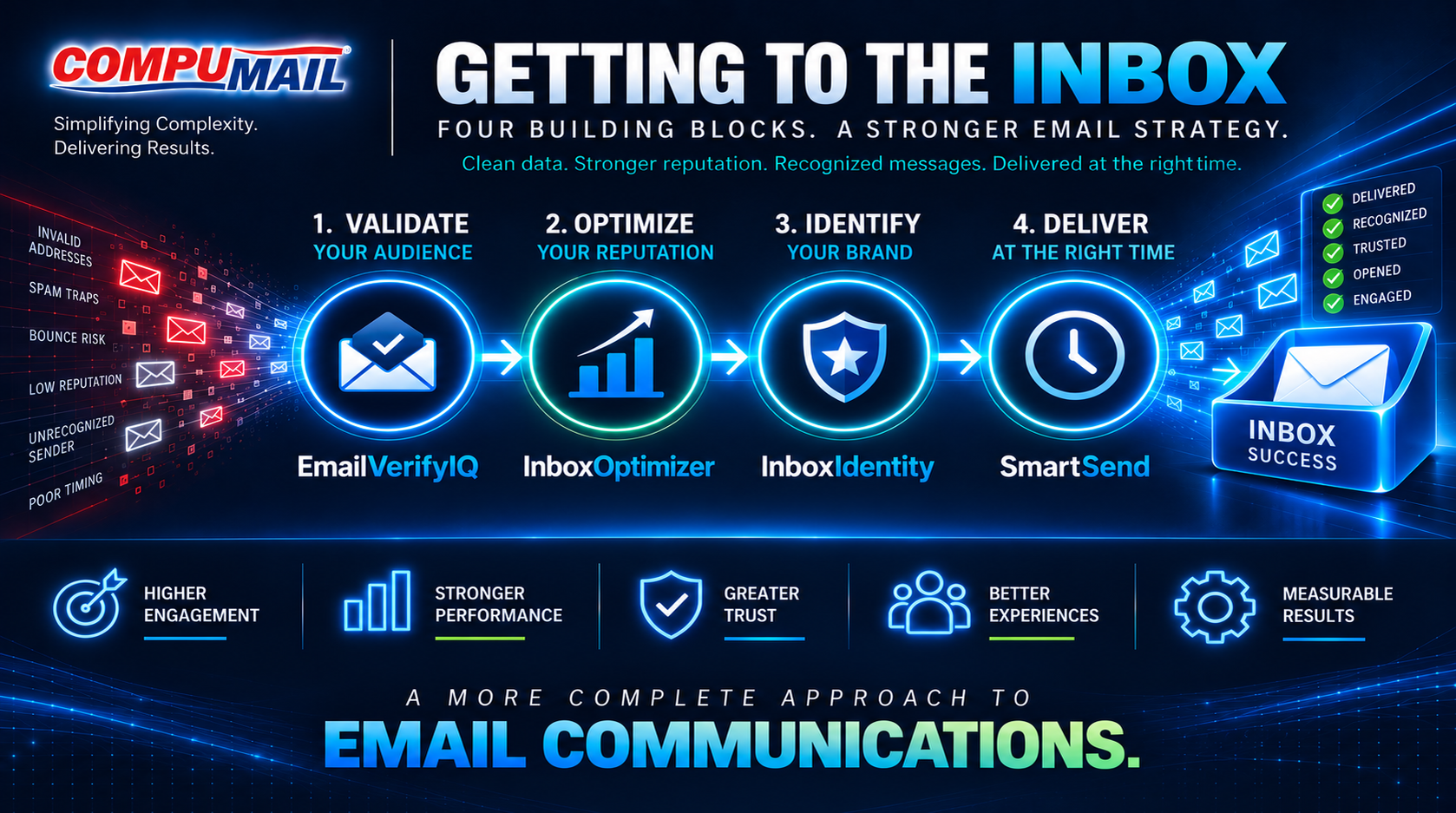
Getting to the Inbox: The Four Building Blocks of Better Email Performance
Today's email ecosystem evaluates a wide range of signals before and after a message is sent. The quality of your recipient data matters. Your sending history and reputation matter. Authentication matters. Recipient behavior matters. Even when a message arrives can influence whether it gets noticed.

From Blind Spots to Insights: Why Visibility Matters!
Learn how better visibility into production activity, postage spend, address quality, communication workflows, and file activity can help organizations uncover trends, identify issues earlier, and turn communication data into actionable business insights that support smarter decisions.
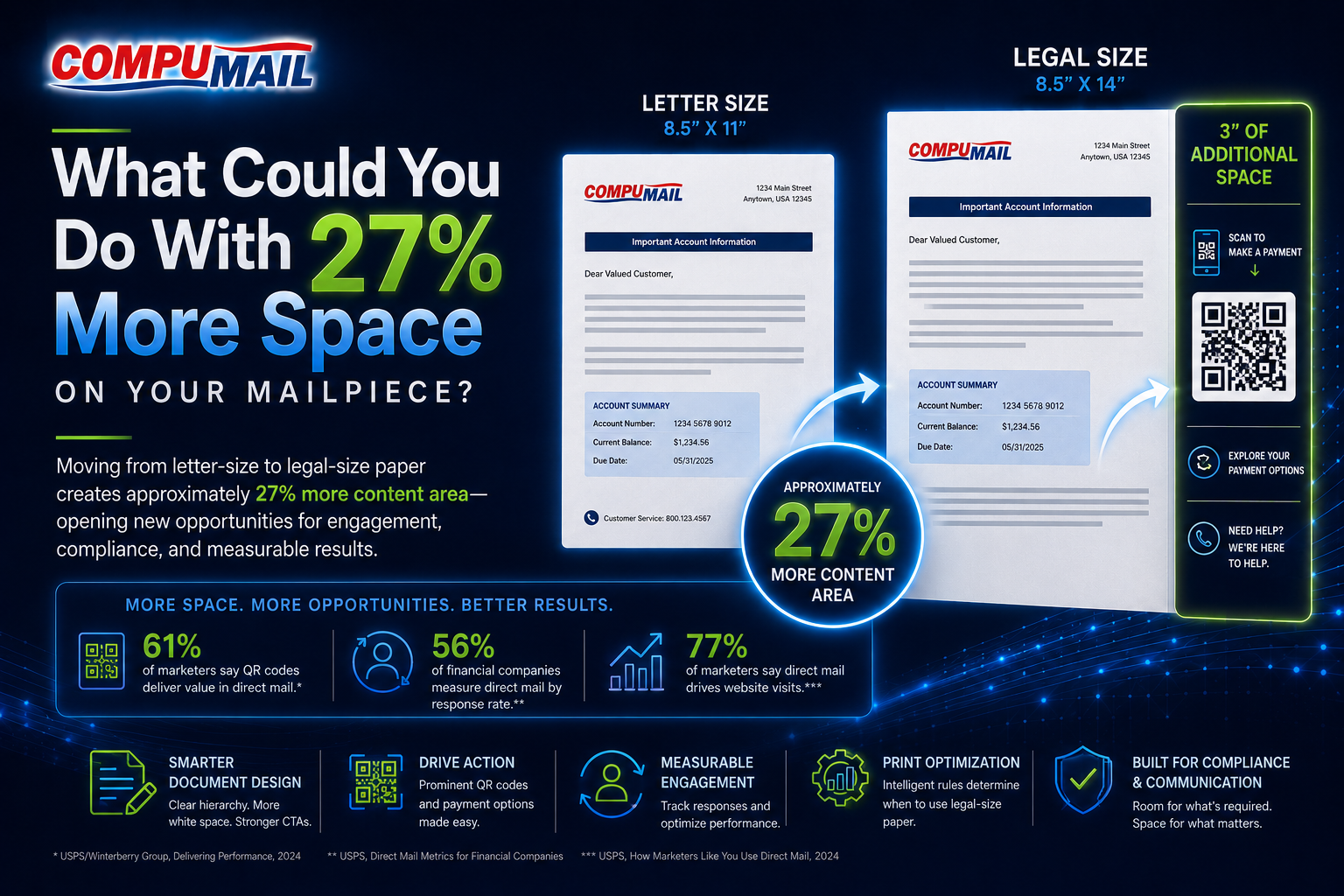
What Could You Do With 27% More Space on Your Mailpiece?
Moving from letter-size to legal-size paper creates approximately 27% more content area—opening new opportunities for calls to action, QR codes, regulatory content, and smarter document design.
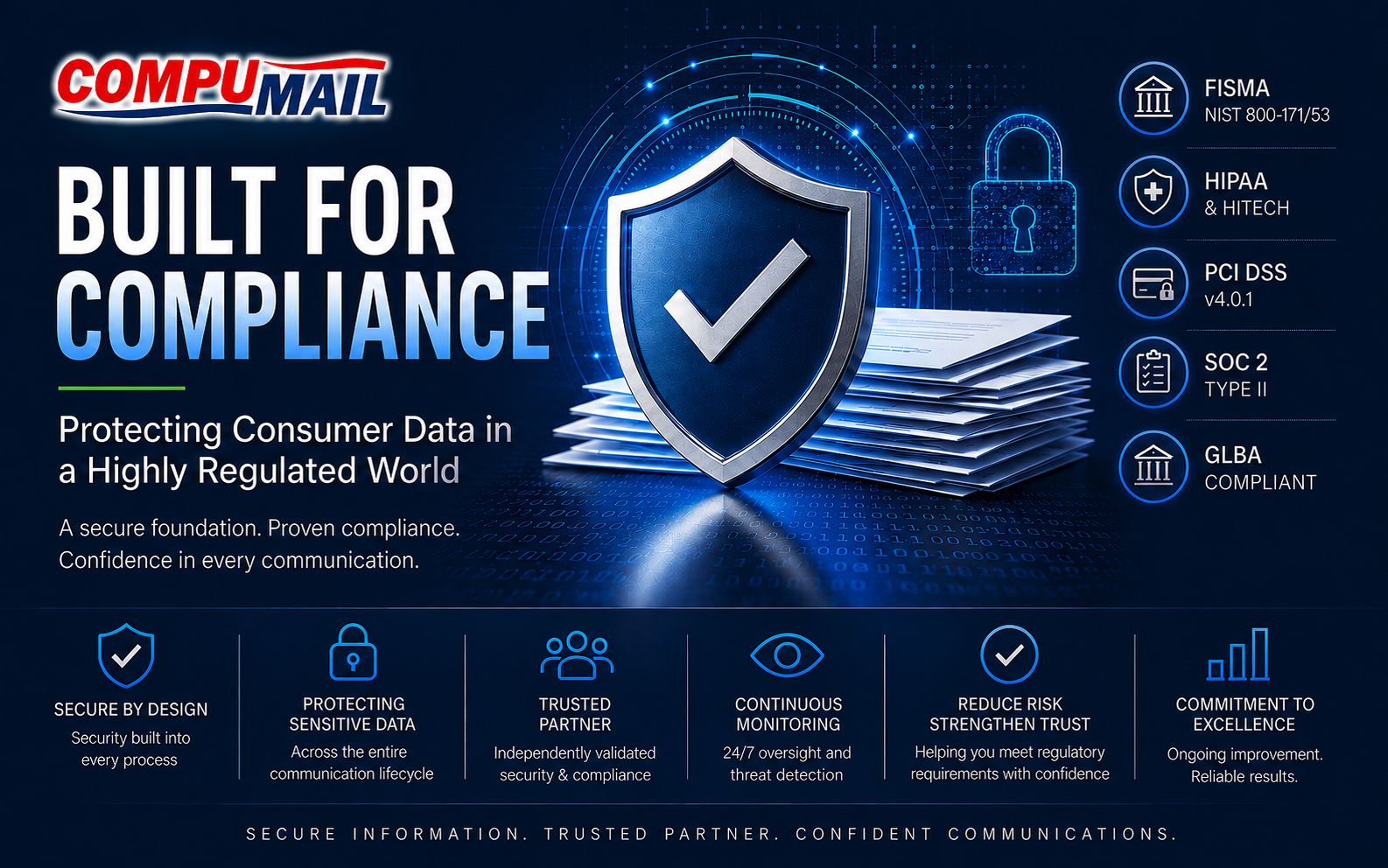
Security Isn't a Feature. It's the Foundation.
Whether it's a billing statement, healthcare notice, collection letter, or account notification, organizations are responsible for protecting sensitive consumer information at every stage of the communication lifecycle. That responsibility extends far beyond simply delivering a document.

A Gold Glove Customer Experience: Precision, Partnership, and Proactive Service from End to End
Baseball fans love the highlight-reel plays. The diving stop, the throw from deep in the hole, the game-saving catch. Those moments earn applause. But ask any coach what wins championships, and the answer is different.

Don't Leave a Runner on Base: How Address Hygiene Improves Delivery Rates and Reduces Waste
In baseball, getting runners on base is only half the battle. The teams that consistently score are the ones that capitalize on every opportunity instead of leaving runners stranded.

The Rise of the Phygital Consumer: Why Print, Email, and SMS Work Better Together
Discover why today's consumers respond best to integrated print, email, and SMS communication strategies. Learn how omnichannel engagement improves visibility, response rates, consumer experience, and business outcomes.
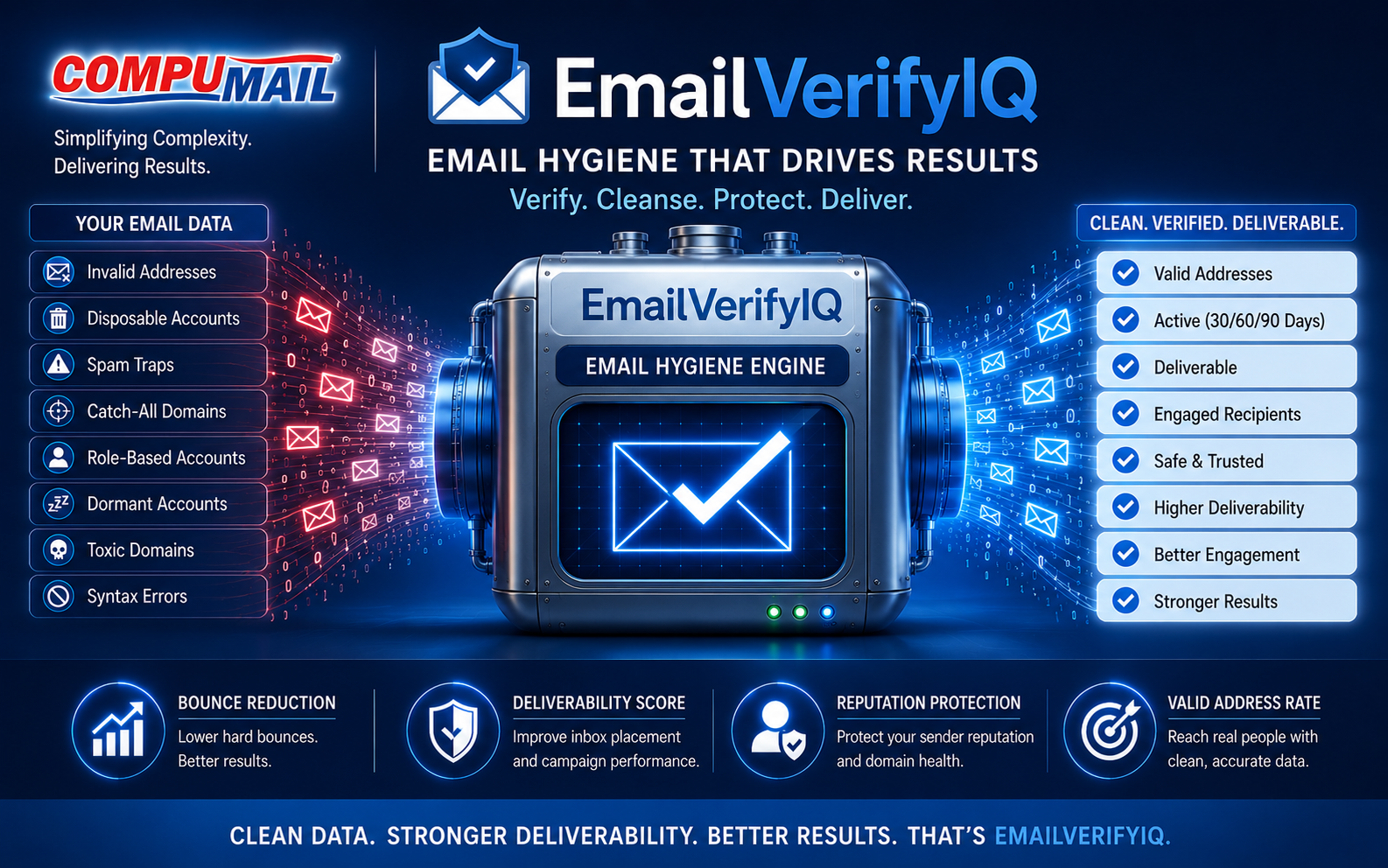
Meet EmailVerifyIQ: Why Email Address Hygiene Matters Just as Much as Address Hygiene
Improve email deliverability, reduce bounce rates, and protect your sender reputation with EmailVerifyIQ. Verify email addresses before deployment and maximize campaign performance.
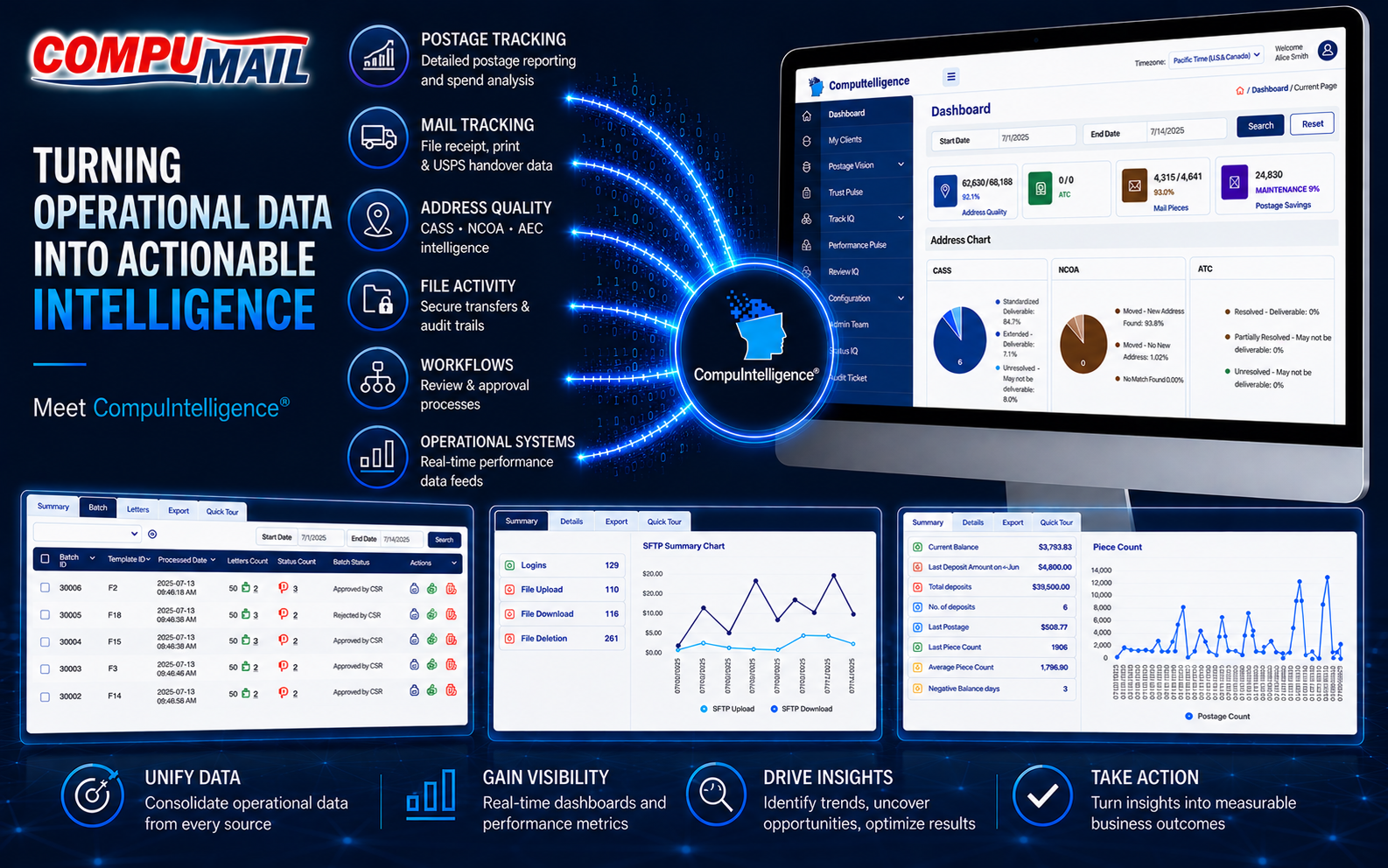
Meet CompuIntelligence® Communication Intelligence & Reporting Platform
In today's business environment, organizations generate more communication data than ever before. Every email, print campaign, SMS notification, compliance review, and consumer interaction creates valuable information.

