Learn how USPS Certified Mail, physical and electronic return receipts, and customized reporting help businesses track important communications.


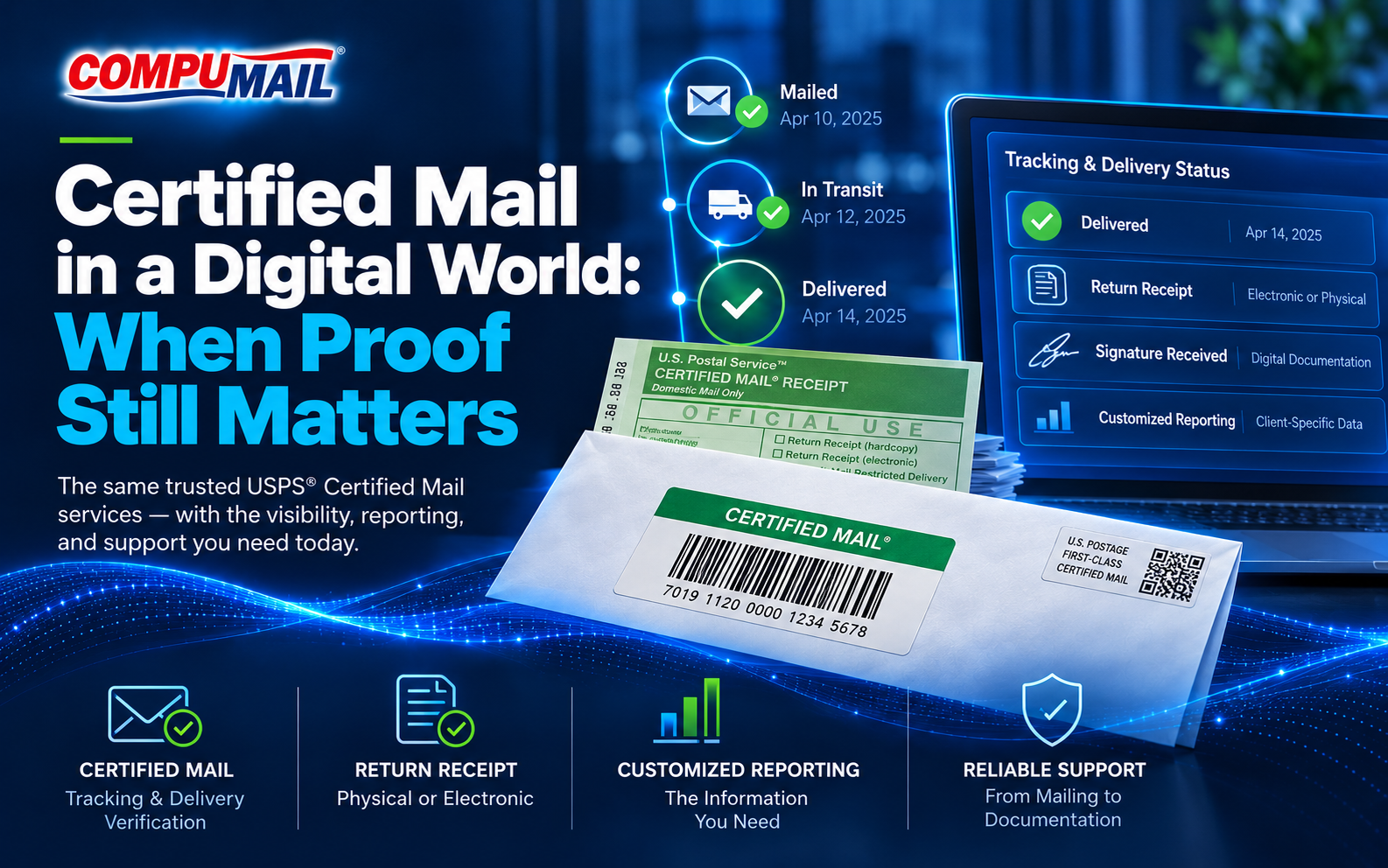


In a world increasingly driven by digital communications, some messages still require something more: documented proof that they were sent, delivered, or that delivery was attempted.
Email, text messaging, and digital notifications have transformed how organizations communicate with customers. They're fast, convenient, and increasingly essential to modern customer engagement strategies.
But not every communication is interchangeable.
Certain notices, disclosures, and other important documents may require additional delivery documentation, whether driven by regulatory requirements, organizational policies, or the need to maintain reliable records.
That's where USPS Certified Mail® continues to play an important role.
And while Certified Mail itself isn't new, the way organizations manage, track, and document these communications has evolved considerably.
Today, businesses can combine traditional Certified Mail services with electronic return receipts, automated tracking, and customized reporting to create a more efficient, visible, and manageable process.
What Is Certified Mail, and Why Does It Still Matter?
Certified Mail is a service offered by the United States Postal Service (USPS) that provides senders with a mailing receipt and access to delivery or attempted-delivery verification.
Unlike ordinary First-Class Mail, Certified Mail provides additional documentation about a mailpiece's journey through the postal system.
Depending on the services selected, organizations can obtain:
- Confirmation that a mailpiece was submitted for mailing.
- A unique tracking number associated with the mailpiece.
- Delivery or attempted-delivery status.
- Delivery dates and other available tracking information.
- A recipient's signature through an optional Return Receipt service.
For organizations handling important customer communications, these additional records can be valuable.
Financial institutions, credit unions, collection agencies, healthcare organizations, and other businesses may use Certified Mail when their communication processes call for greater documentation and accountability.
The value isn't simply knowing that something was mailed. It's having access to records that help document what happened afterward.
Understanding Your Certified Mail Options
Not every important communication requires the same level of documentation.
USPS offers several Certified Mail options, allowing organizations to select services based on their operational requirements and documentation needs.
1. Certified Mail: Tracking and Delivery Verification
Standard USPS Certified Mail provides a mailing receipt, a unique tracking number, and electronic verification of delivery or attempted delivery.
This option can be appropriate when an organization needs documented mailing and delivery-status information but does not require a separate return receipt.
It offers greater visibility than ordinary First-Class Mail while maintaining a relatively straightforward process.
2. Certified Mail with Physical Return Receipt
For organizations that require a physical record of delivery, Certified Mail can be combined with a traditional Return Receipt.
Often recognized as the familiar green postcard (USPS Form 3811), this service provides a physical document containing delivery information and the signature obtained at delivery.
The completed return receipt is mailed back to the sender.
Physical return receipts may be useful for organizations with established paper-based documentation procedures, specific recordkeeping requirements, or workflows that depend on maintaining original physical documents.
However, managing physical return receipts can also introduce additional administrative steps, particularly when handling larger mailing volumes.
3. Certified Mail with Electronic Return Receipt (eRR)
Electronic Return Receipt offers a digital alternative to the traditional green postcard.
Instead of receiving a physical return receipt through the mail, the sender receives an electronic proof-of-delivery document containing delivery information and the signature obtained by USPS.
This electronic documentation can help organizations:
- Reduce the need to handle and store physical return receipts.
- Access delivery documentation electronically.
- Associate signature records with customer accounts or internal systems.
- Simplify document retrieval and reconciliation.
- Support more efficient recordkeeping workflows.
For businesses managing recurring or high-volume Certified Mail communications, electronic return receipts can be particularly valuable.
The underlying Certified Mail service remains the same. What changes is how the return receipt is delivered and how organizations can incorporate that documentation into their existing processes.
It's important to recognize that the suitability of physical versus electronic documentation may depend on applicable requirements and organizational policies.
Certified Mail vs. Electronic Return Receipt: What's the Difference?
One common source of confusion is the distinction between Certified Mail and Return Receipt services.
Although frequently discussed together, they serve different purposes.
Certified Mail provides documentation that a mailpiece was sent and allows the sender to verify delivery or attempted delivery.
Return Receipt is an additional service that provides a delivery record containing the signature obtained at delivery.
That return receipt can be provided in physical or electronic form.
In other words, Certified Mail provides mailing and delivery-status documentation, while Return Receipt adds a separate record of delivery that includes signature information.
Understanding this distinction helps organizations select the appropriate service without introducing unnecessary processing or expense.
The Challenge: Managing Certified Mail at Scale
Sending a handful of Certified Mail pieces may be relatively simple.
Managing hundreds or thousands of them across multiple departments, customers, or business processes is another matter.
Organizations may need to answer questions such as:
- Which communications have been mailed?
- Which pieces have been successfully delivered?
- Which deliveries are still pending?
- Were delivery attempts made?
- Which mailpieces were refused, unclaimed, or returned?
- Where can the associated return receipts and signatures be found?
- How can this information be connected to the original customer record?
Without an organized process, answering these questions can require manual tracking, individual USPS lookups, and time-consuming reconciliation.
The challenge isn't necessarily sending Certified Mail.
It's managing the information generated throughout the mailing and delivery process.
This is where a modern Certified Mail solution can make a meaningful difference.
Bringing Digital Visibility to Traditional Certified Mail
At CompuMail, we help organizations manage Certified Mail as part of a broader, more connected customer communications strategy.
Our Certified Mail services support traditional USPS Certified Mail, Certified Mail with physical Return Receipt, and Certified Mail with Electronic Return Receipt.
But the value extends beyond simply preparing and mailing the documents.
We also help clients manage the tracking, reporting, and delivery documentation associated with their communications.
Customized Tracking and Reporting
Different organizations need different information from their Certified Mail programs.
Some may primarily want confirmation that communications were delivered.
Others may need to identify exceptions, monitor attempted deliveries, or retrieve signature documentation for specific accounts.
CompuMail works with clients to develop reporting solutions aligned with their operational needs.
Depending on the service and available USPS data, reporting can include information such as:
- Certified Mail tracking numbers.
- Mailing and delivery dates.
- Delivery and attempted-delivery statuses.
- Available USPS tracking events.
- Undelivered, refused, or returned mailpiece information.
- Electronic return receipt and signature documentation.
- Client-defined identifiers to connect mailing activity with internal records.
Rather than forcing every organization into the same reporting structure, we can customize the information provided to help clients focus on the data most relevant to their business.
This flexibility can reduce the time spent sorting through tracking information and make it easier to identify mailpieces requiring attention.
Physical or Electronic Documentation
Not every organization wants to manage its delivery documentation the same way.
Some prefer physical return receipts that can be incorporated into existing paper-based processes.
Others want electronic signature documentation that can be stored, retrieved, or associated with digital customer records.
CompuMail supports both approaches, helping clients select the return receipt service and documentation delivery method that best align with their requirements.
For organizations transitioning toward more digital operations, electronic return receipts can provide an opportunity to modernize the process without changing the underlying USPS Certified Mail service.
Turning Delivery Data into Actionable Information
A tracking number alone only tells part of the story.
The greater operational value comes from understanding what the tracking information means and making it available to the people and systems that need it.
For example, a delivered mailpiece may require no additional follow-up.
A returned or unclaimed mailpiece, however, may need further review based on an organization's established procedures.
By organizing and filtering Certified Mail data, businesses can more easily identify these different outcomes and determine the appropriate next steps.
The goal is to make Certified Mail documentation easier to access, interpret, and act upon.
Certified Mail and Compliance: Choosing the Right Approach
Certified Mail is frequently associated with regulated communications, formal notices, and other documentation-sensitive processes.
However, it's important to understand that Certified Mail does not automatically establish legal compliance or guarantee that a particular notice satisfies applicable requirements.
Requirements can vary depending on the industry, jurisdiction, communication type, and circumstances.
Some processes may call for proof of mailing, while others may require delivery confirmation, signature documentation, or additional records.
Similarly, the acceptability of electronic versus physical return receipts may depend on the applicable legal or regulatory framework.
Organizations should work with their legal and compliance teams to determine which services and documentation methods are appropriate.
Once those requirements are established, CompuMail can help support the corresponding mailing, tracking, and reporting workflows.
Where Certified Mail Fits in an Omnichannel Strategy
Modern customer communications increasingly rely on a combination of physical mail, email, text messaging, and digital engagement.
Each channel serves a different purpose.
Email and SMS can provide speed and convenience.
Traditional physical mail can deliver important documents directly to a customer's mailing address.
Certified Mail adds another layer of documentation when greater accountability is needed.
These channels aren't necessarily competing alternatives.
They're complementary tools that organizations can use based on the purpose of the communication, customer preferences, and applicable requirements.
For example, an organization may use digital channels for routine communications while reserving Certified Mail for notices that call for additional delivery documentation.
A successful omnichannel strategy isn't about replacing physical mail with digital communication. It's about using the right channel for the right message.
And when proof matters, Certified Mail remains an important part of that strategy.
Frequently Asked Questions About Certified Mail
What is the difference between Certified Mail and regular mail?
Regular First-Class Mail generally does not provide the same individual mailing receipt and delivery-verification features as Certified Mail. USPS Certified Mail provides a mailing receipt, a unique tracking number, and access to delivery or attempted-delivery verification.
Does Certified Mail include a signature?
USPS Certified Mail requires a signature upon delivery. However, obtaining a separate return receipt containing that signature generally requires purchasing the additional Return Receipt service.
What is an Electronic Return Receipt?
An Electronic Return Receipt (eRR) is a USPS service that provides an electronic delivery record containing signature information instead of the traditional physical green postcard.
Is an Electronic Return Receipt the same as a physical Return Receipt?
Both provide USPS delivery documentation that includes signature information, but they are delivered in different formats. Whether either format satisfies a particular legal or regulatory requirement should be determined by the organization's legal or compliance team.
Can businesses track Certified Mail in bulk?
Yes. Commercial mailing solutions can help organizations manage multiple Certified Mail pieces, organize available USPS tracking information, and receive consolidated reporting rather than relying exclusively on individual tracking lookups.
Can Certified Mail reporting be customized?
Yes. CompuMail offers customized Certified Mail reporting that can help organizations focus on relevant delivery statuses, tracking events, exceptions, and associated documentation.
Can businesses receive Certified Mail signatures electronically?
Yes. By using Certified Mail with Electronic Return Receipt, businesses can obtain electronic proof-of-delivery documentation containing the signature recorded by USPS. CompuMail can help clients incorporate this documentation into their reporting and recordkeeping processes.
When Proof Matters, So Does the Process
Certified Mail has been around for decades, but its relevance hasn't disappeared in an increasingly digital world.
If anything, the growing emphasis on visibility, accountability, and accessible information makes effective delivery documentation an important consideration for organizations managing critical communications.
The difference today is that businesses don't have to manage every Certified Mail piece through disconnected, manual processes.
With the right combination of USPS services, electronic documentation, and customized reporting, organizations can maintain the benefits of traditional Certified Mail while improving operational efficiency.
Because when a communication matters enough to require proof, the process for obtaining and managing that proof matters too.
Make Certified Mail Work Smarter for Your Organization
Whether you're managing occasional Certified Mail notices or a high-volume mailing program, CompuMail can help simplify the process.
From traditional Certified Mail and physical return receipts to electronic return receipts and customized tracking reports, we help organizations build mailing workflows that support their documentation and operational needs.
Contact CompuMail to learn how our Certified Mail services can support your customer communications strategy.
Disclaimer: CompuMail does not provide legal advice. Information presented in this article is intended for general educational purposes and should not be interpreted as legal or regulatory guidance. Organizations should consult their legal counsel and compliance professionals to determine applicable mailing, delivery, documentation, and record-retention requirements.
Latest insights from our articles
Explore a collection of curated articles designed to help you stay ahead in multichannel communication, compliance, and digital transformation.
Certified Mail in a Digital World: When Proof Still Matters
Electronic Return Mail: Modernizing Compliance Without Losing Visibility
Learn how Electronic Return Mail helps organizations reduce physical return mail, capture UAA data faster, improve visibility, and support compliance requirements.
Why Consumers Ignore Communications and What Successful Organizations Do Differently
In a world of overflowing inboxes, crowded mailboxes, and constant digital distractions, simply reaching a consumer is no longer enough. Organizations need to think beyond delivery and focus on what makes a communication worth noticing.
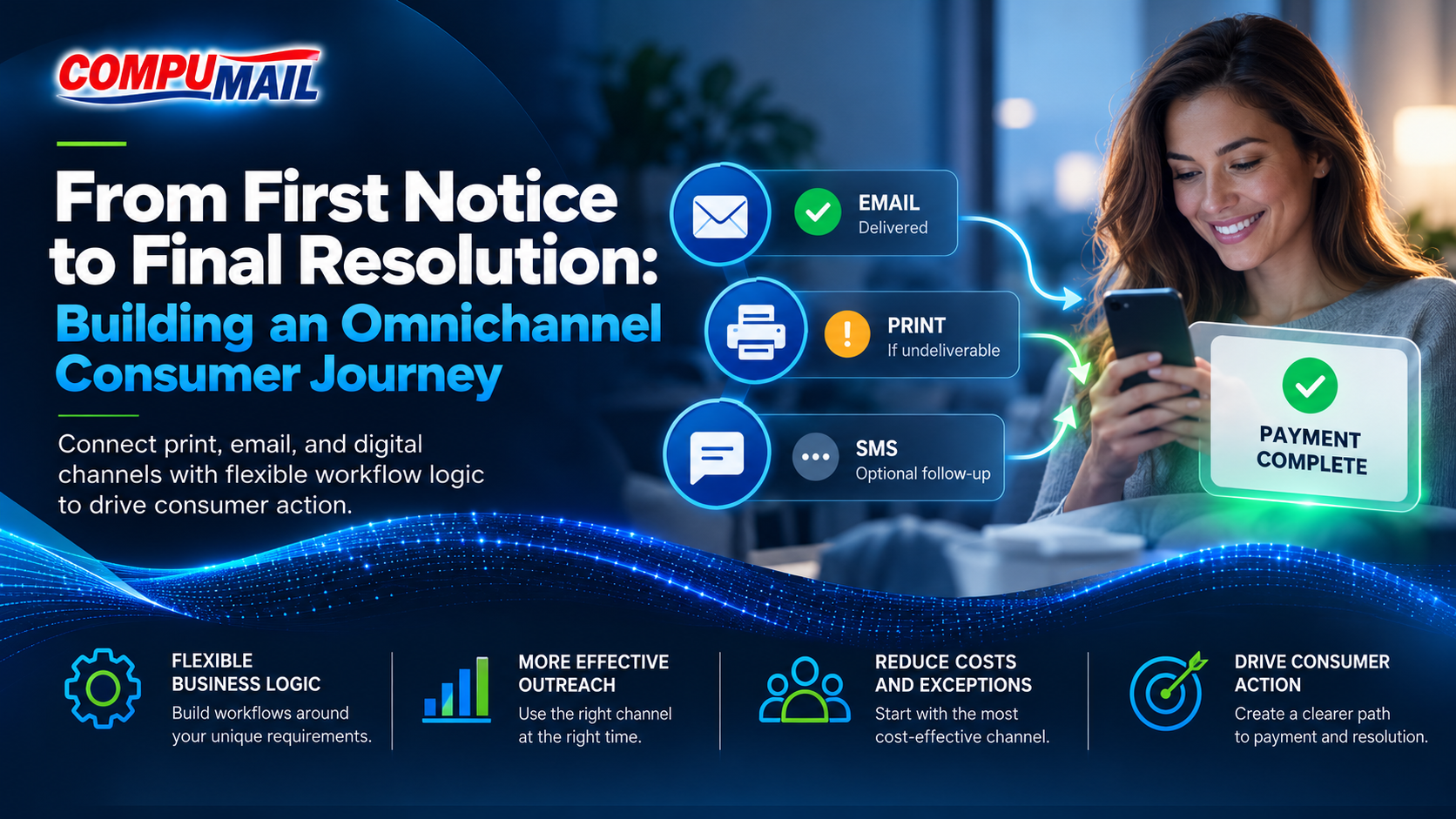
From First Notice to Final Resolution: Building an Omnichannel Consumer Journey
Having multiple communication channels isn't enough. Discover how flexible omnichannel and waterfall workflows connect print, email, and digital communications using client-defined business rules. Learn how smarter routing decisions can reduce unnecessary costs, adapt to delivery challenges, and create a more effective consumer journey from first notice to final resolution.
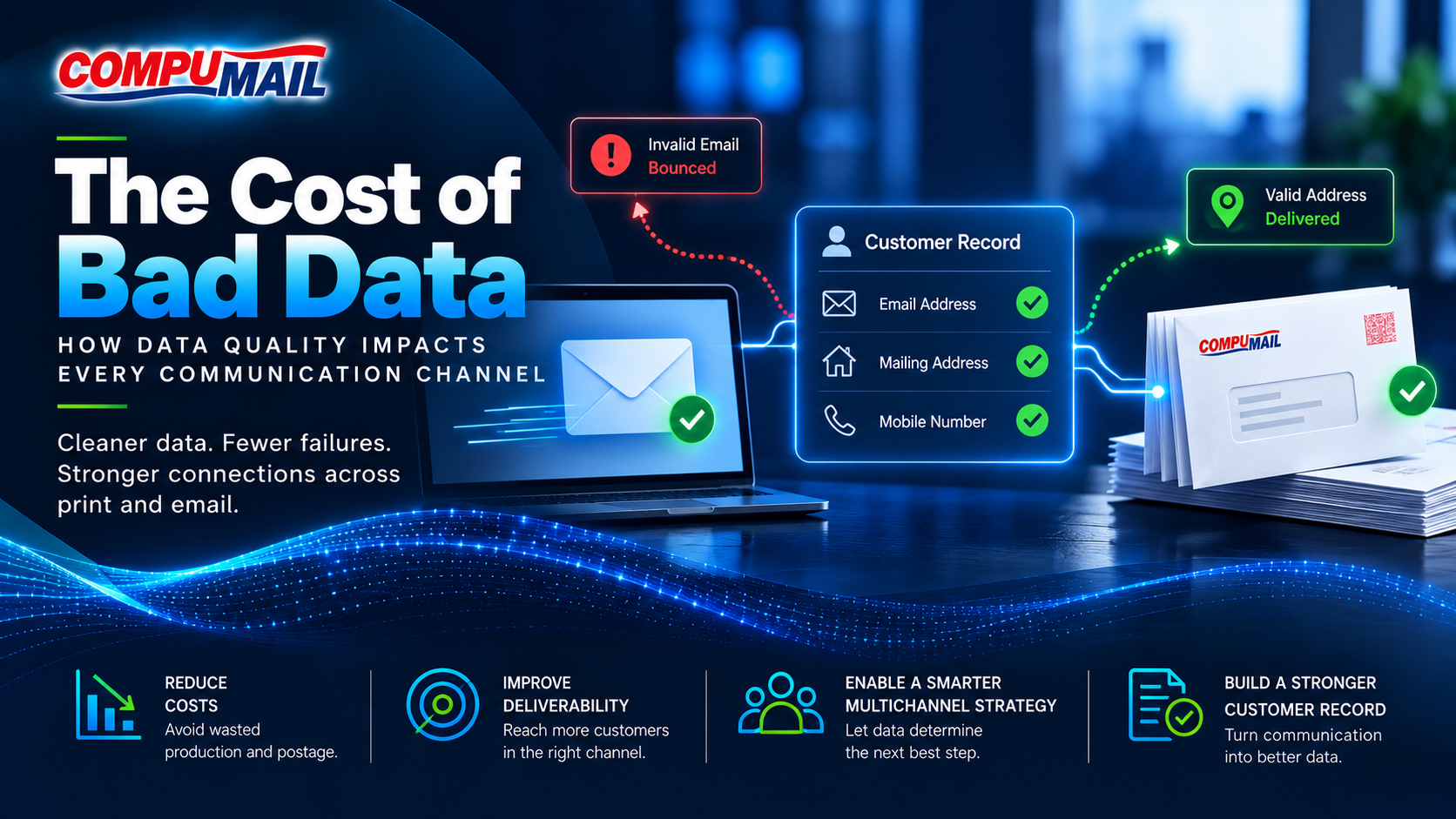
The Cost of Bad Data: How Data Quality Impacts Every Communication Channel
Poor data impacts more than delivery. Inaccurate or outdated postal and email data can lead to returned mail, wasted costs, email bounces, and missed customer communications. Learn how better data quality and address hygiene can improve deliverability, reduce waste, and strengthen your omnichannel communication strategy.
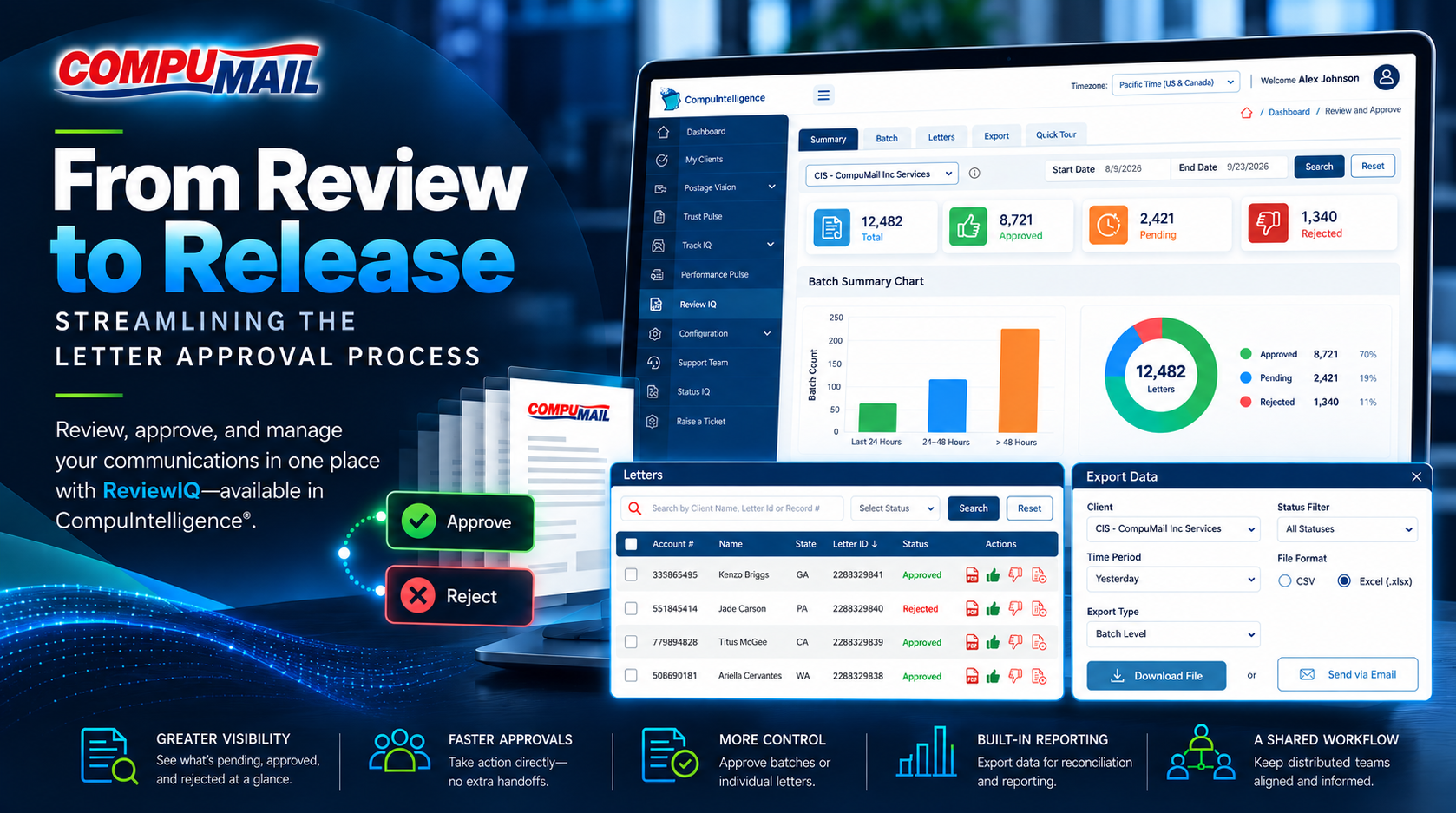
From Review to Release: Streamlining the Letter Approval Process
Reviewing communications before they move into production is an important part of many organizations’ workflows. It gives teams an opportunity to confirm that content, data, and other critical details are correct before communications reach their intended recipients.
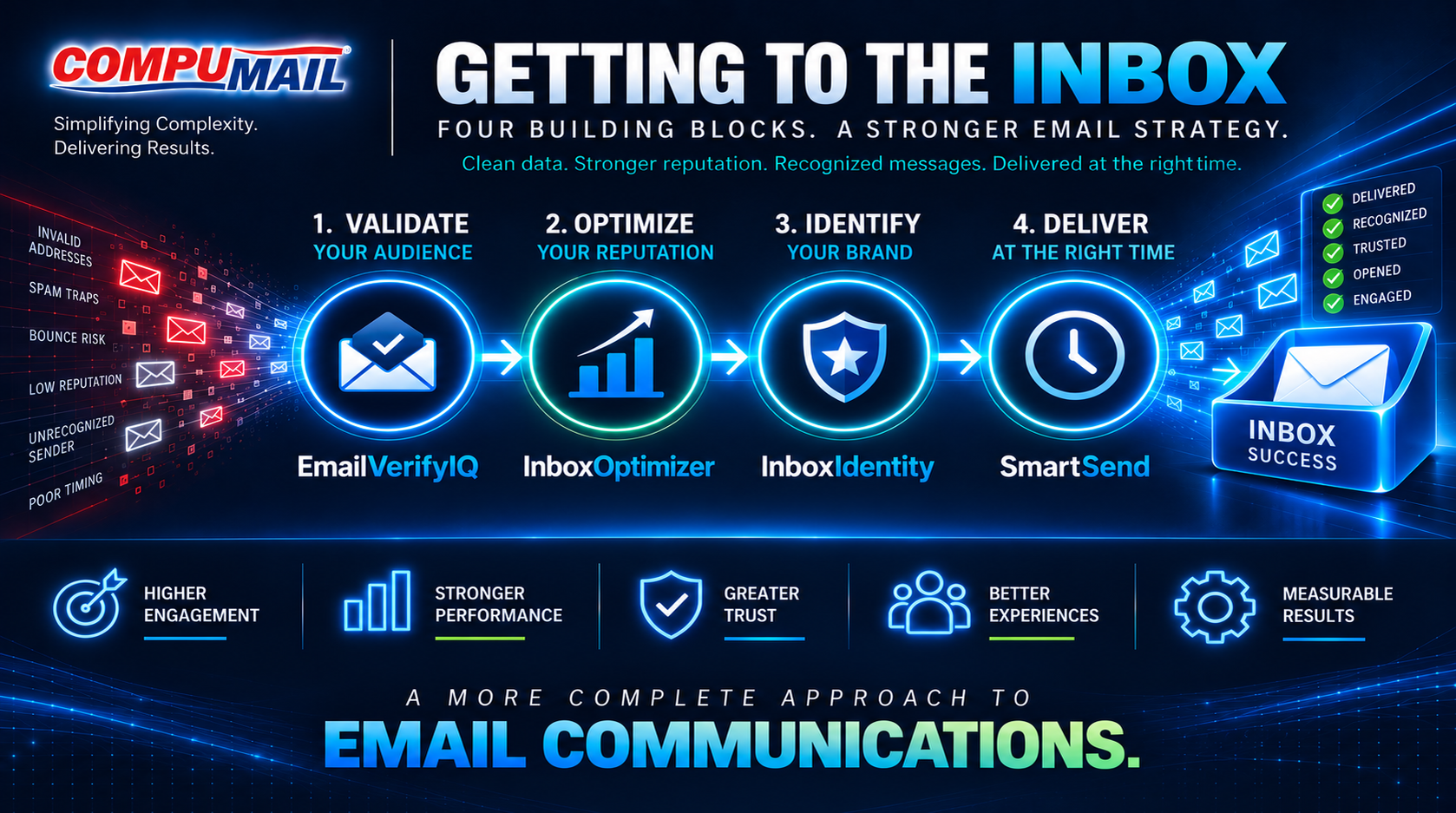
Getting to the Inbox: The Four Building Blocks of Better Email Performance
Today's email ecosystem evaluates a wide range of signals before and after a message is sent. The quality of your recipient data matters. Your sending history and reputation matter. Authentication matters. Recipient behavior matters. Even when a message arrives can influence whether it gets noticed.
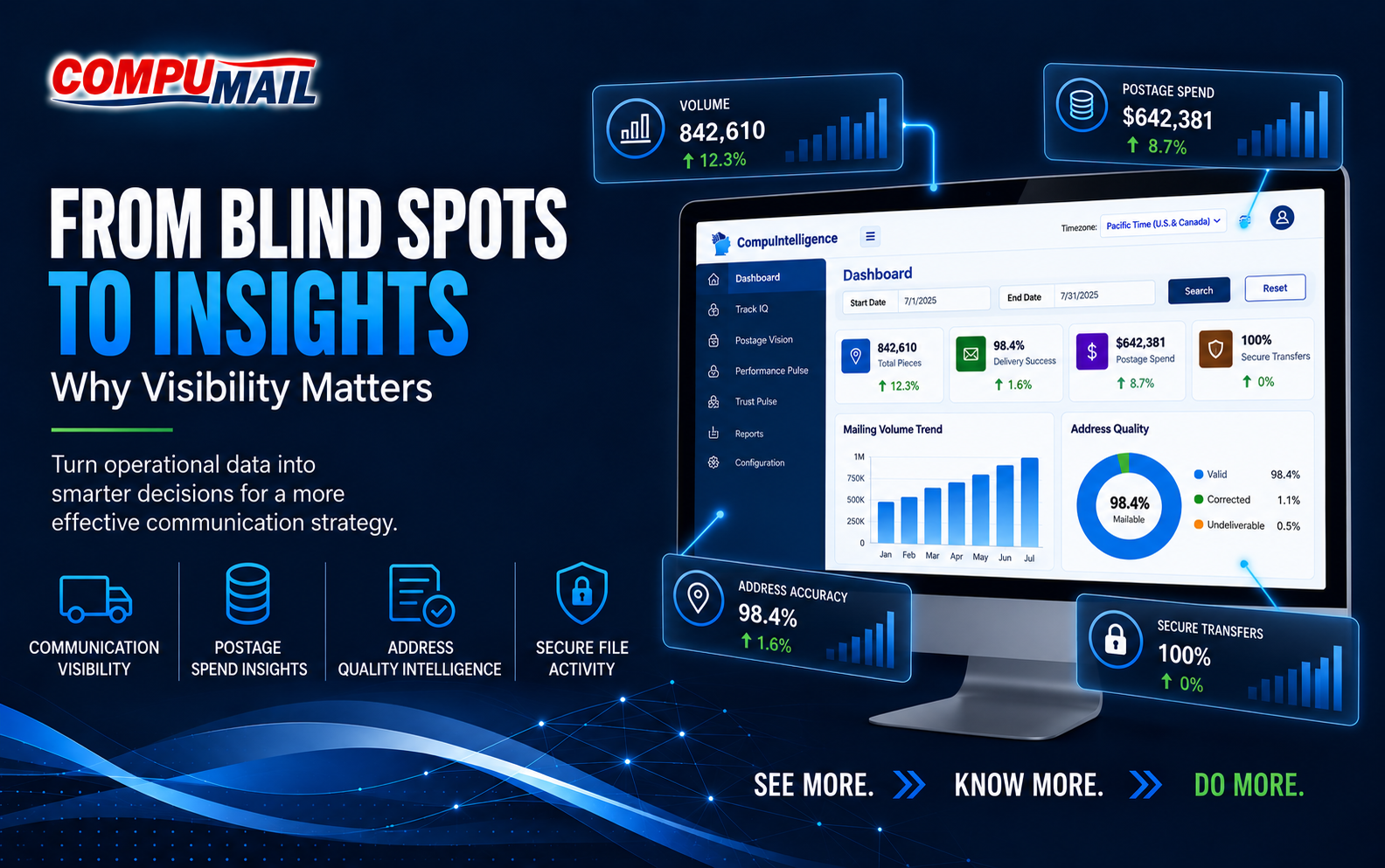
From Blind Spots to Insights: Why Visibility Matters!
Learn how better visibility into production activity, postage spend, address quality, communication workflows, and file activity can help organizations uncover trends, identify issues earlier, and turn communication data into actionable business insights that support smarter decisions.
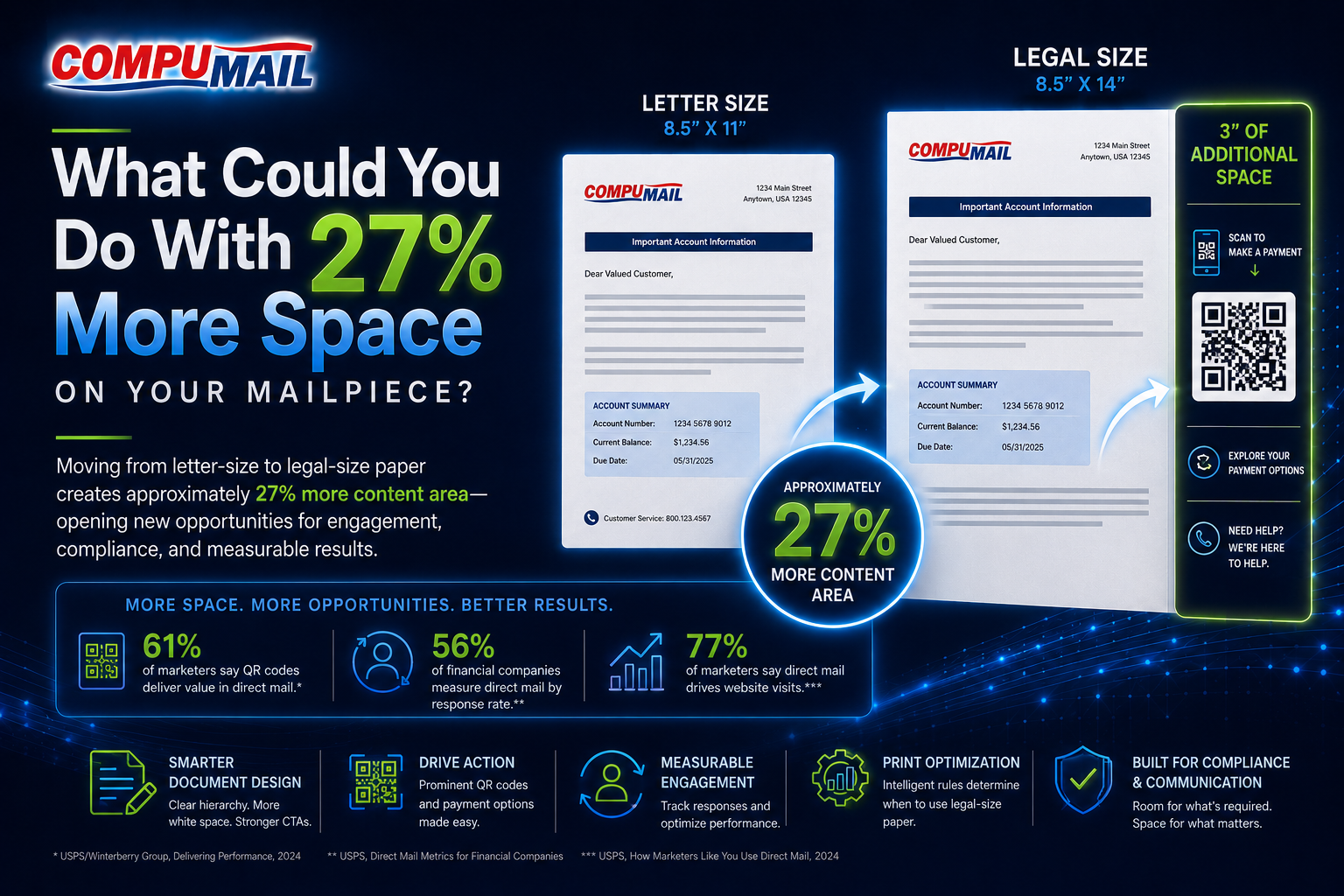
What Could You Do With 27% More Space on Your Mailpiece?
Moving from letter-size to legal-size paper creates approximately 27% more content area—opening new opportunities for calls to action, QR codes, regulatory content, and smarter document design.
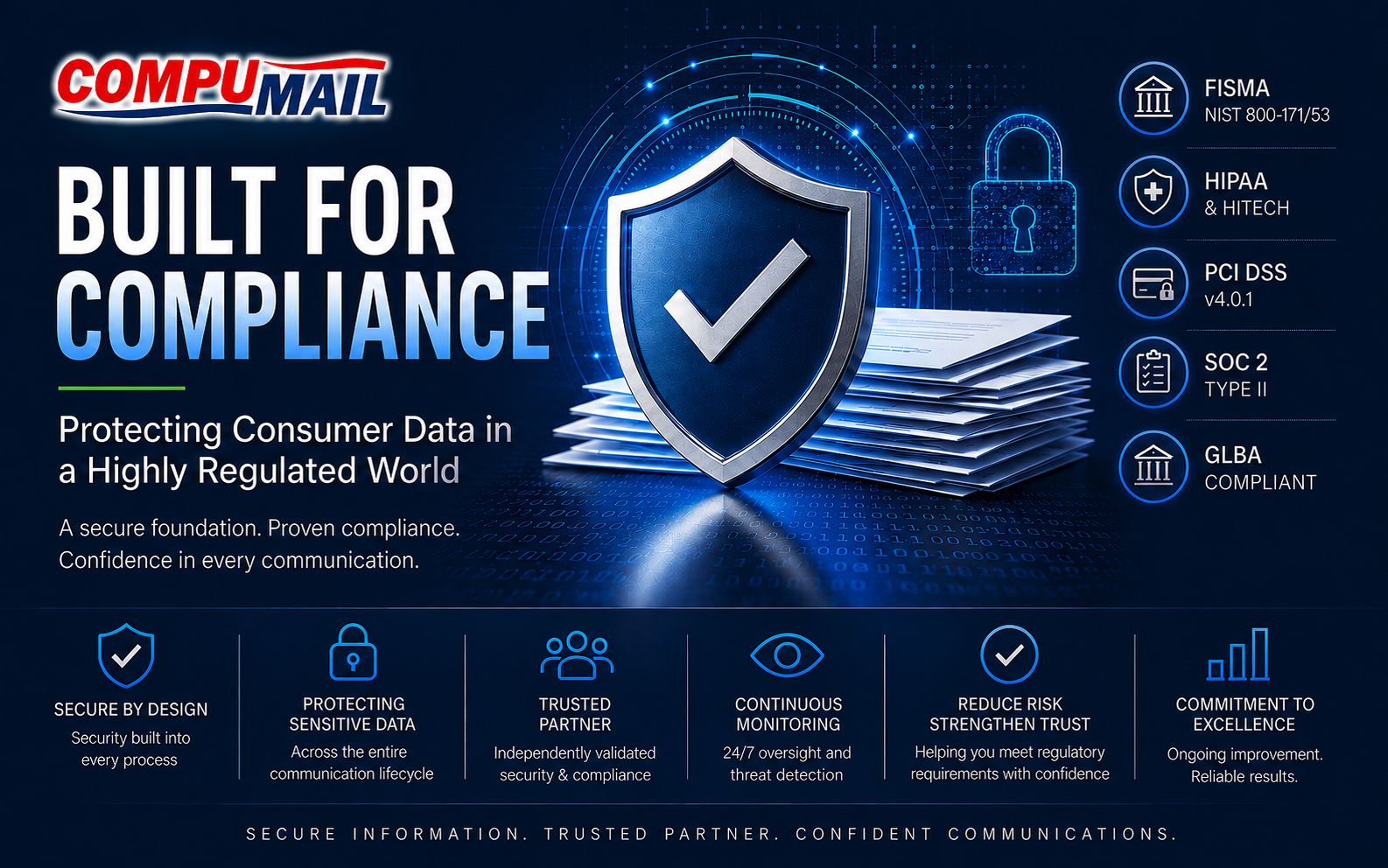
Security Isn't a Feature. It's the Foundation.
Whether it's a billing statement, healthcare notice, collection letter, or account notification, organizations are responsible for protecting sensitive consumer information at every stage of the communication lifecycle. That responsibility extends far beyond simply delivering a document.

A Gold Glove Customer Experience: Precision, Partnership, and Proactive Service from End to End
Baseball fans love the highlight-reel plays. The diving stop, the throw from deep in the hole, the game-saving catch. Those moments earn applause. But ask any coach what wins championships, and the answer is different.

Don't Leave a Runner on Base: How Address Hygiene Improves Delivery Rates and Reduces Waste
In baseball, getting runners on base is only half the battle. The teams that consistently score are the ones that capitalize on every opportunity instead of leaving runners stranded.

The Rise of the Phygital Consumer: Why Print, Email, and SMS Work Better Together
Discover why today's consumers respond best to integrated print, email, and SMS communication strategies. Learn how omnichannel engagement improves visibility, response rates, consumer experience, and business outcomes.
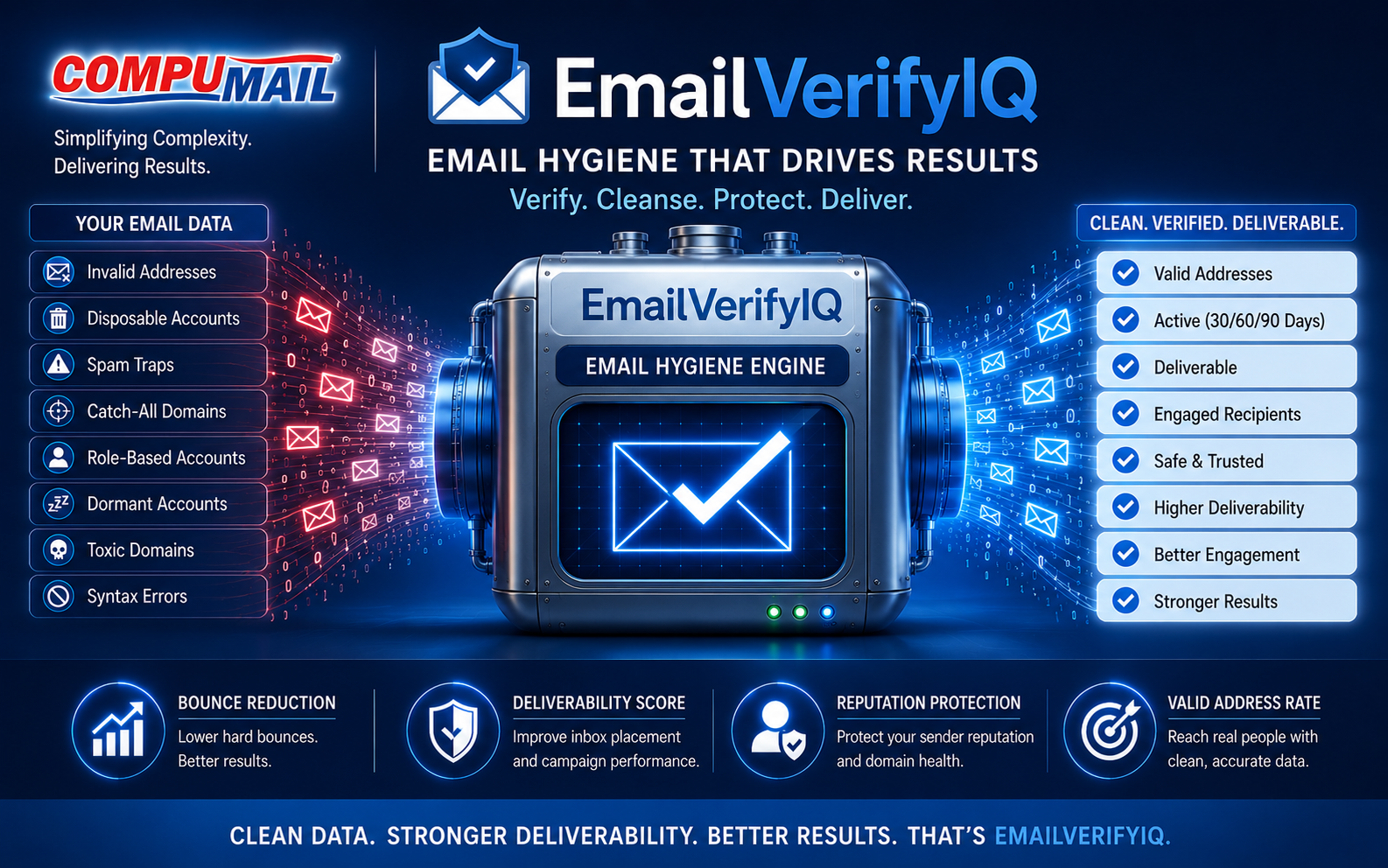
Meet EmailVerifyIQ: Why Email Address Hygiene Matters Just as Much as Address Hygiene
Improve email deliverability, reduce bounce rates, and protect your sender reputation with EmailVerifyIQ. Verify email addresses before deployment and maximize campaign performance.
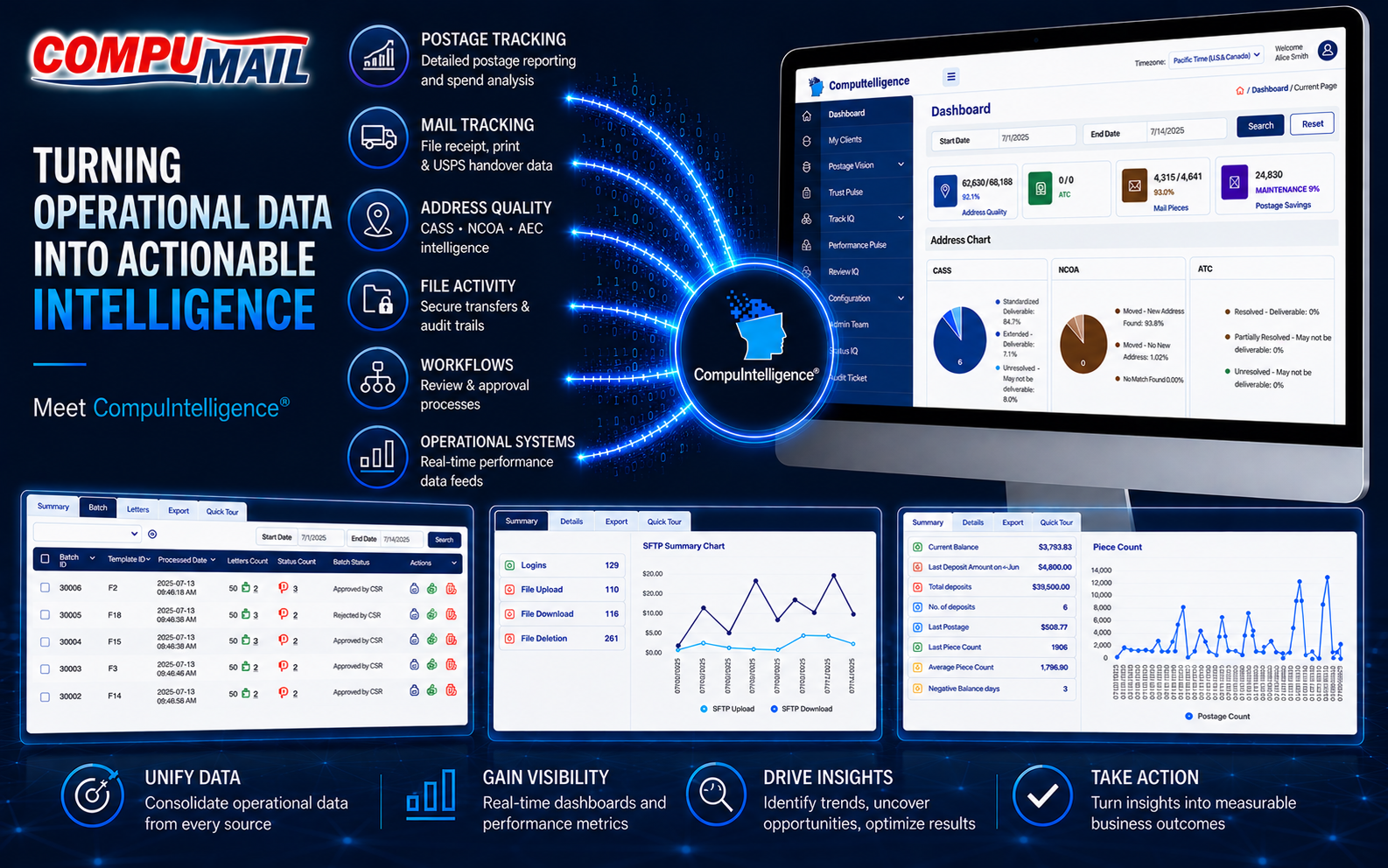
Meet CompuIntelligence® Communication Intelligence & Reporting Platform
In today's business environment, organizations generate more communication data than ever before. Every email, print campaign, SMS notification, compliance review, and consumer interaction creates valuable information.

