The most successful communication strategies aren't built on assumptions—they're built on continuous testing, measurable results, and data-driven optimization across every channel.


.png)


The most successful communication strategies aren't built on assumptions—they're built on continuous testing, measurable results, and data-driven optimization across every channel.
Why Testing Beats Guessing
Every organization wants higher response rates, greater consumer engagement, and improved collection performance. Yet many communication strategies are still built around assumptions.
Should the letter use a larger envelope?
Would a colored envelope increase open rates?
Does a payment reminder perform better in the morning or the evening?
Would adding an SMS reminder increase response rates, or simply create more noise?
Should higher-balance accounts receive Certified Mail instead of First-Class Mail?
The truth is, nobody knows until the data says so.
The highest-performing communication programs aren't built on opinions. They're built on continuous testing, measurement, and optimization.
Every Communication Is an Opportunity to Learn
Many organizations treat every outbound communication as a one-time event. They send the notices, review the overall results, and move on to the next campaign.
The most successful organizations think differently.
They view every mailing, email, and text message as an opportunity to learn something new about consumer behavior.
Small improvements often produce meaningful business results, including:
- Higher payment response rates
- Increased email engagement
- Better consumer self-service adoption
- Reduced call center volume
- Improved return on communication spend
Individually, these gains may appear modest. But across hundreds of thousands—or even millions—of communications—they can translate into significant revenue while reducing operational costs.
The organizations that consistently outperform their peers aren't necessarily sending more communications. They're sending smarter ones because each campaign informs the next.
What Should You Test?
One of the biggest misconceptions about A/B testing is that it only applies to marketing emails or website buttons.
In reality, nearly every aspect of a communication strategy can be measured and optimized.
Organizations commonly test variables such as:
- Headlines and messaging
- Call-to-action wording
- Payment options presented
- QR code placement and size
- Color, layout, and visual hierarchy
- Email subject lines
- Send dates and delivery times
- Print-only versus omnichannel outreach
- Timing between print, email, and SMS communications
- Standard #10 envelopes versus larger format envelopes
- White versus colored envelopes
- Standard First-Class Mail versus Certified Mail
- Certified Mail with Electronic Return Receipt (eRR) versus traditional Return Receipt
- Different document designs for different consumer segments
- Personalized messaging based on account characteristics
Rather than asking, "Which version do we like better?", the question becomes:
"Which version delivers better results?"
That's a much easier question to answer when performance is measured objectively.
Think Beyond the Letter
Sometimes the smallest changes produce the biggest impact.
For example, one CompuMail client recently transitioned from a standard #10 envelope to a larger format envelope and experienced a measurable increase in response rates. While every portfolio is different, it demonstrated that something as simple as the presentation of a communication can influence consumer engagement.
The same principle applies to envelope color. A colored envelope may stand out in a crowded mailbox and encourage more recipients to open it. For some organizations, that small increase in open rates may translate into meaningful improvements in payment response.
Delivery methods can also be optimized.
While Certified Mail and Certified Mail with Electronic Return Receipt (eRR) carry a higher cost than standard First-Class Mail, they may provide greater value for specific segments of a portfolio.
For example, organizations may choose to reserve Certified Mail for:
- Higher-balance accounts
- Consumers with a stronger likelihood of payment
- Legal or compliance-sensitive communications
- Time-sensitive notices requiring proof of mailing or delivery
Rather than applying the same communication strategy to every account, organizations can align their outreach methods with account value, expected return, and business objectives.
The goal isn't to spend more on every communication.
It's to invest more where the data indicates it will generate the greatest return.
Omnichannel Creates More Testing Opportunities
Today's consumers don't all respond through the same communication channel.
Some are more likely to open a printed letter.
Others respond immediately to an email.
Many prefer the convenience of an SMS reminder that links directly to a payment portal.
Testing different communication channels—and different combinations of those channels—helps organizations discover which communication strategy works best for different consumer segments.
For example, one segment may respond best to a printed letter followed by an email reminder, while another may engage more quickly after receiving an SMS.
Instead of relying on a single outreach method, organizations can optimize the entire consumer journey by understanding how print, email, and SMS work together to improve engagement and increase payment rates.
Good Design Is Measurable Design
Document design isn't just about making communications look professional.
Every design decision influences how consumers interact with your message.
Is the payment information immediately visible?
Is the call-to-action easy to find?
Does the document clearly communicate the next step?
Is the QR code prominently displayed?
Would moving payment options higher on the page increase conversions?
Professional document design removes unnecessary friction, making it easier for consumers to understand what action they should take.
A/B testing then validates whether those design improvements actually increase engagement and response rates.
The goal isn't simply creating attractive communications.
It's creating communications that perform.
Turn Data Into Continuous Improvement
Testing only creates value if the results are measured.
Modern communication analytics allow organizations to compare campaign performance over time, identify trends, and make informed decisions based on actual consumer behavior.
Instead of relying on anecdotal feedback, organizations gain visibility into metrics such as:
- Delivery performance
- Response rates
- Email engagement
- Channel effectiveness
- Consumer behavior by communication type
- Campaign trends over time
- Return on investment by communication strategy
These insights allow organizations to answer questions like:
- Did the larger envelope outperform the #10?
- Did the colored envelope improve open rates?
- Was Certified Mail worth the additional investment?
- Which document design generated the highest payment rate?
- Which communication sequence produced the best overall response?
The answers become the blueprint for future campaigns.
Over time, organizations replace assumptions with evidence, allowing every communication program to become smarter than the last.
Why Organizations Partner with CompuMail
CompuMail helps organizations move beyond guesswork by combining communication expertise with measurable analytics.
Our Document Design Services help optimize communications for clarity, usability, compliance, and consumer response.
Our Intelligent Omnichannel Communications platform enables coordinated delivery across print, email, and SMS, making it easy to evaluate which channels—and which combinations—deliver the strongest results for different consumer segments.
We also offer a broad portfolio of communication options, including Certified Mail, Certified Mail with Electronic Return Receipt (eRR), and specialized document production capabilities, giving organizations additional opportunities to tailor communication strategies based on account value and business objectives.
Finally, CompuIntelligence® helps provide the visibility needed to make informed, data-driven decisions that improve communication outcomes over time.
Together, these solutions create a continuous cycle of testing, learning, and optimization that helps organizations maximize the value of every consumer interaction.
Stop Guessing. Start Learning.
Every communication contains valuable data.
Whether you're testing a document layout, an envelope, a delivery channel, a mailing method, or a complete communication strategy, every campaign is an opportunity to learn what resonates with your consumers.
Organizations that continuously test, measure, and optimize their communications consistently outperform those relying on assumptions or outdated best practices.
Because better decisions begin with better data.
And the best communication strategies are never finished—they're continuously improving.
Latest insights from our articles
Explore a collection of curated articles designed to help you stay ahead in multichannel communication, compliance, and digital transformation.
How A/B Testing Helps You Collect More
.png)
A Gold Glove Customer Experience: Precision, Partnership, and Proactive Service from End to End
Baseball fans love the highlight-reel plays. The diving stop, the throw from deep in the hole, the game-saving catch. Those moments earn applause. But ask any coach what wins championships, and the answer is different.
.png)
Don't Leave a Runner on Base: How Address Hygiene Improves Delivery Rates and Reduces Waste
In baseball, getting runners on base is only half the battle. The teams that consistently score are the ones that capitalize on every opportunity instead of leaving runners stranded.
.png)
The Rise of the Phygital Consumer: Why Print, Email, and SMS Work Better Together
Discover why today's consumers respond best to integrated print, email, and SMS communication strategies. Learn how omnichannel engagement improves visibility, response rates, consumer experience, and business outcomes.
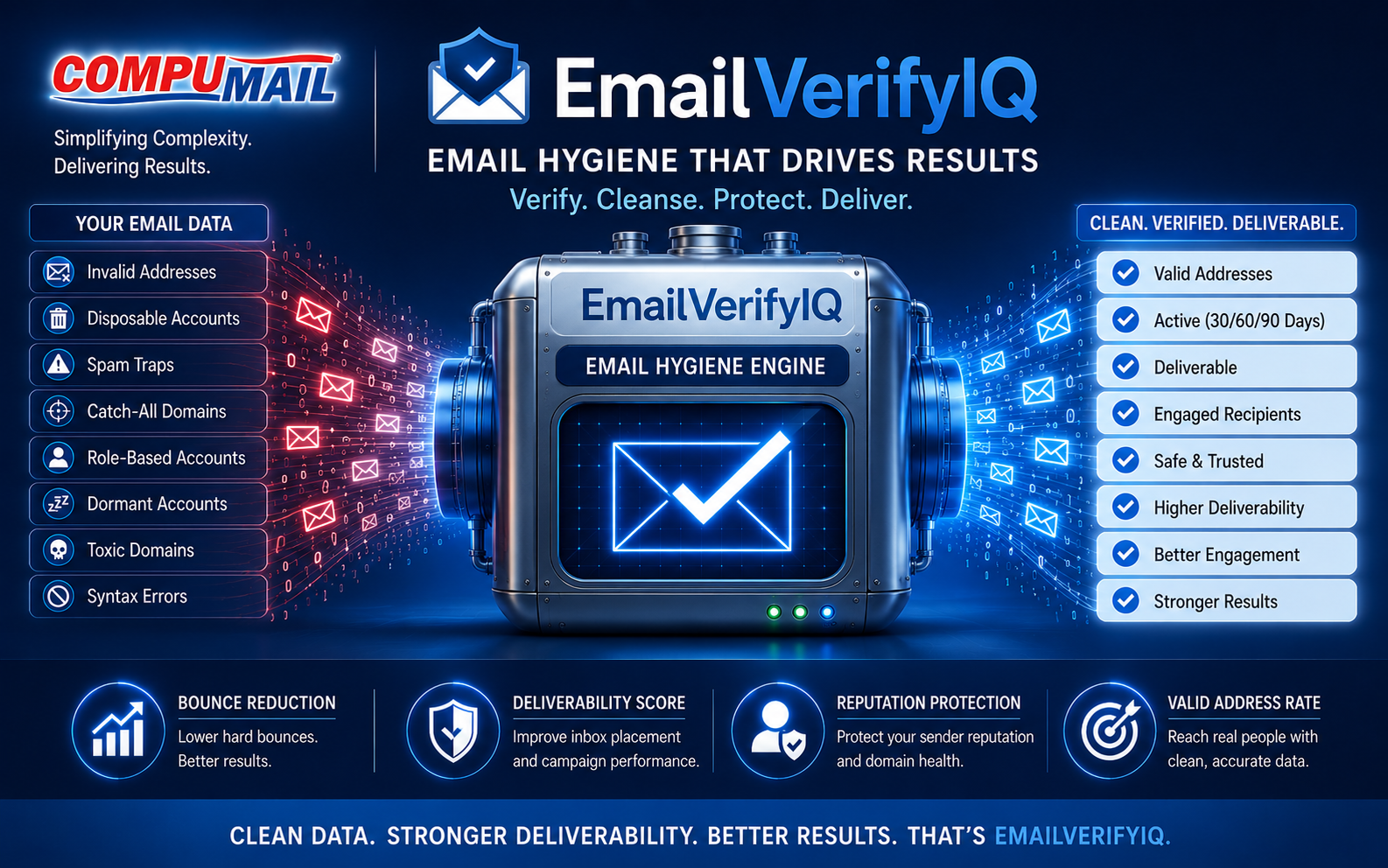
Meet EmailVerifyIQ: Why Email Address Hygiene Matters Just as Much as Address Hygiene
Improve email deliverability, reduce bounce rates, and protect your sender reputation with EmailVerifyIQ. Verify email addresses before deployment and maximize campaign performance.
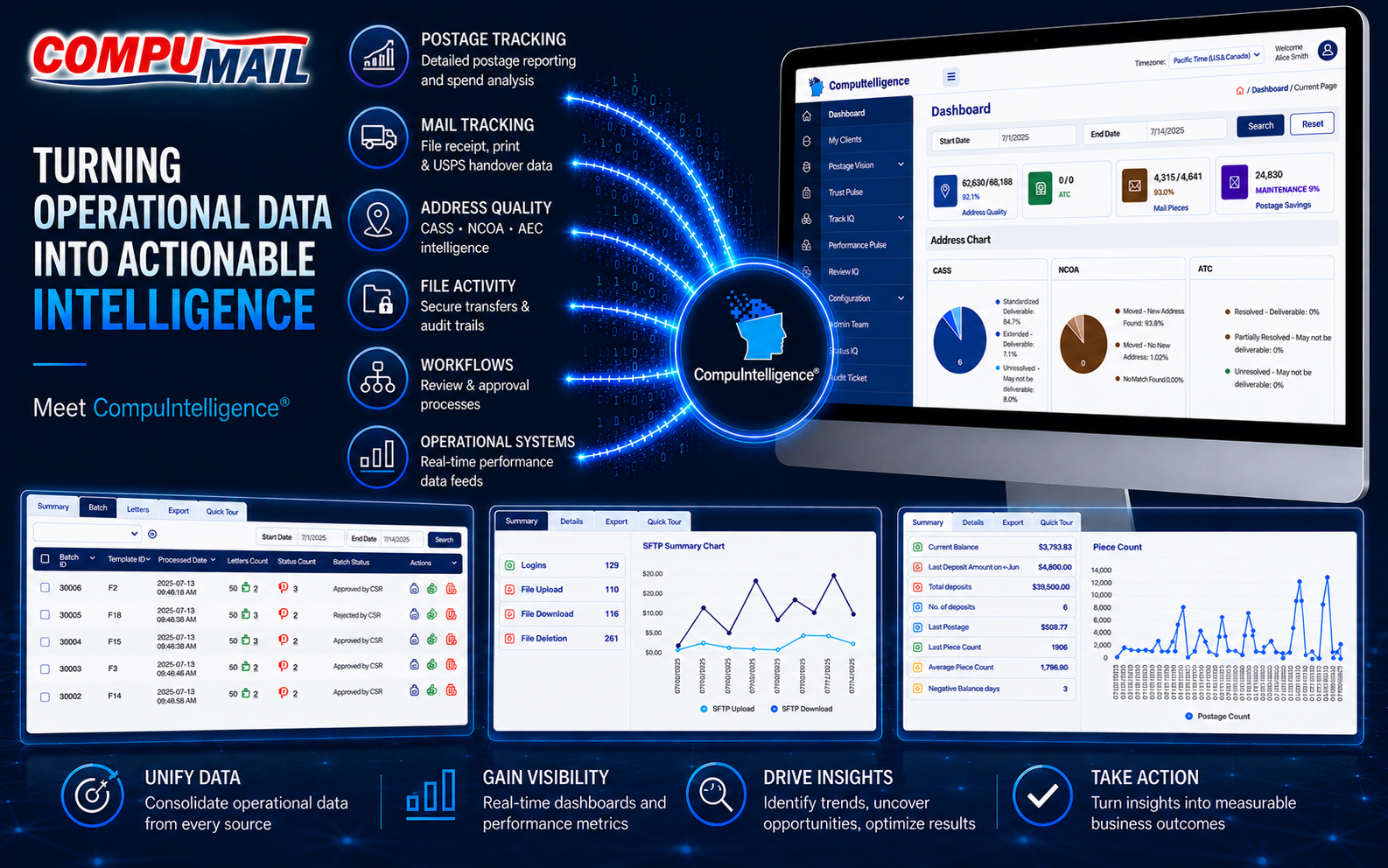
Meet CompuIntelligence® Communication Intelligence & Reporting Platform
In today's business environment, organizations generate more communication data than ever before. Every email, print campaign, SMS notification, compliance review, and consumer interaction creates valuable information.
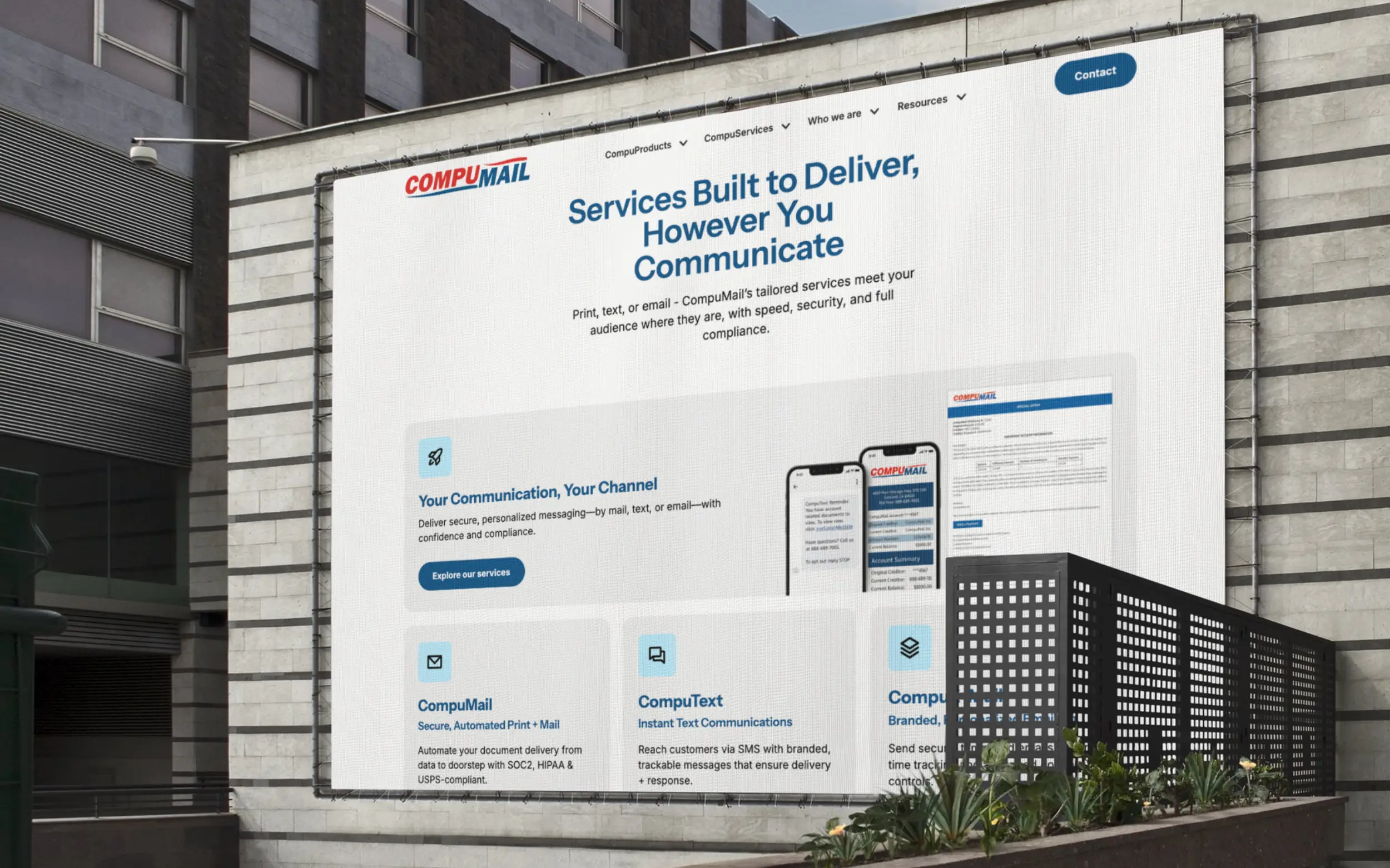
Why Multichannel Messaging Wins in 2026
In highly regulated sectors like finance, healthcare, and government, one-size-fits-all messaging no longer cuts it. Multichannel communication is the new standard—and here’s why it matters.
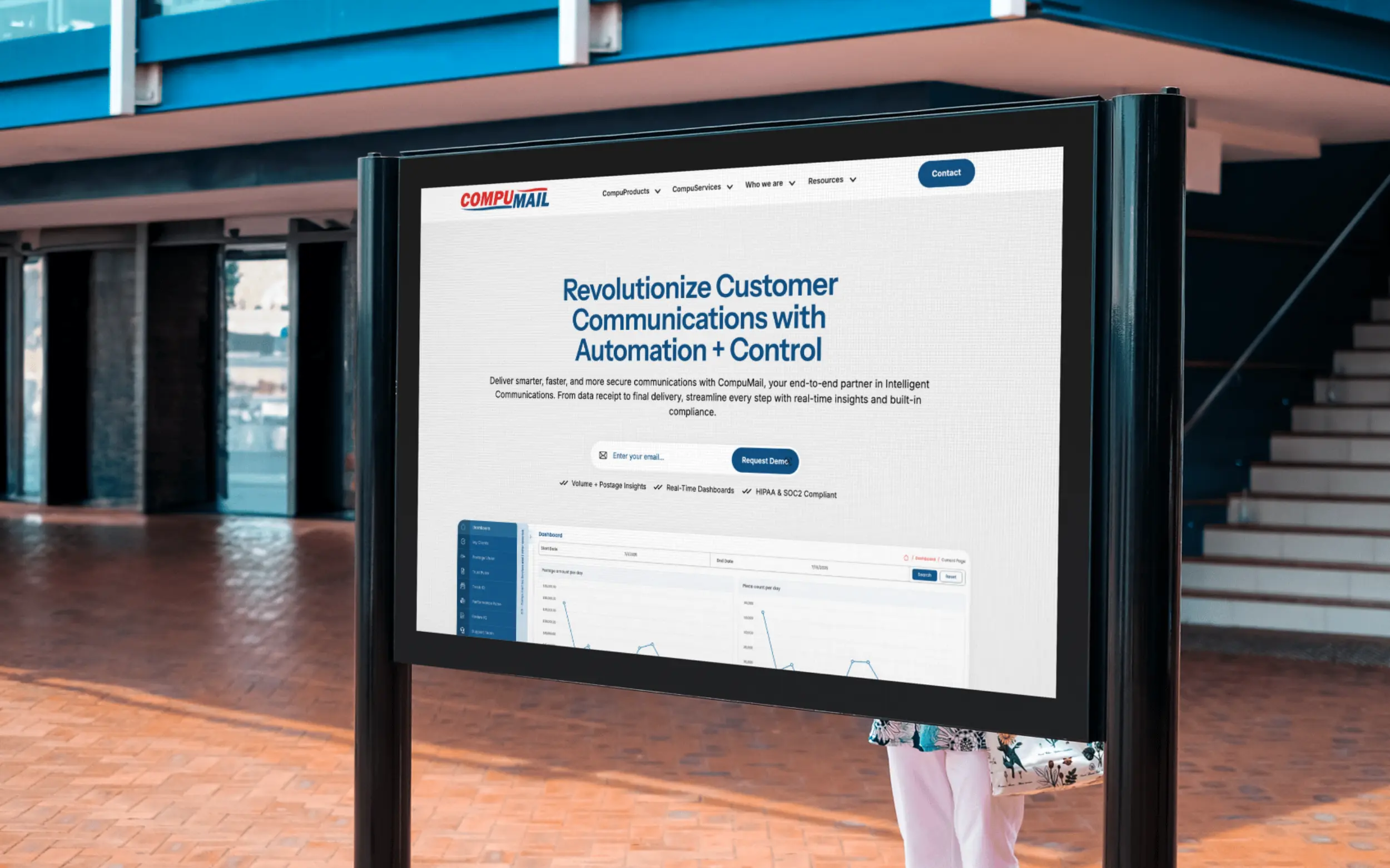
5 Ways Intelligent Communication is Transforming Business in 2026
The rise of automation, compliance-first tools, and multichannel delivery is shaping the future of business communication and CompuMail is at the center of it.

